

Most homeowners never think about the metal rod inside their water heater until rust-colored water starts flowing from the tap. By then, you’re looking at tank replacement instead of a simple $30 part swap. Your anode rod is actively protecting your water heater tank right now, absorbing corrosive minerals so the steel doesn’t. But that protection has a shelf life. Replace it too late and the rod can’t do its job. Wait too long after it fails and you’re buying a whole new water heater. Here’s exactly when to inspect, what depletes the rod faster, and how to know if yours needs changing now.
Standard Replacement Timeline for Anode Rods

Anode rods are sacrificial metal rods inside your water heater that protect the steel tank from rust and corrosion. They work through electrolysis, attracting corrosive particles like sediment and hard water minerals to themselves instead of letting those elements attack the tank walls.
Most residential water heaters need a new anode rod every 3 to 5 years. That’s the standard replacement interval recommended by manufacturers and plumbers for typical household conditions.
While replacement happens every few years, you should inspect the rod every 1 to 2 years. Regular checking lets you catch problems before the rod completely deteriorates and corrosion starts attacking the tank itself. Think of inspection as your early warning system. You’re looking at the rod’s condition while it’s still doing its job, not waiting until it’s failed completely and your tank is already damaged. This approach gives you time to plan the replacement instead of dealing with an emergency.
Several factors can shorten that 3 to 5 year timeframe significantly. Hard water with high mineral content accelerates rod deterioration because there’s more corrosive material for the rod to absorb. Large families that use more hot water put extra demand on the system, wearing down the rod faster. High daily water consumption means more water cycling through the tank, which means more exposure to corrosive elements. If any of these apply to your household, expect to replace the rod closer to the 3 year mark or even sooner.
No matter how good a rod looks during inspection, replace any anode rod that’s over 10 years old. At that age, internal deterioration has occurred even if the outside still appears intact, and the protection it provides is minimal at best.
Warning Signs Your Anode Rod Needs Replacement

Don’t stick to inspection schedules if you notice problems with your hot water. Certain symptoms tell you the anode rod has already failed or is very close to complete depletion.
Early detection means you can still save the tank. Waiting costs more because once the rod is gone, corrosion moves to the tank walls.
The five main warning signs are:
-
Rotten egg or sulfur smell in hot water only. This odor comes from hydrogen sulfide gas produced when bacteria interact with a deteriorated anode rod. If only your hot water smells and cold water is fine, the anode rod is the source.
-
Rusty, orange, or brown colored hot water. When you see discoloration in hot water coming from multiple faucets, the anode rod has likely depleted and rust is forming inside the tank itself.
-
Metallic taste or odor in hot water. A noticeable metal taste that wasn’t there before indicates the rod material is breaking down and particles are entering your water supply.
-
Visible sediment particles in water. Small rust flakes or gritty particles appearing in hot water mean corrosion is actively happening somewhere in the system, often because the anode rod is no longer providing protection.
-
Small leaks appearing at tank seams or connections. Pinhole leaks or moisture around the top of the tank can signal that internal corrosion has weakened the steel, which happens after anode rod failure.
Any of these signs means you need to inspect and likely replace the anode rod right away, regardless of when you last checked it. The difference between a $30 rod replacement and a $1,500 tank replacement often comes down to catching these symptoms within weeks instead of months. Rust doesn’t reverse. Once it starts on the tank walls, it continues until the tank fails completely.
Variables That Influence Replacement Timing

Not all water heaters follow the same replacement schedule. Your specific situation determines whether you’ll need a new anode rod every 3 years or can stretch it to 5 years or beyond.
The main factors affecting anode rod lifespan include:
Water hardness and mineral content levels. Hard water contains calcium and magnesium that accelerate anode rod corrosion. The more minerals in your water, the faster the rod depletes trying to absorb them instead of letting them attack the tank.
Household size and daily hot water consumption. A family of five using hot water for multiple showers, laundry loads, and dishwasher cycles daily wears down the rod faster than a single person or couple with light usage.
Well water vs. municipal water supply characteristics. Well water is typically more corrosive because it contains higher levels of dissolved minerals, sulfates, and other elements that shorten anode rod life. Municipal water is treated but can still vary significantly in chemistry.
Water chemistry including pH levels and chlorine content. Low pH water (acidic) is more aggressive and breaks down anode rods faster. High chlorine levels in some municipal supplies can also accelerate deterioration.
Tank capacity and volume to surface ratio. Larger tanks (75+ gallons) may extend rod life slightly because the volume of water to exposed metal ratio is different, though this varies by tank design.
Water heater age. Older tanks that have accumulated sediment buildup create pockets of concentrated corrosion that can deplete anode rods faster, even if water chemistry hasn’t changed.
Rod material composition. Magnesium rods last 3 to 5 years in most conditions but deteriorate faster in hard water. Aluminum rods last 5 to 7 years and perform better in soft water or low pH conditions. Zinc anodes are combination rods used primarily to combat sulfur bacteria. Powered anode rods are permanent solutions that use electrical current instead of metal depletion.
Regional water composition differences. Water chemistry varies significantly by geography. Coastal areas, regions with limestone bedrock, and areas with specific mineral deposits in the ground all affect water quality differently.
You can assess which factors apply to your home by requesting a water quality report from your municipal supplier or having well water tested by a lab. The report will show hardness levels, pH, mineral content, and other chemistry details. Check your water heater capacity on the label. Count how many people use hot water daily and estimate usage patterns. If you have hard water (over 7 grains per gallon) and a family of four or more, plan on the shorter end of the replacement range. Matching the right rod material to your water chemistry extends protection. Magnesium works well for most situations, but switching to aluminum in soft water conditions or considering a powered rod in extremely hard water can optimize performance.
How to Inspect Your Anode Rod Condition

Regular inspection matters because it shows you the rod’s actual condition instead of guessing based on age alone. Checking every 1 to 2 years gives you real information about whether replacement is needed now or can wait another year.
Before starting, turn off the power source. For electric heaters, switch off the circuit breaker. For gas heaters, turn the gas control valve to the pilot or vacation setting. Turn off the cold water supply valve at the top of the tank. Let the water cool for a few hours if the tank has been in use recently. Working with a hot tank creates burn risks and makes the metal harder to work with.
The anode rod access point is located at the top of the tank, either as a hex head visible on the tank surface or hidden under the hot water outlet fitting. Most standalone residential tanks have a visible hex head. Some models integrate the rod into the hot water outlet, which requires removing that pipe fitting to access the rod. You’ll need a 1 1/16 inch socket or adjustable wrench to loosen the hex head. Before removing the rod completely, attach a garden hose to the drain valve at the tank bottom and drain a few gallons into a bucket or floor drain. This reduces internal pressure and makes rod removal easier. Opening a hot water faucet somewhere in the house also relieves pressure.
Once you’ve removed the rod, evaluate what you’re seeing. Measure the exposed metal core. If less than half the original thickness remains, replace it. A new magnesium rod is typically 3/4 inch in diameter. If the core is worn down to 3/8 inch or less, it’s time for a new one. Heavy calcium coating that’s built up around the rod also signals replacement. Some coating is normal, but if the rod looks like it’s wrapped in thick white or gray mineral deposits, the water chemistry is aggressive and the rod is working hard. Extensive corrosion along the length of the rod, especially if sections are completely eaten away, means replacement regardless of thickness measurements.
If the rod still has more than half its thickness and light to moderate calcium buildup, you can reinstall it and check again in another year. Wrap fresh Teflon tape on the threads, insert it back into the opening, and tighten it snugly but not excessively. Restore the water supply, open a hot water faucet to release trapped air as the tank refills, then restore power once the tank is full and air is purged.
Professional inspection makes sense if you’re uncomfortable working with plumbing, if ceiling clearance above the tank is too limited to pull the rod straight up (most rods are 42 to 44 inches long), or if the rod is seized in place from years of corrosion and won’t budge. Plumbers handle stuck rods routinely and have the best plumbing tools to deal with difficult removals without damaging tank threads.
DIY Anode Rod Replacement Procedure

Replacing an anode rod is straightforward for most homeowners with basic tools and a free afternoon. The job typically takes 1 to 2 hours from start to finish, including prep and cleanup.
You’ll need a 1 1/16 inch socket wrench or breaker bar, a pipe wrench if the rod is integrated into the hot water outlet, plumber’s Teflon tape, a garden hose, the new anode rod, and work gloves. Having a friend available to help with leverage on a stuck rod makes the job easier.
The six step replacement process:
-
Turn off the power source and water supply. For electric heaters, switch off the circuit breaker at the electrical panel. For gas heaters, turn the gas control valve to the pilot or vacation setting. Close the cold water supply valve located on the pipe entering the top of the tank. These steps prevent burns, electrical hazards, and water flow during the work.
-
Drain several gallons to reduce pressure. Connect a garden hose to the drain valve at the tank bottom and run it to a floor drain, utility sink, or outside area. Open the drain valve and let 3 to 5 gallons flow out. Open a hot water faucet somewhere in the house to break the vacuum and allow air into the system, which helps water drain faster.
-
Locate and remove the old anode rod. Find the hex head at the top of the tank. Position the socket wrench on the hex head and turn counterclockwise. This often requires significant force because the threads develop mineral buildup and corrosion over years. If the rod won’t budge after firm pressure, apply penetrating oil and wait 15 minutes, then try again. Once loose, unscrew the rod completely and pull it straight up and out of the tank opening.
-
Inspect the removed rod and prepare the new one. Look at the condition of the old rod to confirm replacement was needed. Take the new anode rod and wrap fresh Teflon tape clockwise around the threads, making 3 to 4 complete wraps. This creates a watertight seal and makes future removal easier.
-
Install the new rod. Insert the new rod into the opening at the top of the tank, threading it in by hand at first to avoid cross threading. Once it’s hand tight and threading smoothly, use the socket wrench to tighten it firmly. Snug is sufficient. Overtightening can strip threads or crack fittings, especially on older tanks.
-
Restore water and power, then check for leaks. Close the drain valve, remove the garden hose, and open the cold water supply valve fully. Keep a hot water faucet open in the house and watch for water to flow steadily without air spurts. Once water runs smooth for 30 seconds, close the faucet. Restore power by switching the circuit breaker back on or relighting the pilot light according to the instructions on the gas valve. Check the area around the new anode rod connection for any moisture or dripping. A few drops right after installation are normal, but continuous seeping means the rod needs additional tightening or more Teflon tape.
Troubleshooting common issues. If the anode rod is completely stuck and won’t loosen even with a breaker bar and penetrating oil, stop before you damage the tank threads. A plumber can use heat and specialized extraction tools. If your ceiling clearance is too limited to remove a standard rod vertically (common in basements or utility closets), flexible segmented rods are available that bend during removal and installation. If you notice water isn’t draining from the drain valve in step 2, sediment buildup has likely clogged the valve, which is a separate maintenance issue that needs attention but doesn’t prevent anode rod replacement.
Professional Anode Rod Replacement Costs and Services

Professional anode rod replacement typically costs between $150 and $300 for most residential water heaters. That price includes the rod itself (usually $20 to $50) plus labor for 1 to 2 hours of work, depending on access and whether the rod is seized in place.
A professional service visit includes more than just swapping the rod. Most plumbers perform a complete water heater inspection during the appointment. They check the tank exterior for signs of rust or corrosion, test the temperature and pressure relief valve operation, inspect all water connections for leaks or deterioration, drain and flush accumulated sediment from the tank bottom, verify proper thermostat settings, and inspect the burner assembly and venting system on gas models. For electric heaters, they check electrical connections and heating element function. This comprehensive approach catches other developing problems before they become emergencies.
Professional help makes sense in several situations. If your water heater is located in a tight space with limited overhead clearance, removing a standard 44 inch anode rod yourself becomes nearly impossible. Plumbers stock flexible segmented rods for these installations and know how to work in confined areas. If you’ve attempted removal and the rod won’t budge, continuing to force it risks stripping the tank threads or cracking the tank top, both of which turn a simple maintenance task into a tank replacement emergency. Older water heaters (10+ years) often have seized rods that require heat application, penetrating chemicals, and significant leverage that’s safer left to professionals with proper tools and experience. If your water heater is still under warranty, check the terms because some manufacturers require professional service documentation to maintain coverage. For water heater repair services that include expertise and proper insurance, professional service protects both your equipment and your home.
Annual maintenance contracts offered by many plumbing companies typically cost $150 to $250 per year and include a scheduled water heater inspection with anode rod assessment. These plans provide regular attention without you having to remember to schedule it, and they often include priority service and discounted rates if repairs beyond the anode rod become necessary during the contract period.
Consequences of Neglecting Anode Rod Replacement
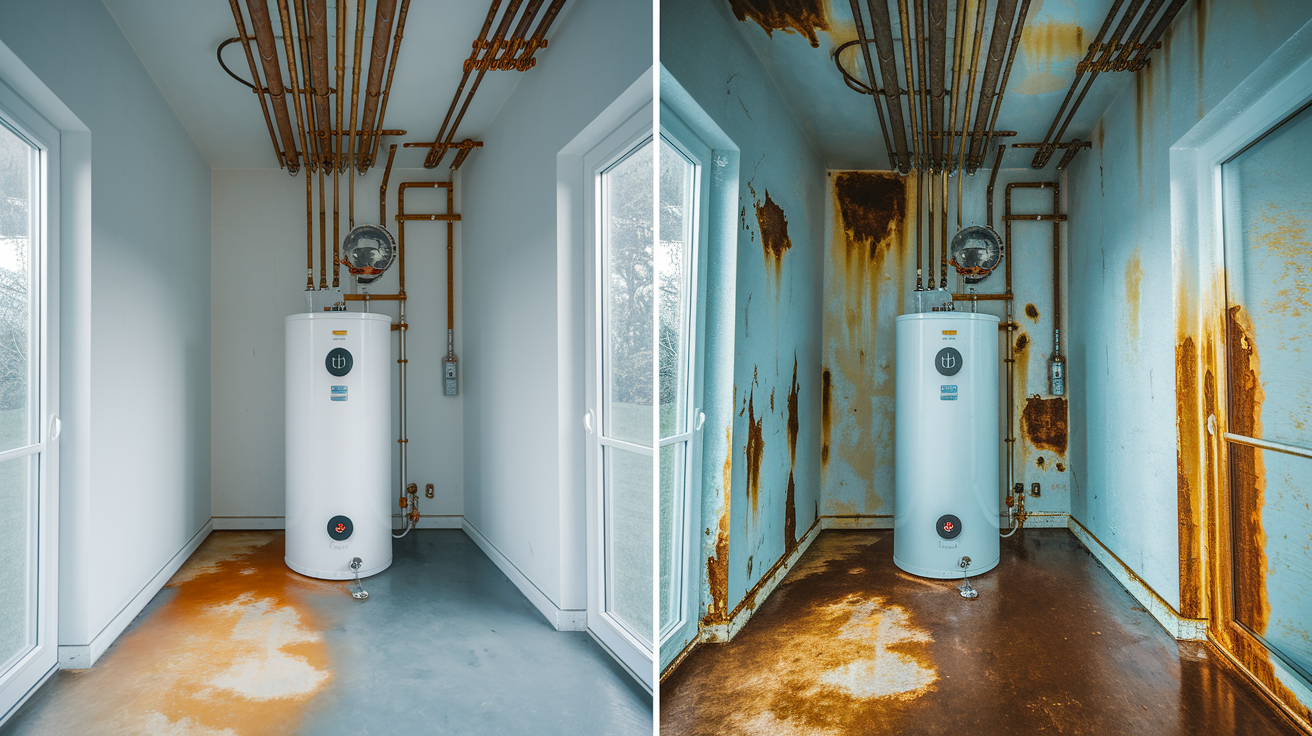
Skipping anode rod replacement seems like a cost saving measure until you face the actual consequences. The small expense and minor inconvenience of maintenance prevents much larger problems.
What happens when anode rods aren’t replaced:
Accelerated interior tank corrosion and rust formation. Once the anode rod depletes completely, corrosive elements in the water attack the exposed steel tank lining directly, creating rust that spreads across interior surfaces.
Premature tank failure years before expected lifespan. Water heaters properly maintained with regular anode rod replacement can last 12 to 15 years. Neglected tanks often fail at 6 to 8 years because internal corrosion weakens the steel to the point of structural failure.
Water contamination with rust particles and sediment. As internal rust forms and flakes off, it contaminates your hot water supply, creating discolored water at every tap and potentially damaging fixtures and appliances that use hot water.
Tank leaks causing water damage to surrounding areas. Rust eventually creates pinhole leaks and larger ruptures that release water into your home, damaging flooring, drywall, stored items, and potentially creating mold conditions if not discovered immediately.
Complete system replacement necessity. Once a tank has corroded to the point of leaking, replacement is the only option. No repair exists for rusted through steel tanks. You’re looking at emergency replacement costs, water damage cleanup, and potential loss of items stored near the heater.
The cost comparison is stark. A replacement anode rod costs $20 to $50, and if you hire professional installation, you’re spending $150 to $300 for the complete service. That protects an $800 to $2,500 investment in your water heater. Replacing a failed tank means purchasing a new 40 to 50 gallon water heater ($600 to $1,200 for the unit), paying for removal of the old tank and installation of the new one ($500 to $1,000 in labor), potentially upgrading venting or electrical service to meet current codes ($200 to $800), and dealing with the inconvenience of no hot water during the replacement process.
Manufacturer warranties require proof of regular maintenance for coverage claims. If your 10 year tank fails at year 7 and you can’t show documentation of anode rod inspection and replacement, the warranty is void. You’re paying full replacement costs out of pocket because neglected maintenance breaks the warranty terms, even though the tank was still within the coverage period.
Creating Your Anode Rod Maintenance Schedule

Creating a written schedule prevents forgotten maintenance that leads to expensive repairs. Treating anode rod care like any other routine home maintenance task keeps your water heater running efficiently for its full expected lifespan.
| Maintenance Task | Frequency | Timing Notes |
|---|---|---|
| Anode rod inspection | Every 1 to 2 years | First inspection at 1 year for new heaters; annually after that in hard water areas |
| Anode rod replacement | Every 3 to 5 years | Based on inspection findings; sooner in hard water or high use households |
| Tank flushing and sediment removal | Annually | Same time as anode inspection; more frequent in areas with heavy sediment |
| Temperature and pressure relief valve testing | Annually | Part of comprehensive water heater maintenance visit |
| Visual leak inspection | Every 3 to 6 months | Quick visual check of tank base, connections, and surrounding floor area |
Keeping maintenance records creates a history that helps identify patterns and proves care was taken if warranty claims become necessary. Record the date of each inspection, what condition the anode rod was in (measurements and description), when replacements were performed, what type of rod was installed, and any observations about water quality or system performance. A simple notebook kept near the water heater or a folder with dated photos of the removed rod works fine. Note if water appears more discolored than usual, if sediment volume during flushing has increased, or if the tank is making new noises. These details help identify developing problems early.
Coordinate water heater maintenance with other regular home tasks to simplify scheduling. Many homeowners schedule water heater service in spring or fall when they’re also having HVAC systems serviced. Others tie it to property tax due dates or other annual financial tasks that already have calendar reminders set up. If you have a home warranty or service contract that includes annual inspections, request water heater service be included during those visits. Linking the task to something you’re already doing makes it more likely you’ll actually complete it rather than letting it slide year after year until a problem forces attention.
Final Words
Sticking to the right anode rod replacement frequency keeps your water heater running for years instead of failing early. Most homes need a new rod every 3 to 5 years, with inspections every 1 to 2 years to catch problems before they turn into expensive tank damage.
If you notice rusty water, sulfur smells, or sediment, check the rod now. Don’t wait for the schedule.
A $20 rod and an hour of time can save you from a $2,000 tank replacement. That’s about as clear as home maintenance gets.
FAQ
How often should I change my anode rod?
You should change your anode rod every 3 to 5 years on average, though this timeline varies based on water quality and household usage. Homes with hard water, large families, or high water consumption often need replacement more frequently, sometimes every 2 to 3 years. Regardless of condition, replace any anode rod that’s over 10 years old as a safety measure.
How much does a plumber charge to change an anode rod?
A plumber typically charges between $150 and $300 to change an anode rod, including both labor and the replacement part. This cost covers the professional’s time to shut down the system, drain the tank, remove the old rod, install the new one with proper sealing, and test for leaks. Annual maintenance contracts that include anode rod inspection may offer better value than one-time service calls.
Why do I only get 10 minutes of hot water?
You only get 10 minutes of hot water when your anode rod is severely depleted and sediment has built up in the tank, reducing the available water volume and heat transfer efficiency. A failed anode rod allows rust and calcium deposits to accumulate on the tank bottom and heating elements. Replacing the depleted anode rod and flushing the tank to remove sediment typically restores normal hot water duration.
What are the signs of a bad anode rod?
The signs of a bad anode rod include a rotten egg or sulfur smell in your hot water, rusty or brown-colored hot water, and a metallic taste in heated water. You might also notice visible sediment particles in the water or small leaks appearing at tank seams. Any of these symptoms means the anode rod is no longer protecting your tank and needs immediate replacement to prevent permanent tank damage.
Can I inspect my anode rod myself?
You can inspect your anode rod yourself by shutting off the power and water supply, draining a few gallons from the tank, and removing the hex-head access point at the tank top with a socket wrench. Once removed, check if the rod is less than 50 percent of its original thickness or heavily coated in calcium buildup. If you lack the tools, physical strength to break the initial seal, or sufficient ceiling clearance to remove the rod, hire a professional for inspection.
What type of anode rod material lasts longest?
The anode rod material that lasts longest depends on your water chemistry, with magnesium rods lasting 3 to 5 years in hard water and aluminum rods lasting 5 to 7 years in soft or low-pH water. Powered anode rods offer a permanent solution that never needs replacement but cost significantly more upfront. Matching the rod material to your specific water conditions maximizes lifespan and protection.
Does hard water affect anode rod lifespan?
Hard water significantly affects anode rod lifespan by accelerating corrosion and mineral buildup, often requiring replacement every 2 to 3 years instead of the standard 3 to 5 years. High mineral content in hard water causes faster deterioration of the sacrificial metal and heavier calcium coating. Homes with hard water should inspect their anode rods annually rather than waiting the full two years between checks.
What happens if I never replace my anode rod?
If you never replace your anode rod, the interior tank will begin rusting once the rod is completely depleted, leading to tank leaks and complete system failure within a few years. Rust particles contaminate your hot water, create sediment buildup that reduces efficiency, and eventually cause tank perforation requiring full water heater replacement costing $800 to $2,500 or more. Neglecting this $20 to $50 part plus installation can void your manufacturer’s warranty and create expensive water damage.