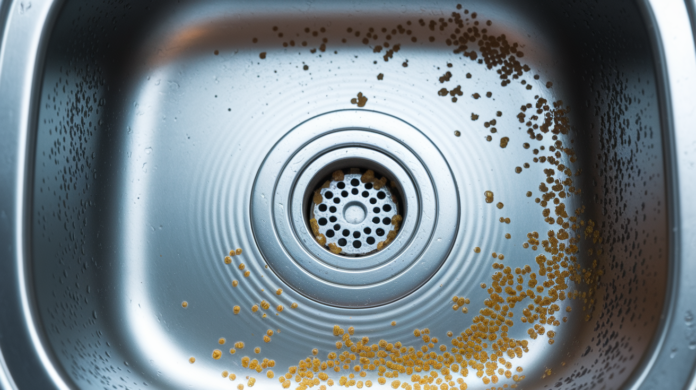

You’d probably be shocked to learn that most kitchen sink clogs aren’t caused by that one big chunk of food you accidentally dropped down the drain last week. The real culprits build up slowly over time: hardened grease coating your pipes like candle wax, rice that swelled to twice its size overnight, and soap scum narrowing your drain opening week after week. In this guide, we’ll walk through exactly what’s blocking your kitchen sink, how to recognize trouble early, and the specific steps to clear it and keep it flowing.
Recognizing Kitchen Sink Clog Warning Signs
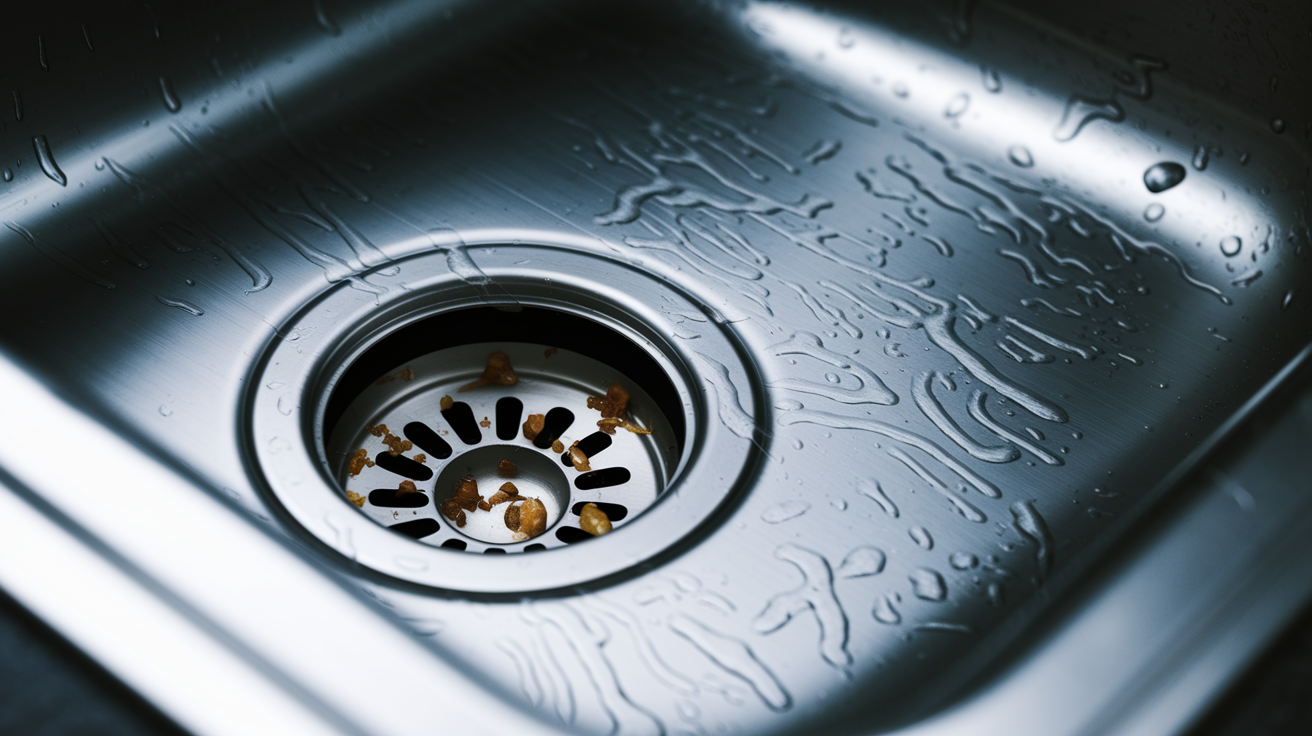
Catching drainage problems early saves you from dealing with a completely blocked sink and standing water full of food scraps. The earlier you notice something’s off, the easier the fix.
Here’s what trouble developing in your kitchen drain looks like:
-
Water draining slower than usual. You notice the sink takes an extra 15 or 20 seconds to empty after washing dishes, when it used to clear in seconds.
-
Standing water that takes minutes to clear. A small pool sits in the basin for three to five minutes after you finish rinsing, gradually trickling down instead of flowing freely.
-
Gurgling sounds from the drain. You hear bubbling or gurgling noises coming from the drain opening while water flows out, indicating trapped air trying to escape past a partial blockage.
-
Foul odors indicating trapped organic matter. A sour, rotting smell drifts up from the drain even when the sink looks clean, signaling decomposing food particles stuck somewhere in the pipes.
-
Water backing up during garbage disposal use. Running the disposal causes water to rise in the basin instead of draining normally, showing that ground food has nowhere to go.
-
Water appearing in the other sink basin. In double sinks, draining one side causes water to bubble up in the opposite basin, revealing a blockage in the shared drain line below both sinks.
-
Complete stoppage. Water sits completely still in the basin with zero drainage, creating an unusable sink.
When you notice two or three of these symptoms happening together, that’s your cue to act. Early intervention stops a minor slowdown from turning into a full backup that requires taking pipes apart or calling for professional help.
Common Causes of Kitchen Sink Clogs
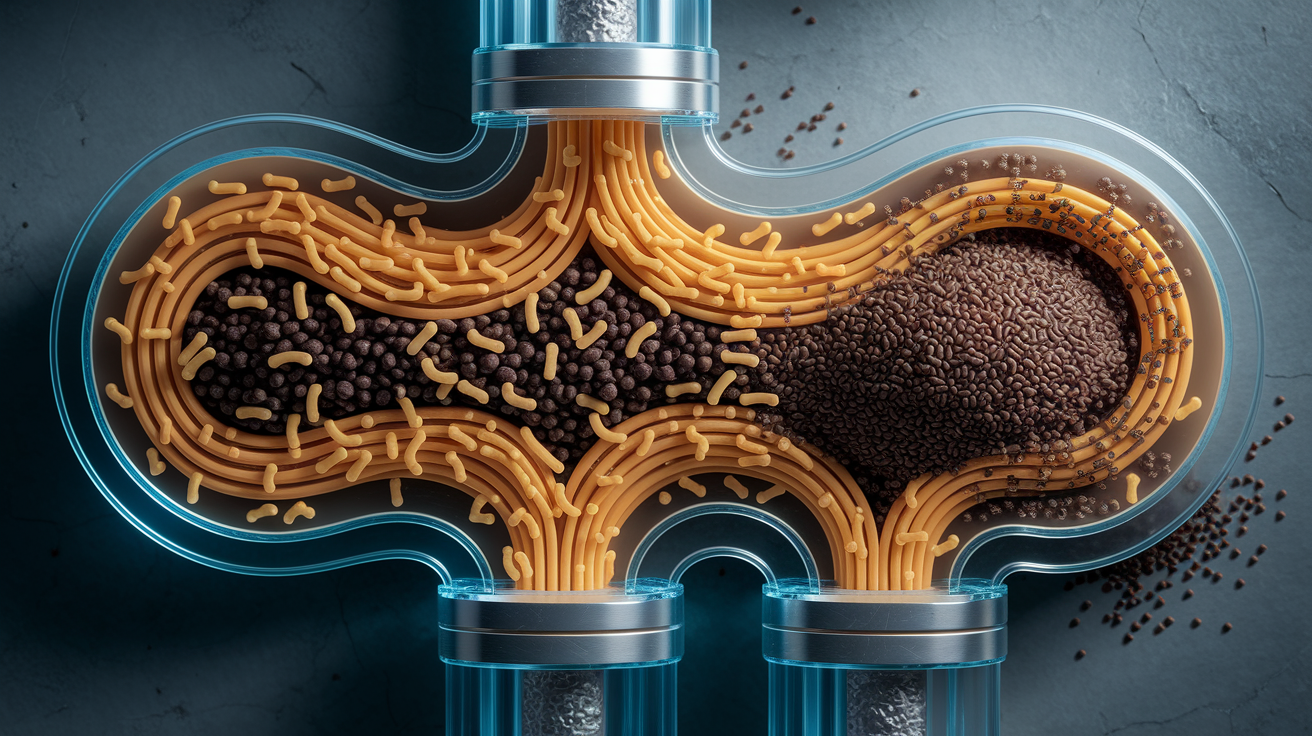
Your kitchen sink handles more punishment than any other drain in your home. Between dish rinsing, food prep cleanup, and garbage disposal use, all kinds of materials flow toward that drain opening. The curved pipe section under your sink (called the P-trap) catches a lot of this debris before it enters your main drain line. That’s exactly what it’s designed to do, but it also means the P-trap becomes the most common spot where blockages form.
Grease, Oils, and Fats
Cooking oils, bacon grease, butter, and meat fats pour down the drain as warm liquids. But the second they hit cooler pipe surfaces and mix with cold water, they transform into sticky, hardened solids. This coating clings to the inside of your pipes like wax on the side of a candle.
Each time you rinse another greasy pan, you add another thin layer. Over weeks and months, these layers build up and create narrow passages where water struggles to flow. The sticky surface also acts like flypaper for every other particle that comes down the drain. Soap scum sticks to it. Food debris sticks to it. Coffee grounds stick to it. What started as innocent pan drippings becomes the foundation for a serious blockage.
Problematic Food Items
Rice, pasta, beans, lentils, and similar starchy foods don’t just sit harmlessly in your pipes. They’re designed by nature to absorb water and expand, sometimes doubling or tripling in size. A handful of leftover rice that slips down the drain at dinnertime can swell overnight into a spongy mass that completely blocks the P-trap by morning.
Fibrous materials like celery strings, potato peels, onion layers, and corn husks create a different problem. These stringy pieces tangle together into dense mats that catch other debris flowing past. Coffee grounds and crushed eggshells might seem harmless since they’re small, but when they mix with grease buildup, they form a cement-like substance that hardens against pipe walls. Brussels sprouts, whole potatoes, and flour paste (created when flour mixes with water in the drain) all share these expansion or clumping characteristics that spell trouble for your plumbing.
Foreign Objects and Non-Food Materials
Small bottle caps, twist ties from bread bags, produce stickers, jewelry, and dropped utensils all find their way into kitchen sinks by accident. These items don’t break down or dissolve. They simply sit in your drain line, usually catching at the curve of the P-trap where the pipe bends. Once lodged there, they become anchor points where food particles and grease accumulate.
People also intentionally wash paper towels, napkins, and cleaning wipes down the sink, thinking they’ll break apart like toilet paper. They don’t. These materials are designed to stay intact when wet, and they create instant blockages when they bunch up in your pipes. Your horizontal drain pipes only slope about half an inch per foot, which means a 48-foot pipe run from your kitchen to the main line drops just one foot total. In that gradual slope, these materials settle into low spots and stay put.
Garbage Disposal Misuse
A garbage disposal isn’t a trash can. It’s designed to grind small, soft food scraps that accidentally fall in while you’re rinsing dishes.
When you try to dispose of fibrous vegetables like celery stalks, asparagus ends, or artichoke leaves, the stringy fibers wrap around the disposal blades without getting properly chopped. Hard materials like chicken bones, pork chop bones, crab shells, and eggshells either jam the disposal motor or get only partially ground, sending large chunks into the drain line below where they get stuck. Starchy foods like pasta, rice, and potato peels also shouldn’t go in the disposal, even though they seem soft. The disposal might grind them initially, but they turn into a thick paste that accumulates in the shared drain pipe beneath the unit. That pipe carries waste from both your disposal and your regular drain, making it a prime location for clogs to form.
How Soap Scum and Mineral Deposits Narrow Pipes
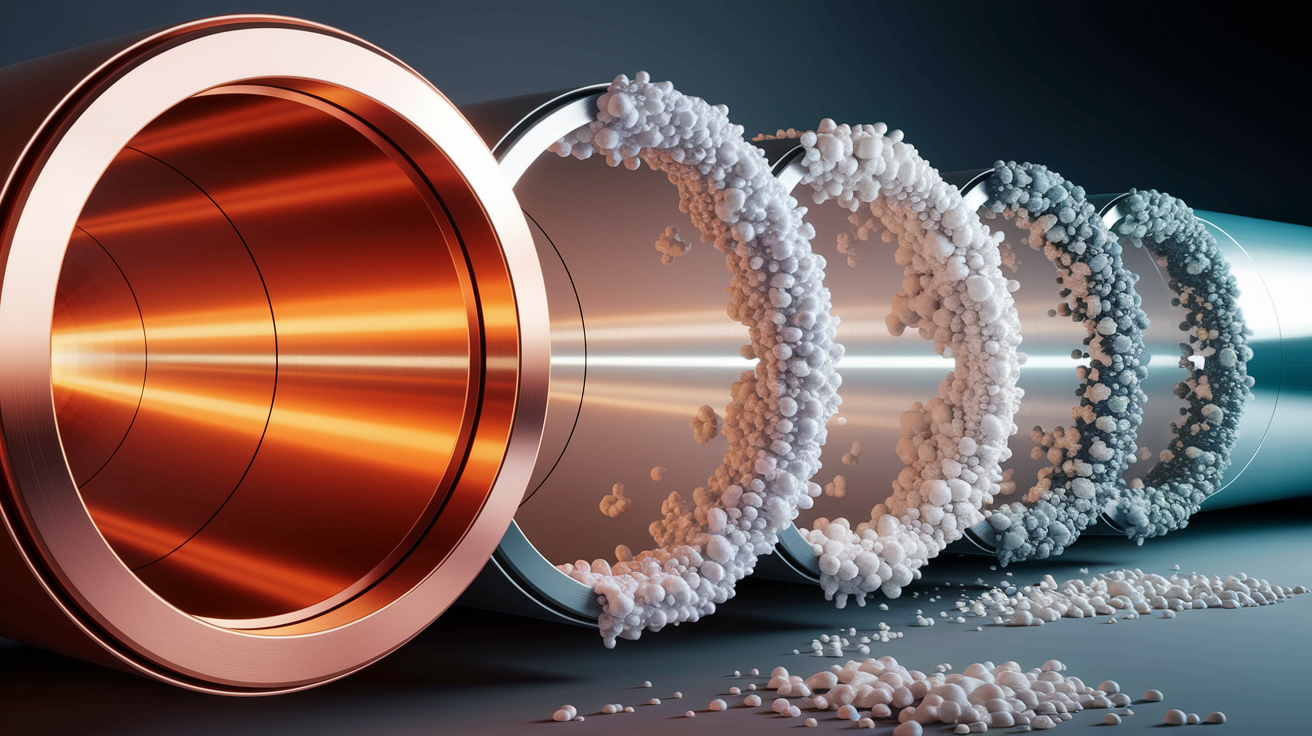
Not all blockages happen suddenly. Some develop so gradually that you don’t notice the problem until water barely drains at all.
Every time you wash dishes with soap, a small amount of that soap combines with fats and oils in the drain, minerals in your water supply, and microscopic food particles. This mixture creates soap scum, a filmy residue that adheres to pipe walls. Unlike a dropped spoon or a clump of pasta that causes an immediate blockage, soap scum builds up in thin layers over months and years. Each layer is barely noticeable on its own, but they compound into a coating that makes the inside of your pipes narrower and narrower.
The sticky surface of soap scum also catches other debris flowing past. Food particles that would normally wash through now stick to the soapy film, and before long you’ve got a layer of gunk restricting water flow.
If you have hard water, mineral deposits add another dimension to the problem. Hard water contains dissolved calcium, magnesium, and other minerals that precipitate out when water sits in pipes or evaporates. These minerals calcify into crusty white or yellowish deposits that harden like concrete on pipe interiors. The process happens slowly, particularly in older plumbing systems where decades of mineral accumulation has reduced the effective pipe diameter.
As the deposits build, they create a rough, uneven interior surface instead of smooth pipe walls. That rough surface catches food particles, grease, and soap residue that would otherwise slide past. In older homes with original metal pipes, corrosion creates another rough surface problem. Corroded pipes develop interior textures similar to velcro, providing countless small crevices where debris gets trapped. Rust buildup actually makes the pipe walls thicker while the usable interior space gets narrower, dramatically increasing your chances of experiencing recurring clogs even when you’re careful about what goes down the drain.
Plumbing System Issues That Create Sink Blockages

Sometimes your kitchen sink clogs repeatedly even when you’re doing everything right with disposal habits. In those cases, the problem isn’t what’s going down your drain but rather structural issues with the plumbing system itself.
Your drain system needs proper venting to work correctly. Vent pipes run from your drain lines up through your roof, allowing air to enter the system so water can flow freely. When these vent pipes get blocked by leaves, bird nests, roof debris, or ice in winter, the system can’t pull in air. Without that air intake, a vacuum forms in the drain line.
You’ll notice the water draining slowly or gurgling as trapped air tries to escape through the drain opening instead of the vent. The problem affects drainage even when there’s no physical blockage in the drain pipe itself.
Improper pipe installation creates persistent problems that no amount of careful disposal habits can fix. When pipes aren’t installed with the correct slope, gravity can’t pull water and debris through properly. Sections of pipe that dip down lower than surrounding areas (called bellies or sags) become collection points where water pools. Debris settles in these low spots because the water flow doesn’t have enough momentum to carry particles uphill to the next section. Each time you use the sink, more material accumulates in these trouble spots until a full clog develops. This happens most often in older homes where pipes have shifted over decades or in situations where amateur installation didn’t follow proper slope requirements.
Tree roots create serious blockages from outside your home. Large trees planted near your house send roots underground in search of water, and those roots detect the moisture around your sewer lines. They infiltrate through tiny cracks or loose pipe joints, then grow inside the pipe, creating dense tangles that catch everything flowing past.
When tree roots are involved, you’ll typically notice that multiple fixtures in your home drain slowly or back up, not just your kitchen sink. That’s because roots usually enter the main sewer line that serves your whole house. If only your kitchen sink acts up while your bathroom drains work fine, roots probably aren’t the culprit. But if your shower backs up when you run the kitchen sink, or your toilet gurgles when you drain the sink, you’re likely dealing with a main line blockage that affects all your plumbing fixtures.
DIY Methods to Clear Kitchen Sink Clogs
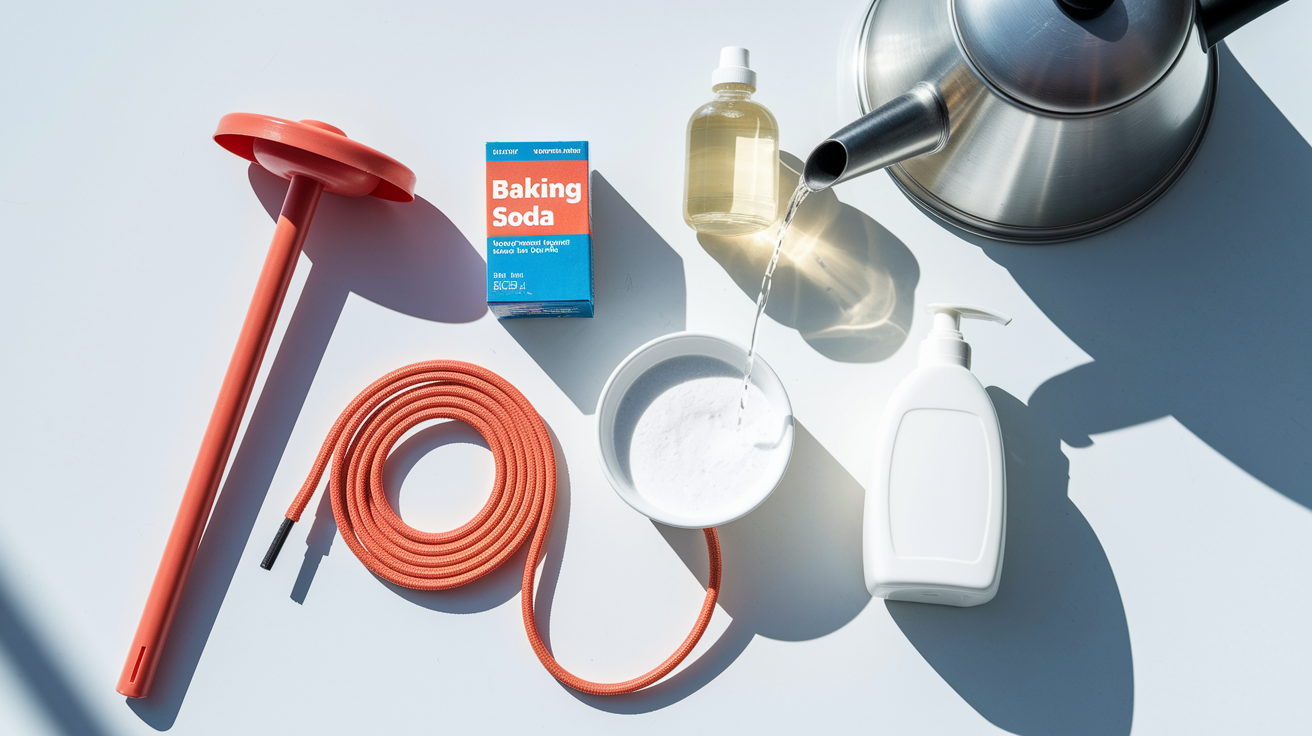
When your sink starts draining slowly or stops completely, try these simple fixes before you call for backup. Start with the gentlest approach and work your way up to more aggressive methods only if needed.
Boiling Water and Dish Soap Method
For grease related slowdowns, squirt a generous amount of dishwashing liquid directly into the drain opening, then carefully pour a full kettle of boiling water down after it. The combination of hot water and degreasing soap can break down fatty buildup and flush it through the pipes. Let it sit for a couple of minutes, then run hot tap water for 30 seconds to see if drainage improves. This works best as an early intervention when you first notice slower drainage.
Baking Soda and Vinegar Treatment
Pour 1/2 cup of baking soda directly into the drain opening. Follow immediately with 1/2 cup of white vinegar. You’ll hear fizzing and see bubbles. That reaction helps break apart organic material and light grease buildup. Let the mixture work for 10 to 15 minutes without running any water. After the wait, flush the drain with a full kettle of boiling water. The hot water rinse pushes loosened debris through the pipes while the drain is still open.
Proper Plunger Technique
Fill the sink basin with three to four inches of water, enough to cover the plunger cup. If you have a double sink, plug the second drain opening with a wet rag stuffed firmly in place. For sinks with an overflow hole near the rim, cover that opening with another wet rag or have someone hold their hand over it.
These steps are critical because they prevent air from escaping through alternate routes. The plunger only creates suction when you have a sealed system. Place the plunger over the drain and push down firmly, then pull up sharply. Repeat this motion 15 to 20 times with quick, forceful strokes. You’re trying to create pressure waves that dislodge the clog and pull debris back up the pipe.
Overnight Baking Soda and Salt Treatment
For stubborn clogs that didn’t respond to the vinegar method, try this more abrasive version. Pour 1/2 cup of baking soda and 1/2 cup of table salt directly into the drain. Add a kettle of boiling water, but don’t flush this one. Let the mixture sit for several hours or overnight. The salt provides abrasive scrubbing action while the baking soda continues working on organic buildup. In the morning, flush with hot tap water.
Drain Snake Basics
A hand cranked drain snake or a basic zip-it tool can reach clogs that sit deeper in the pipes beyond where plungers are effective. Feed the snake cable into the drain opening, pushing it forward until you feel resistance. That resistance is either the clog itself or the curve in your P-trap. Turn the handle clockwise while pushing forward gently. The spiral tip grabs hair, food particles, and other debris.
When you feel the cable catch on something, pull it back out slowly. You’ll often retrieve a nasty clump of accumulated gunk. Repeat the process a few times, then flush the drain with hot water.
If you’ve tried two or three of these methods without improvement, or if the clog returns within a day or two, that’s your signal to stop. Repeated attempts with the same DIY methods won’t solve a problem that’s deeper in your system, more complex than a simple blockage, or related to structural plumbing issues.
Prevention Strategies for Kitchen Sink Clogs
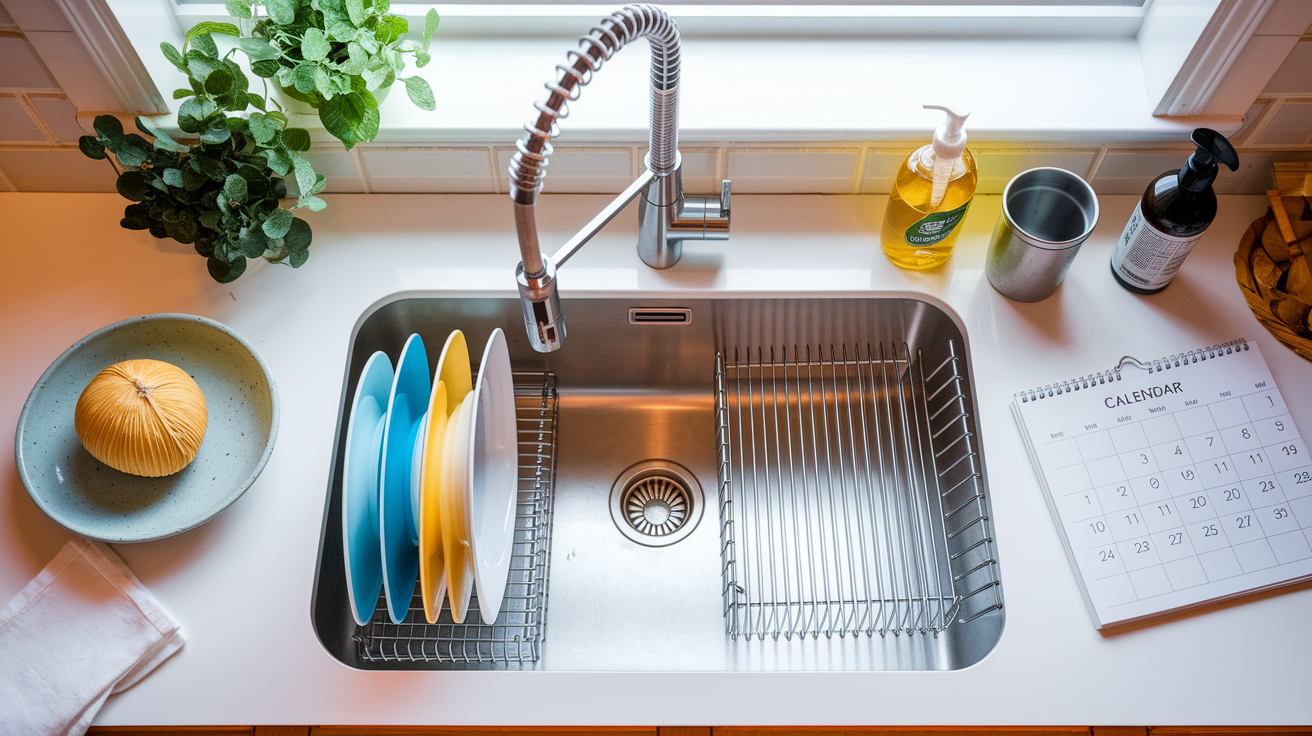
Stopping clogs before they start is always easier than clearing them once they’ve formed. A few simple habits protect your drains and save you from dealing with backups.
Here are the most effective prevention practices:
Install and use a drain strainer or basket in your sink opening to catch food particles, preventing them from entering the drain in the first place.
Scrape plates into the trash or compost bin before rinsing them in the sink, removing the bulk of food waste before any water flows.
Never pour cooking grease, oil, or fat down the drain. Pour cooled grease into a container, let it solidify, and throw it in the trash.
Run cold water before, during, and after using the garbage disposal to keep food particles moving through the pipes. Cold water also keeps grease solid so it can be chopped and flushed rather than coating pipes as liquid.
Perform a monthly maintenance flush by pouring 1/2 cup baking soda and 1/2 cup vinegar down the drain, letting it sit 15 minutes, then flushing with hot water.
Do a weekly hot water treatment by running hot tap water for 30 to 60 seconds to help clear minor buildup before it accumulates.
Keep starchy and fibrous foods out of both your drain and disposal. Rice, pasta, potato peels, celery, and corn husks all belong in the trash.
Avoid washing paper products down the sink including paper towels, napkins, and any type of wipe regardless of what the package claims.
Run water through your drains before leaving for vacation to flush out any accumulated material that might harden during periods of inactivity.
Remove and rinse your drain strainer daily to prevent buildup on the strainer itself from restricting water flow.
Building a monthly maintenance routine takes about five minutes and prevents most common clogs. Pick a recurring calendar reminder, do your baking soda and vinegar flush, and check under your sink for any signs of moisture that might indicate a small leak. Every few months, consider a deeper cleaning by removing the drain strainer and using a zip-it tool or small drain snake to pull out any hair and gunk that’s accumulated just below the drain opening.
These quarterly cleanings catch buildup in the early stages before it develops into a problem that affects drainage. The combination of daily attention to what goes down your drain and regular preventive maintenance creates a system where serious clogs become rare exceptions rather than frustrating regular occurrences.
When to Contact a Professional Plumber for Sink Clogs

Some situations need professional diagnosis and specialized tools that go beyond what you can do with a plunger and a bottle of vinegar. Knowing when to call for help prevents you from wasting time on DIY attempts that won’t solve the underlying problem.
Here are the scenarios that call for professional intervention:
Repeated clogs in the same location despite fixes. When you clear the drain successfully but it clogs again within days or weeks, you’re looking at a structural problem rather than a simple blockage.
Multiple drains backing up simultaneously. If your shower, toilet, or other fixtures gurgle, drain slowly, or back up when you use the kitchen sink, you’re dealing with a main sewer line issue affecting your whole house.
Foul sewage smells coming from the drain. These odors suggest problems with your main sewer line, venting system, or a significant buildup of organic matter in pipes you can’t reach.
Complete blockages that don’t respond to plunging or snaking. When your DIY tools can’t break through or pull out the clog, it’s either too far down the line or too dense for standard home equipment.
Visible pipe corrosion, leaks, or damage under the sink. These problems require pipe replacement or repair, not drain clearing.
Suspected venting problems causing persistent slow drainage in multiple fixtures without obvious clogs.
Situations requiring P-trap removal. While you can remove a P-trap yourself, many homeowners prefer having a plumber handle it to avoid creating leaks during reassembly.
A professional plumber brings specialized equipment that makes quick work of problems that resist home remedies. Camera inspection tools snake through your pipes with a tiny waterproof camera on the end, revealing exactly what’s happening inside your drain lines. These inspections identify cracks, severe mineral buildup, tree root intrusions, and structural issues that explain recurring clogs.
For severe blockages, plumbers use hydro jetting equipment that blasts high pressure water through pipes, scouring away years of grease buildup, soap scum, and scale deposits that hand snaking can’t touch. When you’ve got recurring problems that cleaning doesn’t solve, investing in a professional camera inspection shows you exactly what you’re dealing with and whether you need simple cleaning or more extensive pipe repairs.
Final Words
Food scraps, grease, and soap residue are the top causes behind what causes kitchen sink to clog, but you’re not stuck with slow drains or standing water. Catching warning signs early, scraping plates before rinsing, and skipping the temptation to pour oil down the drain can keep your pipes flowing smoothly.
If DIY fixes aren’t cutting it or you’re seeing water back up in multiple places, that’s when a pro with the right tools makes all the difference. A little prevention now saves you from a bigger headache later.
FAQ
How do I stop my kitchen sink from clogging?
You can stop your kitchen sink from clogging by using drain strainers to catch food particles, scraping plates into the trash before rinsing, never pouring grease or oil down the drain, running cold water when using the garbage disposal, and performing monthly hot water flushes with baking soda and vinegar to clear buildup before it hardens.
Why should you never use baking soda and vinegar to unclog a drain?
You shouldn’t necessarily avoid baking soda and vinegar for unclogging drains. This natural combination works for minor clogs and monthly maintenance when you pour half a cup of each, wait 10 to 15 minutes, then flush with boiling water. However, it won’t clear severe blockages that need professional tools.
What liquid do plumbers use to unclog drains?
Professional plumbers typically avoid chemical drain cleaners and instead use hydro jetting equipment that forces high-pressure water through pipes to clear blockages. For inspection and diagnosis, they use camera equipment rather than liquids. Chemical cleaners can damage pipes and create hazardous conditions, which is why professionals use mechanical methods instead.
Can Dawn dish soap unclog drains?
Dawn dish soap can help unclog drains when combined with hot or boiling water to break down grease buildup and dislodge smaller blockages. Pour several tablespoons of dish soap down the drain, follow with boiling water, and let it sit briefly. This method works best for grease-related clogs caught early.
What are the first signs my kitchen sink is starting to clog?
The first signs your kitchen sink is starting to clog include water draining slower than usual, standing water that takes several minutes to clear, gurgling sounds from the drain, foul odors from trapped food, and water backing up when you run the garbage disposal or dishwasher.
How does grease cause kitchen sink clogs?
Grease causes kitchen sink clogs by transforming from liquid to hard sticky solid when it cools and mixes with water. It coats pipe interiors, creating surfaces where soap scum and food particles stick and accumulate until passages narrow and complete blockages form over time.
Why do starchy foods clog kitchen sinks?
Starchy foods clog kitchen sinks because items like rice, pasta, beans, and potatoes absorb water and expand to many times their original size. Food left in the drain overnight can swell enough to completely block the pipe by morning, especially when combined with grease buildup.
What is the P-trap and why does it clog?
The P-trap is the curved pipe section under your sink designed to catch debris before it enters the main drain line. It clogs frequently because its shape creates a natural collection point where grease, food particles, and dropped objects settle and accumulate in the gradual pipe slope.
How does hard water contribute to sink clogs?
Hard water contributes to sink clogs by depositing minerals that calcify over time on pipe walls, creating rough surfaces that catch debris and progressively narrow the pipe diameter. When combined with dishwashing soap and grease, these mineral deposits form sticky coatings that accelerate blockage formation.
When should I call a plumber instead of trying DIY methods?
You should call a plumber instead of trying DIY methods when clogs repeatedly return to the same location, multiple drains back up simultaneously, you smell sewage odors suggesting main line issues, complete blockages don’t respond to plunging or snaking, or you notice visible pipe corrosion and leaks.