
Here’s your intro paragraph:
Your water heater has a part inside it that’s designed to rust away and die so your tank doesn’t. That’s not a flaw. It’s the whole point. The anode rod is a sacrificial metal component that attracts corrosive elements to itself, keeping them from eating through your tank walls and causing leaks. Most homeowners never think about it until their water turns rusty or starts smelling like rotten eggs. By then, the rod’s been gone for months, and the tank’s already taking damage. Understanding what this rod does and when to replace it can save you from an expensive emergency and years of extra life from your water heater.
What Is an Anode Rod and What Does It Do

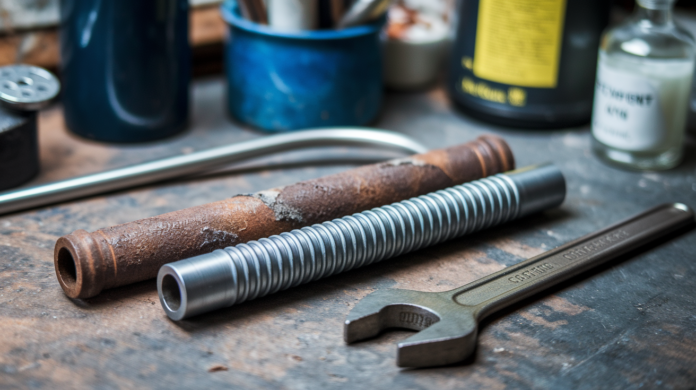
An anode rod is a sacrificial metal component that gets inserted into your water heater tank to prevent corrosion. It attracts rust causing elements to itself instead of letting them attack your tank walls. This long metal rod (usually magnesium or aluminum wrapped around a steel wire core) connects at the top of your tank and extends down into the water, where it performs a protective function most homeowners never actually see.
The anode rod works through electrolysis. When water flows into your tank, it carries positively charged corrosive ions like calcium and magnesium that naturally want to attack the iron and steel lining. The anode rod pulls these ions away from the tank walls, drawing them to its own surface instead. The ions convert the anode rod material into rust rather than attacking your tank’s interior, creating a barrier that keeps your tank intact.
This process is deliberately sacrificial. The rod corrodes and degrades over time so your tank doesn’t have to. As corrosive ions attack it, the rod slowly converts itself into rust, losing metal coating and eventually exposing the steel wire core underneath. It’s designed to take this damage, sacrificing its own integrity to preserve your water heater tank and prevent leaks, ruptures, and early failure.
Without a functioning anode rod, your tank has zero corrosion protection. The same ions that would attack the rod will instead eat away at your tank walls. Rust spots, leaks, and eventually catastrophic failure requiring expensive repairs or full replacement.
Common Anode Rod Materials and Their Differences

Anode rods come in three main materials. Each offers specific advantages depending on your water chemistry and household conditions. The material you choose affects how quickly the rod degrades, how well it protects your tank, and whether it addresses special water quality issues like sulfur odor.
Your water’s mineral content plays the biggest role in determining which material performs best. Hard water with high calcium and magnesium levels accelerates corrosion. Soft water creates different chemical conditions that favor certain rod types.
Magnesium Anode Rods
Magnesium rods are the most common type installed in residential water heaters. They work best in soft water conditions where they provide aggressive corrosion protection by attracting ions faster than other materials. Magnesium corrodes more readily than aluminum, making it highly effective at protecting your tank but also causing it to degrade faster in homes with hard water or heavy usage.
Aluminum Anode Rods
Aluminum rods perform better in hard water environments where high mineral content would quickly consume a magnesium rod. They last longer than magnesium in these conditions and cost less to replace, making them practical for areas with hard water. Aluminum rods corrode more slowly, providing steady protection over a longer period without the rapid degradation that magnesium experiences in mineral rich water.
Zinc Alloy Anode Rods
Zinc alloy rods combine aluminum with a small percentage of zinc, creating a specialty rod designed to eliminate sulfur smells from your hot water. If your water has that rotten egg odor caused by sulfur bacteria, a zinc alloy rod neutralizes the smell while still providing corrosion protection. These combination rods cost more but solve two problems at once.
Installing a water softener reduces mineral buildup and extends the life of any anode rod type by lowering the concentration of corrosive ions in your water supply.
When to Replace Your Anode Rod: Lifespan and Warning Signs
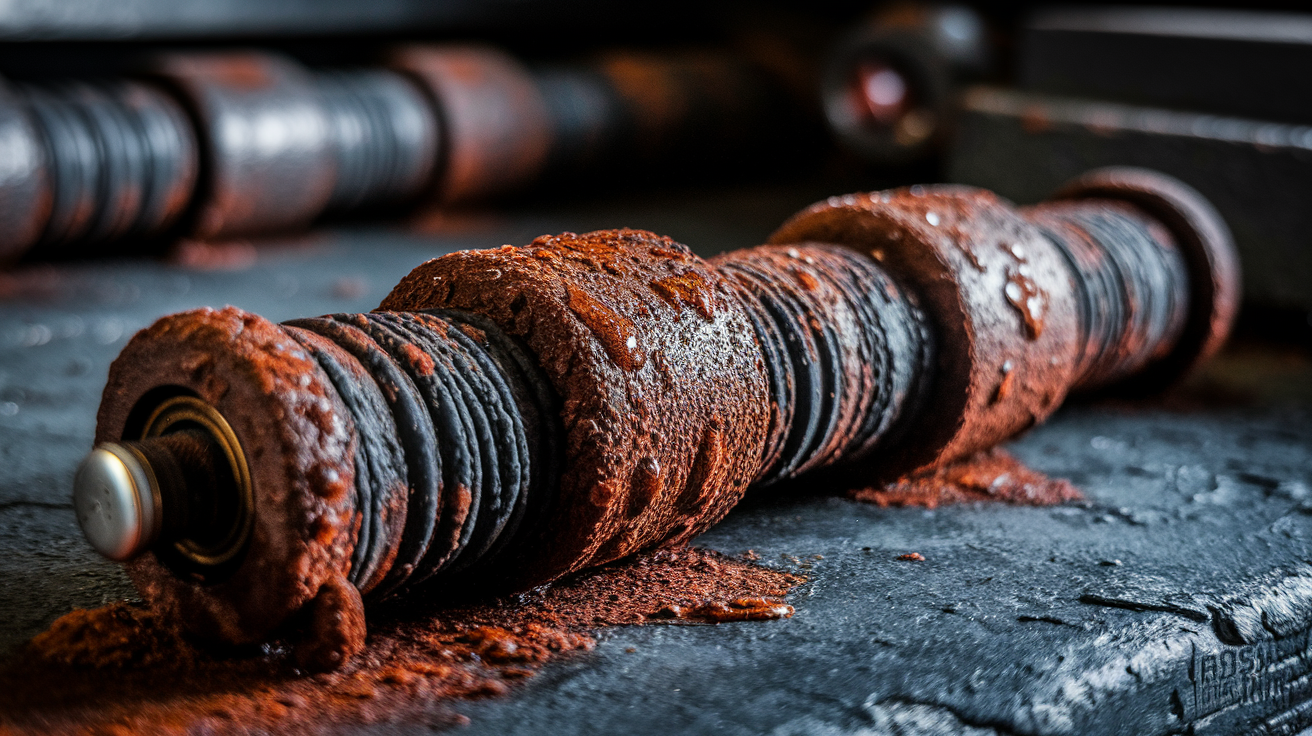
The average anode rod lasts between 3 to 5 years, but this range varies significantly based on your water’s mineral content, daily hot water usage, and temperature settings. Water hardness is the single biggest factor affecting degradation rate. High mineral content accelerates the chemical reaction that corrodes the rod, consuming the protective metal coating faster and shortening its useful life.
Usage patterns also impact how quickly your rod degrades. Homes with heavy hot water demand push more water through the tank, exposing the anode rod to more corrosive ions and speeding up deterioration. Higher temperature settings increase chemical reaction rates, causing the rod to sacrifice itself faster to protect the tank. In areas with extremely hard water or large households, rods can fail in as little as 2 years.
Anode rods fail silently. There’s no light, alarm, or obvious external sign when the rod stops working. By the time you notice symptoms, the rod has usually been depleted for months, and your tank may already be developing rust spots. Catching these indirect warning signs early is critical to preventing permanent tank damage.
Key warning signs that your anode rod may be depleted:
- Rusty or discolored water coming from hot water taps
- Rotten egg smell or strong sulfur odor from hot water
- Popping, rumbling, or banging sounds from the tank caused by sediment buildup
- Reduced hot water supply or water that doesn’t stay hot as long
- Visible rust stains or corrosion on the exterior tank surface
- Water heater approaching or exceeding 5 years old without rod inspection
- Metallic taste in hot water that wasn’t present before
Most manufacturers recommend annual inspections starting at year 3. During inspection, if more than 6 inches of the steel core wire is exposed, or if less than half an inch of protective metal coating remains on any section, the rod needs immediate replacement. These measurements indicate the rod is near the end of its protective capacity.
Once the anode rod fully degrades, your tank has zero protection against rust. Corrosive ions that were attacking the rod now attack your tank walls instead. Rust, corrosion, leaks, and eventual ruptures that require expensive emergency repairs or full replacement. Catching degradation early prevents catastrophic tank failure and the water damage that comes with it.
How to Inspect and Replace an Anode Rod
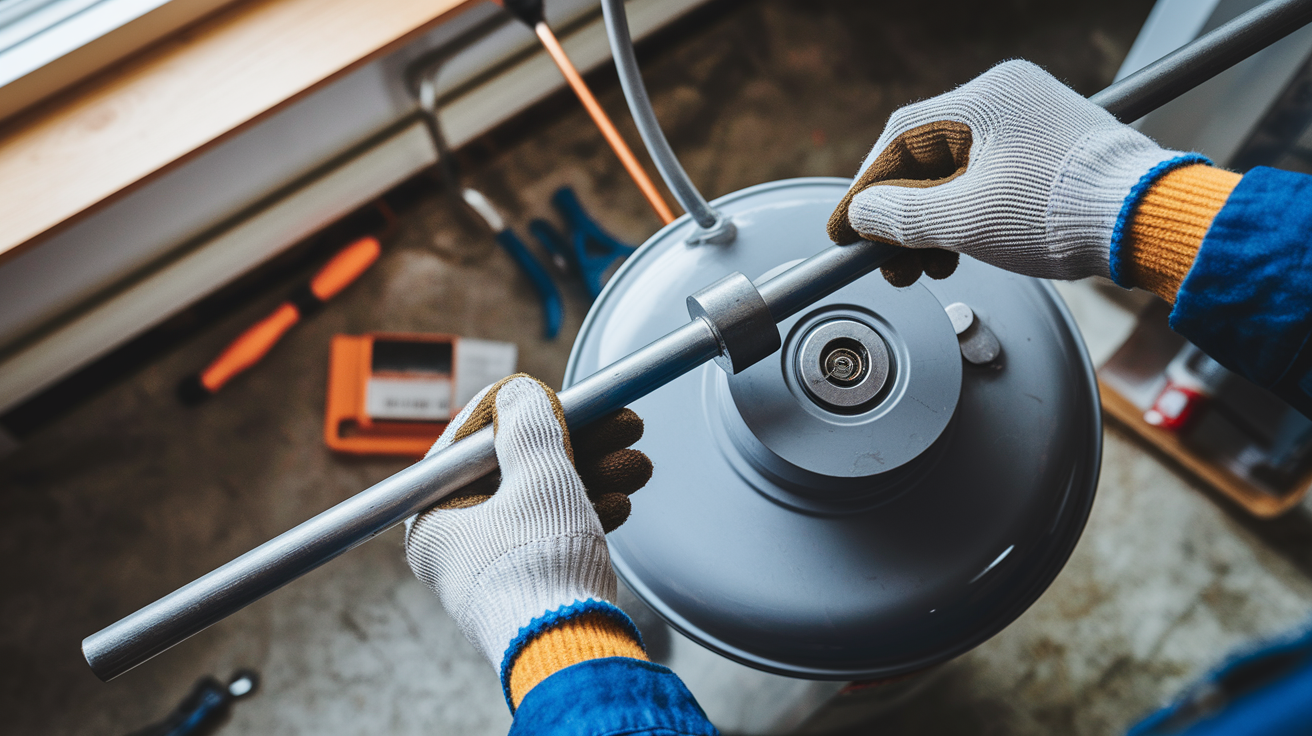
Anode rod replacement is technically feasible for DIYers, but it comes with real challenges. Access can be difficult depending on where your water heater sits. Seized rods often require serious torque to loosen. And there’s risk of damaging tank threads if you apply force incorrectly. Many homeowners start the job and end up calling a professional when the rod won’t budge.
The decision between DIY and professional service depends on several factors. Can you access the rod’s hex head without obstruction? Do you own or can you rent the proper tools? Your comfort level working with plumbing matters too. Warranty requirements may specify professional service. And there’s the physical reality of applying the 40+ foot pounds of torque often needed to break a rod loose.
Inspection Process
Start by locating the hex head on top of your water heater tank. It’s usually a large bolt head near the center or side of the tank’s top surface. Turn off the power supply at the breaker for electric heaters or set the gas control to “pilot” for gas models, then shut off the cold water supply valve. Drain a few gallons from the tank using the drain valve to reduce pressure. Use a socket wrench with the correct size (typically 1 1/16 inch, but check your specific model) to access the hex head. If you can remove the rod, examine its condition carefully. More than 6 inches of exposed steel core wire, less than half an inch of metal coating remaining, or heavy calcium buildup covering the entire rod means replacement is needed.
Replacement Steps
Turn off all power and water supplies following the same safety steps as inspection. Drain several gallons from the tank to reduce internal pressure. If the rod looks seized or hasn’t been removed in years, apply penetrating oil around the threads and let it sit for 15 minutes. Use a breaker bar or impact wrench to loosen the old rod. This often requires significant force, commonly 40 foot pounds or more. Remove the rod completely, taking care with ceiling clearance since standard rods are 42 to 44 inches long. Clean the threads in the tank opening. Apply Teflon tape to the threads of your new rod, wrapping clockwise 3 to 4 times. Install the new rod by threading it in by hand until snug, then tighten with a wrench until firmly seated but not over torqued. Refill the tank completely, open a hot water faucet to purge air from the lines, then restore power and test for proper heating.
Professional service provides several advantages beyond just muscle. Plumbers correctly diagnose rod condition and select the right replacement material for your specific water chemistry. They preserve your warranty by following manufacturer specifications. They inspect your entire system during the visit, catching other potential issues before they become problems. Most importantly, they’ve got experience removing seized rods without damaging the tank threads or top surface, which can happen when DIYers apply too much force in the wrong direction.
Situations that warrant calling a professional instead of DIY:
- Your water heater warranty is still active and requires professional service
- You have no prior plumbing experience or comfort working with water heater components
- You notice signs of tank damage beyond just a degraded anode rod, like active leaks or rust spots
- Limited ceiling clearance makes removing a standard straight rod physically impossible
- The rod is completely seized and won’t budge even with penetrating oil and a breaker bar
Annual professional inspection by a plumber is recommended to determine when replacement is needed, stay ahead of problems, and extend your water heater’s overall lifespan by years.
Anode Rod Design Variations for Different Water Heaters
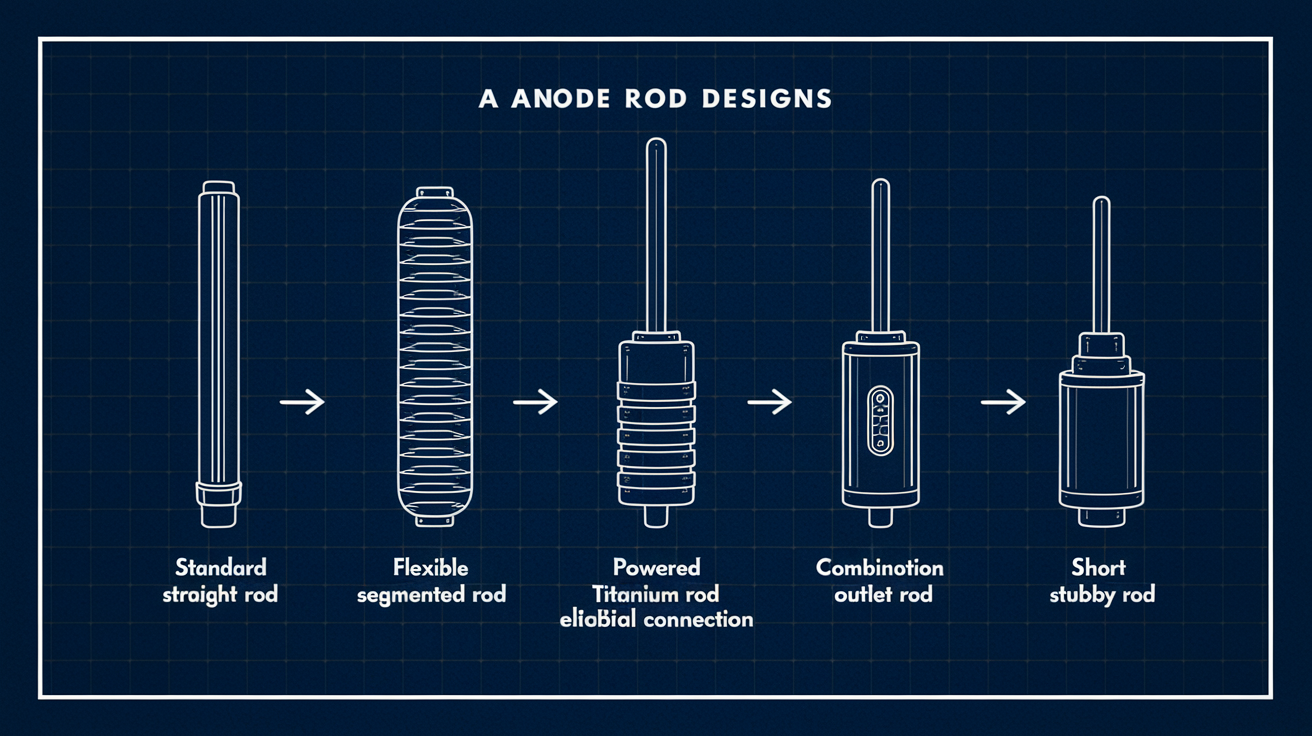
Not all anode rods are straight, standard rods that drop vertically into your tank. Specialty designs exist to solve specific installation challenges and performance issues. Limited ceiling clearance, problematic water chemistry that rapidly consumes standard rods, and situations where you need dual function components.
| Rod Type | Best For | Key Benefit |
|---|---|---|
| Standard Straight | Conventional storage tanks with adequate ceiling clearance | Most affordable, widely available, proven protection |
| Flexible/Segmented | Tight spaces, water heaters in closets or under low ceilings | Bends during installation, fits where straight rods can’t be removed |
| Powered/Electric | Hard water areas, homes with recurring anode rod failure | Never needs replacement, provides continuous protection indefinitely |
| Combination Anode/Outlet | Tanks where anode port is combined with hot water outlet | Dual function design, necessary when no dedicated anode port exists |
| Short/Stubby | Compact water heaters, under counter models, limited tank height | Shorter length matches smaller tank dimensions |
Powered anodes use a titanium rod with a low voltage electrical current instead of sacrificial metal. The current creates the same electrolysis effect that protects your tank, but nothing corrodes or needs replacing. These systems cost significantly more upfront ($200 to $300 versus $20 to $60 for standard rods), but they eliminate ongoing maintenance and work especially well in homes with problematic water that eats through standard rods in less than 2 years. You install them once and they provide continuous corrosion protection for the life of your water heater.
Flexible rods solve the ceiling clearance problem that stops many homeowners from replacing standard rods. If your water heater sits in a basement with ductwork above it, or in a closet with limited vertical space, a flexible segmented rod bends during installation so you can remove and replace it without needing 44 inches of clear height above the tank. Combination rods serve as both your hot water outlet connection and anode protection in tanks designed without a separate dedicated anode port, providing corrosion protection while delivering hot water to your home’s plumbing.
Cost Considerations for Anode Rod Maintenance

Standard anode rods cost between $20 and $60 depending on material and length. Magnesium rods typically run $25 to $40, aluminum rods cost $20 to $35, and specialty zinc alloy rods range from $40 to $60. Powered anode systems cost significantly more at $200 to $300 for the complete unit, but they never need replacement.
Professional anode rod inspection and replacement typically costs $150 to $300 depending on your location, the plumber’s rates, and whether the rod is seized. This service includes turning off power and water, draining the tank, removing the old rod (which can take significant time if it’s stuck), installing and sealing the new rod, refilling the system, and testing for proper operation. DIY replacement saves the labor cost but requires you to have or rent the proper tools (breaker bar, large socket, possibly an impact wrench) and invest the time to do it correctly.
Compare these costs to the price of neglect. Full water heater replacement runs $800 to $2,500 or more depending on tank size, fuel type, and installation complexity. That doesn’t include potential water damage if your tank ruptures, which can add thousands more in flooring, drywall, and mold remediation expenses.
Powered anode systems make sense as long term investments if you plan to keep your water heater for its full lifespan. Spending $250 once eliminates the need for inspections and replacements every 3 to 5 years. Over a 10 year water heater life, you’d typically replace a standard rod twice at $200 to $400 in professional service costs, making the powered option cost neutral while providing better protection and zero maintenance hassle.
Final Words
An anode rod protects your water heater from the inside out, sacrificing itself so your tank doesn’t rust through and fail.
Regular inspection every year and replacement when needed keeps that protection working. It’s a small maintenance step that prevents expensive tank replacements and water damage down the road.
If you’re not sure what does an anode rod do or whether yours needs attention, we can check it during a routine service visit. We’ll show you what we find and explain what it means in plain language.
Catching wear early means your water heater keeps running reliably for years.
FAQ
What are the symptoms of a bad anode rod?
The symptoms of a bad anode rod include rusty or discolored hot water, a rotten egg sulfur smell, popping or rumbling sounds from the tank, reduced hot water supply, visible rust on the tank exterior, and a metallic taste in your water.
What happens if you don’t change your anode rod?
If you don’t change your anode rod, the tank loses its corrosion protection and begins to rust from the inside. This leads to leaks, ruptures, and eventual tank failure that requires expensive repairs or full water heater replacement, often costing $800 to $2,500 or more.
How often do anode rods need to be changed?
Anode rods need to be changed every 3 to 5 years depending on your water quality and usage patterns. Hard water with high mineral content accelerates degradation, so annual inspections starting at year 3 help catch problems early and prevent tank damage.
What happens if you remove the anode rod from a water heater?
If you remove the anode rod from a water heater and don’t replace it, the tank has zero protection against corrosion. The tank walls will rust quickly, leading to leaks, structural failure, and costly replacement within months to a few years instead of lasting 10+ years.
Can a homeowner replace an anode rod themselves?
A homeowner can replace an anode rod themselves if they have basic plumbing skills, proper tools like a breaker bar and socket wrench, and adequate ceiling clearance. However, seized rods requiring high torque and warranty considerations often make professional service the safer choice.
How do you know when an anode rod is completely worn out?
You know an anode rod is completely worn out when more than 6 inches of the steel core wire is exposed or less than half an inch of coating thickness remains on the rod. At this point, the rod can no longer protect the tank and needs immediate replacement.
Does water hardness affect how long an anode rod lasts?
Water hardness significantly affects how long an anode rod lasts because high mineral content accelerates the corrosion process. Hard water can reduce anode rod lifespan to 2 to 3 years, while soft water may extend it beyond 5 years.
Are all anode rods the same material?
All anode rods are not the same material. They come in magnesium (best for soft water), aluminum (better for hard water with longer lifespan), and zinc alloy (specifically for eliminating sulfur smells), each performing differently based on your water chemistry.
What is a powered anode rod and is it worth it?
A powered anode rod is a titanium rod that uses electrical current to provide continuous corrosion protection without ever needing replacement. While costing $200 to $300 upfront, it eliminates ongoing maintenance and is worth it for long-term savings and convenience.
Can you install a flexible anode rod in any water heater?
You can install a flexible anode rod in any water heater that has limited ceiling clearance where a standard straight rod cannot be removed vertically. These segmented designs bend during installation, solving tight-space access problems without compromising protection.