

Ever notice how a leak can hide for months while silently draining your wallet and damaging your home? Standard pressure tests confirm something’s wrong, but they won’t tell you where that pipe is actually leaking six feet underground or behind a finished wall. Tracer gas leak detection solves this by injecting specialized gas into your system and tracking exactly where it escapes using sensitive detection equipment. This method pinpoints leaks you can’t see, smell, or reach, giving you the exact location instead of forcing you to tear up floors and guess.
Understanding Tracer Gas Leak Detection: Gases, Equipment, and Process

Tracer gas leak detection works by putting a specialized gas into a sealed system and tracking where it escapes using sensitive detection equipment. This method finds exact leak locations in pipes, vessels, and sealed components where visual inspection and pressure testing don’t cut it. The two main tracer gases are helium for maximum sensitivity and a 5% hydrogen/95% nitrogen mixture for cost effective general testing.
These gases work because their molecules are tiny, which lets them squeeze through leak paths that bigger molecules can’t pass through. Helium detects leaks as small as 10⁻⁹ mbar·l/s, making it the most sensitive option for critical applications. The hydrogen nitrogen mixture detects leaks down to 10⁻⁶ mbar·l/s while costing about 25% of what helium costs. Both gases are non-toxic and safe at testing concentrations.
Detection equipment splits into two categories based on which gas you’re tracking. Mass spectrometers analyze helium with extreme precision for high stakes applications like aerospace systems and medical devices. Portable sniffer probes with electrochemical or impact sensors detect hydrogen, offering typical sensitivity around 25 parts per million. A device like the Loktracer TLD500 represents this category, providing reliable detection at roughly one third the cost of comparable helium systems.
The detection process starts by pressurizing the system with tracer gas after sealing all openings. Gas escapes through any leak points and rises or disperses to where detection equipment can pick it up. The operator moves the sniffer probe systematically around suspected areas or monitors readings from detection equipment positioned at strategic points. When the sensor encounters tracer gas, it signals the leak location through audible alerts or visual readouts.
This method excels at pinpointing exact leak locations because the gas follows the path of least resistance through materials. In underground pipes, tracer gas might travel through soil, emerge at the surface through cracks in concrete, or seep up through gravel beds. Unlike pressure decay testing that only confirms a leak exists somewhere in the system, or visual methods that miss hidden leaks, tracer gas detection guides you directly to the source within a 3 foot radius under typical conditions.
Primary Tracer Gases Used in Leak Detection

Three tracer gases dominate professional leak detection work, each offering distinct advantages based on sensitivity requirements, budget, and application type.
Helium for Leak Detection
Helium provides unmatched detection sensitivity at 10⁻⁹ mbar·l/s. That means it can identify leaks so small they’d take years to cause noticeable system failures. This inert gas is completely non-toxic and non-flammable, making it safe for testing food processing equipment, medical devices, and any application where contamination concerns exist. Mass spectrometer leak detectors analyze helium with exceptional precision, which is why aerospace manufacturers rely on helium testing for fuel systems and hydraulic components where zero failure tolerance applies. The main drawback is cost. Helium is a mined gas with limited availability, and prices reflect that scarcity. High precision industries accept this expense because the sensitivity requirements justify the investment.
Hydrogen Nitrogen Mixture
The 5% hydrogen/95% nitrogen mixture delivers reliable leak detection at 10⁻⁶ mbar·l/s sensitivity while costing approximately 25% of what helium costs. This composition stays well below flammability thresholds and is labeled as green non-combustible on cylinders. The mixture is non-toxic and safe at testing concentrations. Hydrogen molecules are smaller and higher energy than helium, which means they move through dirt, asphalt, and concrete faster and more easily. This penetration advantage makes hydrogen nitrogen mixtures particularly effective for underground pipe testing and building structure applications. Industrial grade gas from suppliers like Prax, AirGas, or local welding suppliers costs about $60 to $70 per cylinder. A standard cylinder contains roughly 250 cubic feet, which handles multiple jobs before requiring replacement.
SF6 Sulfur Hexafluoride
SF6 serves specialized applications, particularly in electrical equipment testing and high voltage systems. This heavy gas tends to settle in low areas rather than rise like hydrogen or helium, making it useful for detecting leaks in underground vaults, cable ducts, and sealed electrical components. SF6 detection equipment tracks this gas with good sensitivity while the gas itself poses no flammability risk. Applications include transformer testing, switchgear leak detection, and verifying seals on gas insulated electrical systems. The gas is more expensive than hydrogen mixtures but less costly than helium.
| Gas Type | Detection Sensitivity | Safety Profile | Relative Cost | Best Applications |
|---|---|---|---|---|
| Helium | 10⁻⁹ mbar·l/s | Non-toxic, non-flammable, inert | Highest (4x hydrogen cost) | Aerospace systems, medical devices, semiconductor manufacturing, critical zero failure applications |
| 5% Hydrogen / 95% Nitrogen | 10⁻⁶ mbar·l/s | Non-flammable at test concentration, non-toxic | Lowest (25% of helium cost) | Underground pipes, HVAC systems, pool plumbing, building structures, general industrial testing |
| SF6 Sulfur Hexafluoride | 10⁻⁶ to 10⁻⁷ mbar·l/s | Non-flammable, settles in low areas | Moderate | Electrical equipment, transformers, underground vaults, gas insulated switchgear |
Four Core Tracer Gas Testing Methods

Professional leak detection relies on four distinct approaches, each designed for specific system configurations and accessibility constraints.
Sniffing Method
This technique pressurizes the system with tracer gas and uses a handheld sniffer probe to detect escaping gas around potential leak points. The operator moves the probe systematically around joints, welds, seams, and suspected weak points while monitoring audio and visual feedback. In automotive fuel systems, sniffing identifies leaks in fuel lines, injector connections, and tank seams where pressure integrity directly affects safety and emissions compliance. Aerospace hydraulic systems use this method because access to exterior surfaces is straightforward while the consequences of hydraulic failures are severe. HVAC radiators and heat exchangers benefit from sniffing because the technician can reach around connection points and along tube runs without disassembling the unit. The method is portable, requires minimal setup, and delivers precise location information. Choose sniffing when you can access the exterior surfaces of a pressurized system and need to pinpoint leaks quickly without elaborate test fixtures.
Bombing (Accumulation) Method
Sealed objects get placed in a pressurized chamber filled with tracer gas, which penetrates through any leak paths into the interior. After sufficient exposure time, the objects are removed and immediately tested with a sniffer probe that detects gas inside the unit or escaping from openings. Medical devices like catheters must maintain sterility, so manufacturers can’t inject tracer gas directly through the device without contaminating it. The bombing method surrounds the sealed device with gas, allowing leaks to reveal themselves without compromising sterility. Electronics battery cells use this approach because the sealed construction makes internal gas injection impossible, but external pressurization finds casing leaks before assembly into finished products. Waterproof enclosures for electronics, instruments, and underwater equipment get bombed to verify seal integrity comprehensively. The method ensures uniform gas penetration from all sides and suits high volume production testing where batches of identical items need verification. Select bombing when testing sealed objects that can’t be internally pressurized or when verifying seals around complete assemblies.
Spray Method
Tracer gas is applied externally around suspected leak points while a detector positioned inside the system senses gas that penetrates through leaks. This reverses the typical flow direction and works when you can access the interior but external access is limited. Industrial machinery joints on large equipment often have internal access through inspection ports but external areas are blocked by guards, insulation, or structural components. HVAC ductwork installed in walls, ceilings, and confined spaces allows detector placement inside the duct system while spray testing occurs from the outside where leaks are suspected. Pipeline welds in the field benefit from spray testing when sections of pipe can be isolated with detectors placed at access points while welders or inspectors spray suspected weld areas. The method is quick because you focus on suspected areas rather than testing the entire system. Choose spray testing when internal detector placement is easier than external access and you’ve identified likely leak locations from other evidence like stains, corrosion, or pressure drop patterns.
Vacuum Method
Objects are placed in a vacuum chamber while tracer gas is sprayed around the exterior. Detection equipment inside the chamber or connected to it identifies gas entering through leaks. This provides the highest accuracy for critical applications because the vacuum pulls gas through even the smallest leak paths. Aerospace fuel systems undergo vacuum testing because fuel leaks at altitude or during high stress flight conditions can’t be tolerated. Medical sterile containers and pacemakers must maintain absolute seal integrity for patient safety, justifying the expense and complexity of vacuum testing. Semiconductor vacuum systems require this level of verification because manufacturing processes depend on maintaining specific vacuum levels, and even tiny leaks compromise product quality. The method requires expensive vacuum chamber equipment and longer test cycles, but critical applications where failure risks are unacceptable make this investment necessary. Choose vacuum testing when your application absolutely can’t tolerate leaks, when regulatory requirements demand this level of verification, or when other methods lack sufficient sensitivity for your requirements.
Essential Detection Equipment and Technology

Tracer gas detection divides into two main equipment categories. Mass spectrometers that analyze helium with extreme sensitivity, and electrochemical or thermal conductivity sensors that detect hydrogen cost effectively.
Mass spectrometer leak detectors ionize gas samples and use magnetic fields to separate helium atoms from other molecules based on their mass to charge ratio. This physical separation provides detection sensitivity from 10⁻⁹ down to 10⁻¹² mbar·l/s. That means these instruments can identify leaks losing less than one milliliter of gas per year. Aerospace manufacturers testing fuel system components, medical device makers verifying implantable device seals, and semiconductor fabricators maintaining vacuum chamber integrity rely on this precision. The equipment is typically cart mounted or bench mounted, requires calibration with reference leak standards, and costs significantly more than portable hydrogen detectors. When leak detection directly impacts safety, regulatory compliance, or product functionality, the sensitivity and reliability justify the investment.
Portable sniffer probes and handheld detectors use impact sensors, thermal conductivity sensors, or electrochemical cells to identify hydrogen in the hydrogen nitrogen tracer gas mixture. These sensors respond to gas concentration changes typically as low as 25 parts per million when positioned near a leak source. Equipment like the Loktracer TLD500 represents this category with straightforward operation: power on, perform a baseline check, and sweep the probe around suspected leak areas while watching for audible and visual alerts. Sensor lifespan typically runs 2 to 5 years before response degradation requires replacement. Unit replacement proves more cost effective than sensor repair after this period. These systems cost roughly one third the price of comparable helium detection equipment while providing detection accuracy sufficient for underground pipes, pool plumbing, HVAC systems, and general industrial applications.
Equipment selection depends on four main factors. Required sensitivity comes first because applications with zero failure tolerance need mass spectrometer precision while most building systems and infrastructure work with portable detector sensitivity. Portability matters when testing occurs in the field, on job sites, or across multiple locations rather than in controlled lab environments. Cost constraints affect smaller operations and companies just entering leak detection services, making hydrogen detection systems an accessible entry point. Maintenance considerations include calibration requirements, sensor replacement schedules, and whether your operation has the technical capability to maintain precision equipment or needs simpler portable units that require minimal upkeep.
Step by Step Tracer Gas Leak Detection Procedure
Proper preparation and systematic procedure separate reliable leak detection from guesswork and missed findings. The basic framework applies across different systems, though specific details vary.
Small adjustments in procedure account for whether you’re using the sniffing method on accessible pipes, bombing sealed components in a chamber, or spray testing large industrial systems. System type also matters because underground pipes require different timing than exposed HVAC ductwork.
-
Isolate and seal the system. Close valves, install test plugs at pipe ends, cap openings, and verify all access points are sealed except for the tracer gas injection point. This ensures gas pressurizes the test section rather than escaping through intentional openings.
-
Remove all water and liquids. Water at an unknown leak location blocks tracer gas from escaping, especially problematic with small leaks. Blow compressed air through pipes or drain vessels completely before introducing tracer gas.
-
Measure baseline background levels. Check ambient tracer gas concentration with your detector before testing begins. Background contamination from previous tests or nearby operations can cause false positives if you don’t establish a baseline reading.
-
Inject tracer gas into the system. Connect your gas cylinder through either a pressure regulator or flow regulator to the system. A typical residential pool pipe requires 1 to 3 cubic feet of gas to fill initially. Industrial systems may need significantly more based on volume.
-
Pressurize to appropriate levels. Apply enough pressure to force gas through leak paths but not so much that you damage the system. Pressure regulators prevent over pressurization on small leaks. Flow meters help conserve gas on larger leaks by controlling injection rate.
-
Wait for detection time based on depth and materials. Pipes 2 feet below ground may show detectable gas at the surface within a few minutes. Deeper pipes or systems buried under dense materials require longer runtime before surface detection begins. Underground pool pipes often need 15 to 30 minutes.
-
Conduct systematic detection sweeps. Move your sniffer probe slowly across the test area in a grid pattern. Cover suspected leak zones thoroughly. In concrete slabs, gas often emerges through cracks or slab edges rather than directly above the leak due to following the path of least resistance.
-
Identify and mark leak locations. When detector readings spike, slow your sweep to pinpoint the strongest signal. Leak location accuracy reaches within a 3 foot radius at ground level under unimpeded conditions. Mark the spot clearly.
-
Drill strategic access holes if needed. Small drilled holes through concrete improve location accuracy by allowing gas to escape more directly above the actual leak rather than migrating to existing cracks.
-
Document findings with photos and measurements. Record detector readings, leak location coordinates, gas concentration levels, and photographic evidence of where leaks were identified.
-
Verify by retesting after repairs. Conduct a complete retest after repair work to confirm leaks are resolved and the system now holds pressure without gas escape.
Test duration and detection timing depend heavily on system configuration and environmental factors. Shallow accessible pipes in loose soil show results quickly. Deep pipes under concrete slabs need patience. Keep gas flowing throughout the detection phase because stopping injection may allow dispersed gas to dissipate before you complete your sweep. Thorough documentation protects against disputes and provides before and after proof that repairs succeeded.
Detection Sensitivity and Measurement Limits

Detection sensitivity describes the smallest leak a system can reliably identify, typically measured in millibars times liters per second (mbar·l/s) or parts per million (ppm) depending on the equipment type.
Mass spectrometer helium detectors achieve sensitivity down to 10⁻⁹ mbar·l/s, which translates to detecting gas loss rates so small that a sealed container would take decades to show noticeable pressure drop. To put this in perspective, a leak losing one cubic centimeter of helium per year is detectable. This extreme sensitivity serves applications where even microscopic leaks compromise function or safety. Hydrogen detection systems working with the 5% hydrogen/95% nitrogen mixture typically reach sensitivity around 10⁻⁶ mbar·l/s. This is less sensitive than helium but still identifies leaks far smaller than pressure decay testing or visual inspection could find. Portable units like the Loktracer TLD500 measure at 25 ppm or less when the sensor is positioned at the leak source, which exceeds requirements for most building infrastructure and industrial applications.
Location accuracy at ground level typically falls within a 3 foot radius of the strongest gas signal under unimpeded conditions. This radius expands when gas migrates through concrete, follows underground utility conduits, or disperses in highly porous soil. Material type significantly affects precision because gas follows the path of least resistance rather than traveling straight up from the leak. A pipe leaking under a concrete slab often shows gas emergence at slab edges or through existing cracks several feet away from the actual leak location. Pipe depth matters because deeper leaks allow more lateral gas migration before reaching the surface. Ventilation and air movement can carry gas away from the leak point before you detect it, especially in windy outdoor conditions or mechanically ventilated indoor spaces. Drilling small access holes through concrete or asphalt directly improves accuracy by creating an easier escape path above the suspected leak location, tightening the detection radius to within 1 foot.
Response time varies with system volume, gas concentration, and environmental conditions. Small sealed components like valves or fittings show immediate detector response when gas escapes. Large pipe systems require time for gas to travel from the injection point to the leak location and then through surrounding materials to where detection occurs. Underground applications involve the longest response times because gas must permeate through soil and work its way to the surface. Temperature affects gas movement speed because warmer conditions increase molecular activity. Soil moisture slows gas migration because water saturated soil is denser than dry soil. Patience during the detection phase prevents false negatives where you conclude no leak exists simply because you didn’t wait long enough for the gas to arrive at detectable concentrations.
Safety Protocols and Regulatory Considerations
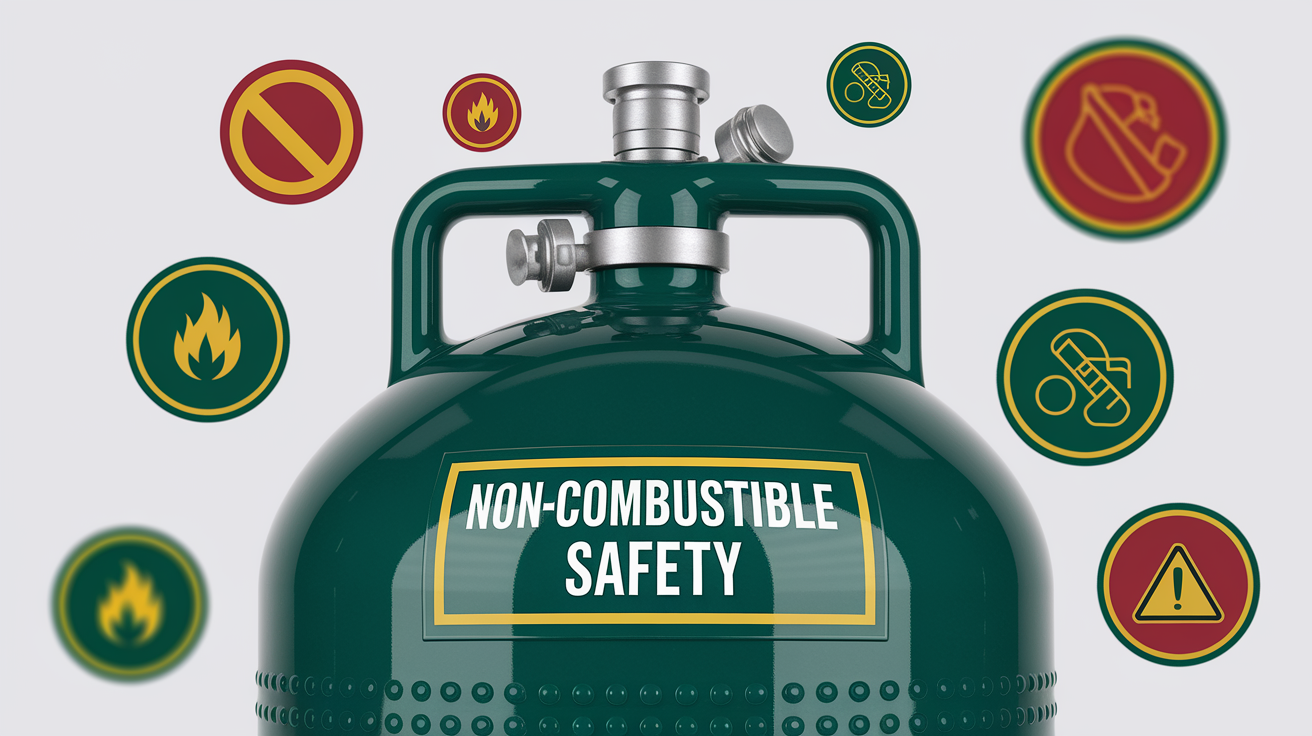
Safety concerns frequently arise regarding tracer gas testing, particularly questions about whether hydrogen based mixtures present explosion or fire hazards.
The 5% hydrogen/95% nitrogen mixture used in professional leak detection is non-flammable and non-combustible at this concentration. Cylinders carry green non-combustible labels to indicate this safety classification. Hydrogen only becomes flammable when its concentration in air reaches approximately 4% to 75%. The testing mixture starts at 5% hydrogen mixed with nitrogen, not air. When this mixture escapes through leaks and disperses into the atmosphere, the hydrogen concentration decreases further, never approaching flammable levels during normal testing procedures. Helium presents even fewer safety concerns because it’s a completely inert noble gas that doesn’t react with other substances under any conditions.
Both tracer gases are non-toxic and pose no health risks at testing concentrations. Helium is the same gas used safely in party balloons and medical applications. The hydrogen nitrogen mixture contains gases that make up the majority of Earth’s atmosphere. Breathing tracer gas directly from a cylinder would displace oxygen and cause asphyxiation, but the same is true of any compressed gas including compressed air. Normal dispersion during leak testing results in atmospheric concentrations far too low to affect breathing or health.
Ventilation requirements for indoor testing depend on space size, test duration, and gas quantities. Small leaks releasing minimal gas in large well ventilated spaces need no special air circulation. Extended testing in confined spaces like crawlspaces, utility tunnels, or small mechanical rooms benefits from portable fans or natural ventilation to prevent gas accumulation. The goal isn’t preventing dangerous concentrations because the gas mixture is non-flammable, but rather maintaining clear baseline readings for accurate detection. Excessive gas buildup from large leaks or repeated testing in unventilated areas can create background contamination that reduces detection sensitivity. Opening doors, running exhaust fans, or allowing test areas to air out between test runs maintains optimal detection conditions.
Operator training focuses on equipment operation, proper test procedures, and result interpretation rather than hazardous materials handling. Understanding how tracer gas behaves through different materials, knowing appropriate pressures for various systems, and recognizing when readings indicate genuine leaks versus background interference requires hands on practice. Most equipment manufacturers offer training courses covering their specific detection systems. Industry certifications exist for non-destructive testing professionals, though regulatory requirements vary by industry and application type.
Regulatory compliance considerations depend on what you’re testing. Pressure vessels, boilers, and industrial systems often fall under ASME codes or state pressure vessel regulations that specify acceptable leak rates and testing methods. Medical devices require FDA approval processes that include leak testing documentation. Aerospace components must meet FAA or military specifications. Underground storage tanks follow EPA regulations. Each regulatory framework defines acceptance criteria, documentation requirements, and in some cases mandates specific testing methods. Tracer gas testing serves as an accepted verification method across these industries because it provides quantitative measurements, creates documentation, and detects leaks below the thresholds where safety or environmental concerns arise.
Calibration Requirements and Quality Control

Calibration maintains detection accuracy and ensures equipment continues meeting sensitivity requirements throughout its service life.
Mass spectrometers and portable detectors drift over time due to sensor aging, contamination exposure, and electronic component changes. Without regular calibration, readings become unreliable and you either miss small leaks or get false alarms from equipment responding incorrectly. Professional credibility depends on delivering accurate results, which requires knowing your equipment performs as specified. Regulatory compliance in industries like medical device manufacturing or aerospace often mandates documented calibration at specified intervals.
Calibration procedures start with reference gas standards that contain known concentrations of the tracer gas. For helium systems, standard leaks certified to release specific flow rates provide calibration references. Hydrogen detection systems use calibration gas cylinders containing precisely measured hydrogen concentrations. The process involves exposing the detector to the reference standard and adjusting sensitivity until readings match the known value. Baseline readings get established by testing the sensor response in clean air with no tracer gas present, verifying zero reading accuracy. Alarm thresholds are verified by gradually increasing gas concentration and confirming the detector signals appropriately at programmed trigger levels. Every calibration gets documented with the date, reference standard used, readings before and after adjustment, and technician performing the work.
Calibration frequency depends on manufacturer recommendations, regulatory requirements, and usage patterns. Most manufacturers specify annual calibration under normal use conditions. Heavy use or harsh environmental exposure may require quarterly or even monthly verification. Regulatory requirements in pharmaceutical, aerospace, or medical device industries often mandate specific intervals regardless of manufacturer guidance. Factors that necessitate more frequent calibration include testing in dusty or chemically contaminated environments, equipment exposure to temperature extremes, sensors showing unstable readings, or any situation where detection sensitivity is critical to safety. Before any high stakes test, smart operators verify calibration even if the scheduled interval hasn’t arrived.
Quality control measures extend beyond formal calibration. Pre test verification checks confirm equipment functions before each job. This includes battery voltage checks on portable units, sensor response checks with a small calibration gas puff, and verifying audible and visual alarms function. Sensor performance monitoring tracks how quickly sensors respond and whether sensitivity remains consistent over multiple tests. Lifespan tracking for sensors with typical 2 to 5 year service lives helps plan replacements before degradation causes missed detections. The economics favor replacement over repair for most portable units because labor costs for sensor rebuilding exceed new equipment prices, and replacement units include updated electronics and features.
Comparing Tracer Gas Methods to Alternative Leak Detection
Leak detection work includes several established methods beyond tracer gas techniques, each with distinct capabilities and optimal use cases.
Method selection typically depends on required sensitivity, whether you need leak location or just confirmation one exists, system accessibility, available time, and budget constraints. Understanding where tracer gas methods excel versus when simpler alternatives suffice helps you choose the right tool.
| Detection Method | Sensitivity | Speed | Cost | Best Use Cases | Limitations |
|---|---|---|---|---|---|
| Tracer Gas (Helium) | 10⁻⁹ mbar·l/s | Moderate (setup and wait time) | High (equipment and gas) | Aerospace systems, medical devices, semiconductor vacuum chambers, critical zero failure applications | Requires complete system sealing, expensive gas, needs specialized equipment |
| Tracer Gas (Hydrogen Mix) | 10⁻⁶ mbar·l/s | Moderate to fast | Moderate | Underground pipes, pool plumbing, HVAC systems, building structures, general industrial | Less sensitive than helium, requires gas injection access, timing varies with depth |
| Pressure Decay Testing | Moderate (depends on system volume) | Slow (hours to days) | Low | Confirming leak existence, large systems, initial screening | Doesn’t locate leaks, temperature affects readings, time consuming, can’t detect very small leaks |
| Bubble Testing | Low to moderate | Fast | Very low | Accessible joints and fittings, quick field verification, visible leak confirmation | Only works on accessible surfaces, misses small leaks, messy, impractical for large areas |
| Ultrasonic Detection | Moderate (detects turbulent flow) | Fast | Moderate | Pressurized air and gas systems, steam leaks, accessible pipes | Ineffective on very small leaks, requires pressure differential, background noise interference, struggles with buried pipes |
| Thermal Imaging | Low (detects temperature changes) | Fast | Moderate to high | Active water leaks, HVAC system performance, energy audits | Only detects leaks causing temperature differences, can’t pinpoint small hidden leaks, doesn’t work on dry systems |
Tracer gas methods excel in situations where other techniques struggle or fail. Non-destructive testing needs make tracer gas the obvious choice when you can’t cut into walls, excavate entire pipe runs, or disassemble equipment to find leaks. The method finds exact locations without damage, preserving system integrity and minimizing repair costs. Precise location requirements that demand knowing where to dig or cut favor tracer gas over methods like pressure decay that only confirm a leak exists somewhere. Challenging conditions including dry or gravelly soil defeat sonic detection methods that rely on acoustic signals traveling through moisture. Elevated systems like rooftop pools or second story plumbing create difficult access situations where tracer gas from below can find leaks without extensive scaffolding or lift equipment. Verification of previous repairs benefits from tracer gas sensitivity because it confirms fixes actually resolved the problem rather than just reduced flow.
Selection criteria start with sensitivity requirements. If you need to detect microscopic leaks in critical systems, helium tracer gas provides capabilities no other method matches. Accessibility matters because some methods require complete surface access while tracer gas works on buried or concealed systems. Environmental conditions affect sonic and thermal methods more than tracer gas approaches. Budget considerations put tracer gas in the middle range, less expensive than extensive excavation or destructive investigation but more costly than simple pressure testing. Finally, decide whether you need qualitative screening (does a leak exist anywhere?) or quantitative measurement (exactly where is it and how big?). Tracer gas delivers precise location data and leak rate measurements, while simpler methods just identify that problems exist.
Cost Analysis and Equipment Investment

Understanding the complete cost picture helps evaluate whether tracer gas leak detection makes sense for your operation or project.
Initial equipment investment for hydrogen based portable detection systems typically runs one third the cost of comparable helium mass spectrometer systems. Entry level hydrogen sniffer probes designed for pool, plumbing, and HVAC applications start around $3,000 to $5,000. Mid range units with enhanced sensitivity and recording capabilities run $8,000 to $12,000. Professional helium mass spectrometer leak detectors begin around $15,000 for basic models and reach $40,000 or more for high end systems with advanced features. Equipment selection factors include required sensitivity for your typical applications, portability needs if you work across multiple job sites, recording and documentation capabilities, and whether you’re entering leak detection as a primary service or adding it as an occasional capability.
Consumable costs center on tracer gas itself. Hydrogen nitrogen mixture costs approximately $60 to $70 per cylinder from suppliers including Prax, AirGas, and welding gas suppliers. Standard cylinders contain roughly 250 cubic feet of gas. Typical residential pool pipes require 1 to 3 cubic feet to fill, meaning one cylinder handles 80 to 250 tests depending on system sizes. Helium costs roughly four times more per cylinder at $250 to $300, with comparable capacity. Industrial grade gas is sufficient for leak detection work. Research grade purity specifications add cost without improving detection performance for practical applications. Beyond gas, you’ll need pressure or flow regulators ($100 to $300), test plugs and sealing equipment ($50 to $200), and miscellaneous fittings and adapters ($100 to $300).
Operational costs include sensor replacement as the primary recurring expense. Impact sensors, thermal conductivity sensors, and electrochemical cells in portable hydrogen detectors typically last 2 to 5 years under normal use conditions. Sensor degradation shows as reduced sensitivity, unstable readings, or failure to respond to gas presence. Replacement typically costs $500 to $2,000 depending on detector model. The economics favor complete unit replacement rather than sensor rebuilding on many portable detectors because repair labor and shipping costs approach new equipment prices while new units include warranty coverage and updated features. Calibration expenses run $150 to $400 annually if you send equipment to certified calibration labs. Many operators handle field calibration in house using reference gas standards ($100 to $200) once they’ve established baseline procedures.
Gas sourcing involves establishing accounts with industrial gas suppliers. Prax, AirGas, and regional welding supply companies distribute tracer gas mixtures. Initial cylinder deposits typically run $100 to $200, refunded when you return cylinders. Account setup may require business verification and tax documentation. Industrial grade hydrogen nitrogen mixture is clearly specified as 5% hydrogen, 95% nitrogen. Research grade offers no advantage for leak detection despite higher prices. Most suppliers stock standard tracer gas mixtures or can source them within a few days.
ROI calculations depend on your service pricing and job volume. Leak detection services for residential pool pipes typically bill $300 to $800 per visit. Underground plumbing leak location runs $400 to $1,000. Commercial HVAC and industrial applications command $500 to $2,000 depending on system complexity. Cost per test including gas and equipment wear averages $20 to $50 for hydrogen systems, $80 to $150 for helium systems. A $5,000 hydrogen detection setup reaches payback within 10 to 20 jobs if leak detection is your primary service. Operations adding leak detection as a complementary offering to existing plumbing or pool service work often justify equipment investment through avoiding subcontractor costs and keeping revenue in house. Equipment lifespan of 5 to 10 years with proper maintenance means multi year service from initial investments, improving overall returns compared to per job equipment rental.
Troubleshooting Common Detection Challenges
Even correctly executed tests encounter situations requiring problem solving skills and understanding of how tracer gas behaves in real world conditions.
Experience with how gases migrate through different materials, respond to environmental factors, and interact with system conditions separates operators who solve problems from those who give up and call tests inconclusive.
Gas emerging at unexpected locations: Tracer gas follows the path of least resistance through concrete, soil, and building materials rather than traveling straight up from leak points. A pipe leak 4 feet from a concrete slab edge may show gas emergence right at the edge because that’s the easiest escape route. Gas migrates through existing cracks preferentially. Solution: Once you detect gas presence in an area, drill small strategic holes in a grid pattern around the general detection zone. These holes create easier escape paths directly above the actual leak, tightening location accuracy. Compare signal strength at different holes to pinpoint the source.
Water blocking gas escape: Residual water at the leak location prevents tracer gas from escaping, especially problematic on small leaks where water surface tension effectively seals the opening. This shows as weak or absent detector signals despite confirmed pressure loss. Solution: Thoroughly purge all water from pipes and vessels before introducing tracer gas. Use compressed air to blow lines dry. On pool pipes, remove water from suspected leak sections through drain ports or by blowing from multiple access points. Verify water removal by checking that air flows freely before adding tracer gas.
Insufficient detection time for deep systems: Pipes buried more than 3 to 4 feet deep, especially under dense clay soil or compacted materials, require extended gas runtime before surface detection becomes possible. Rushing the test leads to false conclusions that no leak exists. Solution: Base wait times on burial depth and soil conditions. Shallow pipes at 2 feet may show gas within 5 to 10 minutes. Pipes at 4 to 6 feet commonly need 20 to 40 minutes. Very deep installations under parking lots or building slabs may require an hour or more. Keep gas pressure steady throughout this period.
False positives from background contamination: Previous tracer gas testing in the same area, gas storage nearby, or contaminated equipment produces detector responses unrelated to current leaks. This wastes time investigating phantom leaks. Solution: Always measure baseline ambient gas levels before testing. If background readings are elevated, ventilate the area and wait for levels to drop. Clean detector probes between jobs. Store equipment away from gas cylinders to avoid contamination.
Weak signals in dense materials: Compacted soil, thick concrete slabs, and asphalt surfaces restrict gas movement, producing weak detector responses even with significant leaks. Solution: Increase system pressure within safe limits to force more gas through leak paths. Use higher sensitivity detector settings. Consider drilling access holes through surface materials to reduce the distance gas must travel.
Gas bypassing small leaks: Very small leaks under low pressure may not release detectable gas quantities, especially if test pressure is too low to overcome surface tension or physical blockage at the leak. Solution: Increase test pressure gradually while monitoring for detector response. Small pinhole leaks often need higher differential pressure to produce detectable gas flow rates.
Final Words
The tracer gas leak detection method gives you precise answers when other approaches fall short.
Whether you’re dealing with buried pipes, sealed systems, or hard-to-access equipment, this technology pinpoints leaks that visual inspection and pressure testing can’t locate.
Choosing the right gas, equipment, and testing approach makes the difference between guessing and knowing. When you follow proper procedures and understand how tracer gas moves through different materials, you get reliable results and verified repairs.
That’s how you protect what matters and avoid chasing the same leak twice.
FAQ
What is the tracer gas technique?
The tracer gas technique is a leak detection method that introduces a specialized gas (typically helium or a 5% hydrogen/95% nitrogen mixture) into a sealed system and uses sensitive detection equipment to identify where the gas escapes through leak points. The gas follows the path of least resistance through materials, allowing technicians to pinpoint exact leak locations.
What are three good techniques to detect a gas leak?
Three good techniques to detect a gas leak include the sniffing method (pressurizing systems and using a probe to detect escaping gas), the bombing method (placing objects in a pressurized tracer gas chamber), and the spray method (applying tracer gas externally while a detector inside senses penetration through leak points).
Which gas is used as a tracer gas for leak detection?
The gases used as tracer gas for leak detection are primarily helium and a 5% hydrogen/95% nitrogen mixture. Helium offers the highest sensitivity (detecting leaks as small as 10⁻⁹ mbar·l/s) while the hydrogen mixture provides cost-effective detection (10⁻⁶ mbar·l/s sensitivity) at approximately 25% the cost of helium.
What is tracer gas testing?
Tracer gas testing is a non-destructive leak detection process that pressurizes a system with specialized gases, allows the gas to escape through leak points, and uses sensitive detection equipment like mass spectrometers or sniffer probes to locate exactly where leaks occur. This method excels at pinpointing leaks that visual inspection or pressure testing cannot locate.