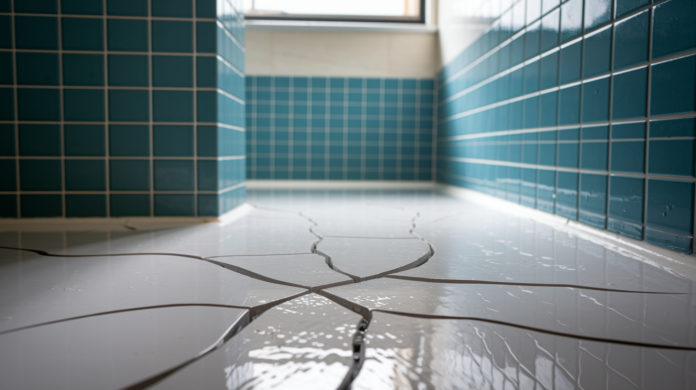

You probably didn’t expect to pay more for the damage around your shower leak than the actual leak repair. But that’s what happens when water’s been seeping through your shower pan for months. Most people focus on the cracked pan or failed drain, but the real cost comes from rotted subfloors, ceiling damage below, and mold growing inside walls you can’t see. This guide breaks down what shower pan leak repairs actually cost, what drives those numbers up or down, and how to know if you’re looking at a $300 fix or a $3,000 problem.
Typical Costs for Shower Pan Leak Repair

Shower pan leak repair costs usually fall between $150 and $500 if you’re looking at minor professional sealing work. When the damage goes deeper, you’re talking $500 to $1,200 for things like liner patches or drain fixes. Complete pan replacement? That’s $900 to $2,300, with most people paying around $1,620. What you end up spending depends on how bad the damage is, what your pan’s made of, what contractors charge in your area, and whether you’re just fixing the leak or dealing with water damage too. These prices cover proper diagnosis, quality materials, and work that actually prevents the problem from coming back.
DIY material costs tell a different story. Basic sealant kits run $10 to $30. Full fiberglass pan installation materials cost $220 to $520 when you factor in the pan, drain assembly ($50 to $70), plumber’s putty ($3 to $6), and mortar ($10 to $20). Add professional labor at $350 to $570 for about four hours of work, and you’re back in that $900 to $2,300 range. The gap between DIY and pro costs gets smaller when you think about specialized tools, mistakes you’ll probably make, and the risk of screwing up the install so badly you void warranties and create bigger problems.
Here’s how specific repairs break down:
- Minor caulking and sealing: $10 to $30 in materials versus $150 to $300 for a pro
- Drain assembly repair: $50 to $100 DIY versus $300 to $600 professional
- Liner patch replacement: $100 to $200 materials versus $500 to $900 with tile removal and reinstall
- Partial pan repair with tile work: $200 to $400 DIY versus $800 to $1,500 professional
- Complete replacement: $220 to $520 materials versus $900 to $2,300 installed
- Temporary sealant fixes mask the problem for weeks or months before failing, wasting money on repeated applications
Those temporary sealant solutions at $10 to $100 might look cheap up front, but they typically fail within three to six months. Each time you reapply, you’re spending time and money while the real problem keeps damaging your subfloor, joists, and everything around it. The water damage happening during this delay often multiplies the eventual professional repair cost by three to five times compared to just fixing it right the first time.
These figures are national averages. They shift significantly based on where you live, what contractors charge locally, experience levels, and what gets discovered during inspection. A leak in a ground floor bathroom with easy plumbing access costs way less than a second floor shower with water damage spreading to the ceiling below.
DIY Repair Versus Hiring a Professional: Complete Cost Analysis
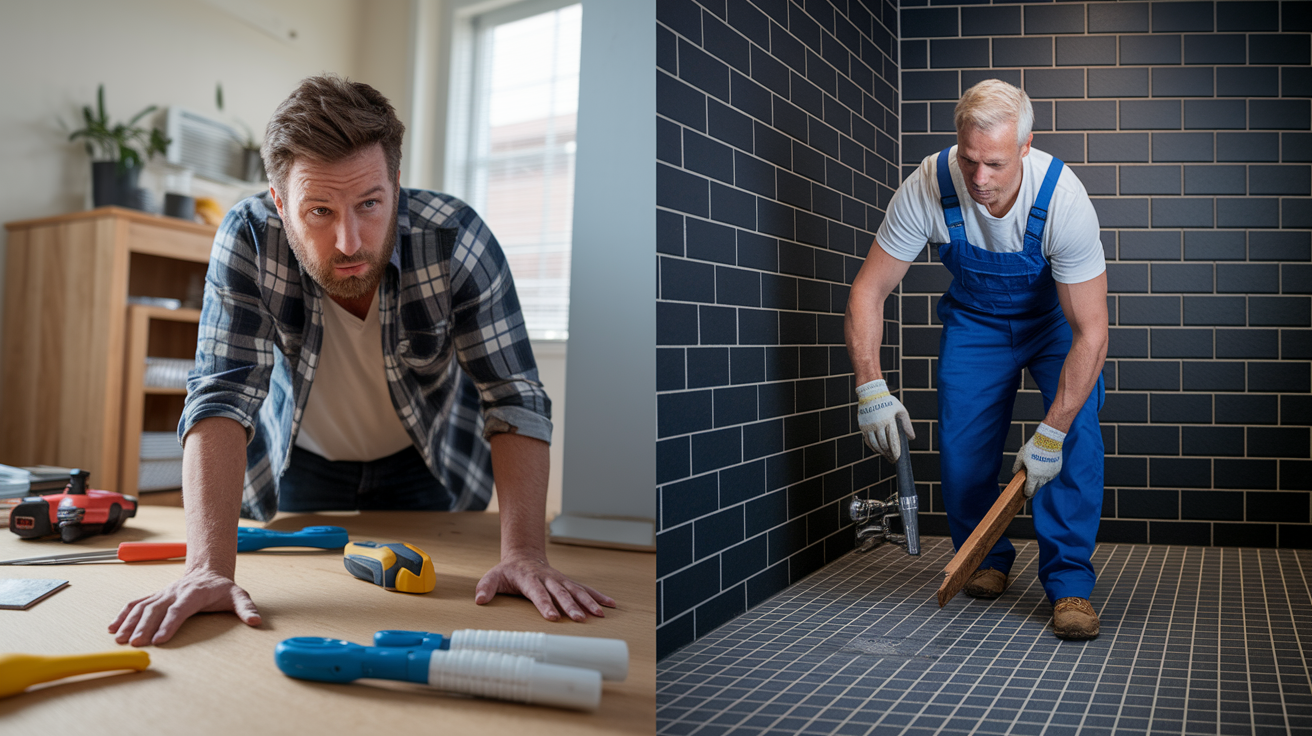
The choice between fixing your shower pan leak yourself or calling a professional comes down to your budget and an honest look at your skills, available time, and how much risk you’re comfortable with.
For DIY repairs, material costs vary by what you’re tackling. Minor repairs with sealant and caulk run $10 to $30 for quality products that handle small seal failures or isolated cracks. Moderate repairs needing liner patches and drain parts cost $100 to $300 for materials like waterproof membrane sections, drain assembly components, and adhesives. Full pan replacement projects need $220 to $520 in materials. That includes the shower pan itself, complete drain assembly, plumber’s putty or silicone, and mortar bed materials. These numbers don’t include tools you might need to buy or rent, or delivery fees that can tack on another $50 to $150.
Professional service costs include hourly rates from $45 to $200 depending on where you live and the contractor’s experience. Most projects take about four hours for straightforward work, so you’re looking at total labor costs of $350 to $570 for standard installation. Professional quotes should cover comprehensive assessments, all materials with specific grades and brands, removal and disposal of failed components, proper waterproofing, testing to make sure the repair holds, and cleanup. You’re also paying for at least a one year labor warranty that covers installation defects and makes sure everything meets local building codes.
Timeline differences between DIY and professional work significantly impact how long your bathroom’s out of commission. Quick DIY repairs for minor sealing issues take two to four hours if you’ve got basic home repair experience. Moderate DIY projects involving liner replacement stretch to one or two days as you figure things out, carefully remove and replace tiles, and wait for adhesives and sealants to cure. Extensive DIY work for complete pan replacement eats up three to five days between demolition, installation, waterproofing, and finish work. Professionals knock out minor repairs in two to four hours, moderate repairs in one to two days, and complete replacements in two to three days because they work efficiently with the right tools and established techniques.
| Repair Type | DIY Cost | Professional Cost | DIY Time | Pro Time |
|---|---|---|---|---|
| Minor seal repair | $10-$30 | $150-$300 | 2-4 hours | 2-4 hours |
| Drain assembly fix | $50-$100 | $300-$600 | 4-8 hours | 3-5 hours |
| Liner patch with tile work | $100-$200 | $500-$900 | 1-2 days | 1 day |
| Complete pan replacement | $220-$520 | $900-$2,300 | 3-5 days | 2-3 days |
DIY repair makes sense for minor sealing work where you’re applying fresh caulk around fixtures or resealing joints showing early deterioration, basic cosmetic fixes that don’t touch structural components, and situations where you’ve got verified plumbing experience and understand local code requirements. You need professional expertise when structural damage extends beyond the pan surface, extensive water damage affects subfloors or framing, plumbing modifications require permits and code compliance, or when you want warranty coverage protection. Professionals provide at least one year labor warranties that protect your investment, while screwing up a DIY install voids manufacturer warranties and creates liability if leaks damage lower level spaces. The risk calculation shifts dramatically when you consider that a failed DIY repair costing $300 in materials can result in $3,000 to $8,000 in water damage restoration over the following months.
Complete Breakdown of Cost Variables and Hidden Expenses

Shower pan leak repairs rarely involve just the pan itself. The leak’s typically been damaging surrounding structures for weeks or months before you catch it.
Primary cost variables and additional expenses that commonly pop up with leak repairs include:
- How bad the leak damage is and how long it’s been going on
- Water damage to surrounding structures like joists, studs, and drywall that can cost thousands to restore
- Subfloor condition and replacement needs adding $225 to $650 when moisture’s compromised structural integrity
- Tile removal and reinstallation requirements ranging from $1,800 to $6,850 for complete shower tiling or $25 per square foot for partial work
- Drain assembly condition potentially needing replacement if corrosion or improper slope contributed to the leak
- Plumbing access difficulty and necessary modifications costing $600 to $1,600 for moving existing plumbing or $1,000 to $7,000 for adding new drain lines
- Bathroom size and shower pan dimensions affecting material quantities and labor hours
- Mold presence requiring professional remediation beyond surface treatment
- Existing shower pan removal at around $250 plus disposal fees averaging another $250
- Drywall replacement and ceiling repairs for water stains visible on lower levels
- Permit fees for code compliance ranging from $30 to $500 depending on your municipality
- Fixture removal and reinstallation costs when shower doors, handles, or built in seats need temporary removal
These factors compound costs exponentially rather than just adding up linearly. Water damage spreading from a leaking pan doesn’t stop at the immediate shower area. It travels through grout joints to wall studs, seeps through subfloor seams to ceiling drywall below, and creates conditions for mold growth inside enclosed wall cavities. Plumbing complexity dramatically increases labor time and expense when drain lines run through difficult to access areas, require rerouting to meet current code standards, or connect to cast iron stacks that need special cutting and fitting techniques.
Hidden costs surface during inspection after initial demolition reveals the full extent of damage. Outdated plumbing installed decades ago may not meet current building codes, forcing updates to vent stacks, trap configurations, or pipe materials that weren’t part of initial estimates. Structural issues discovered after tile removal (like deteriorated joists, improperly installed original pans without adequate slope, or missing waterproof membranes) require correction before new pan installation can proceed. Mold testing revealing contamination in wall cavities demands professional remediation with proper containment, HEPA filtration, and antimicrobial treatment that goes far beyond wiping visible growth with bleach.
Related finishing expenses often double initial repair estimates. New grout work throughout the shower costs $200 to $500 depending on shower size. Fresh caulking around all fixtures and seams adds $100 to $200 in materials and labor. Paint and primer for water damaged walls in adjacent rooms run $150 to $400 per room when stains have bled through multiple coats. Matching existing tile becomes expensive or impossible for discontinued patterns, sometimes forcing complete shower retiling to get a uniform appearance.
Comprehensive pre repair inspection and detailed quotes covering all anticipated work prevent mid project surprise expenses that strain budgets and delay completion. Reputable contractors identify potential additional repairs during initial assessment and provide itemized estimates that distinguish between confirmed work, likely additional needs, and possible discoveries that may come up during demolition.
Repair Cost Breakdown by Shower Pan Type and Material
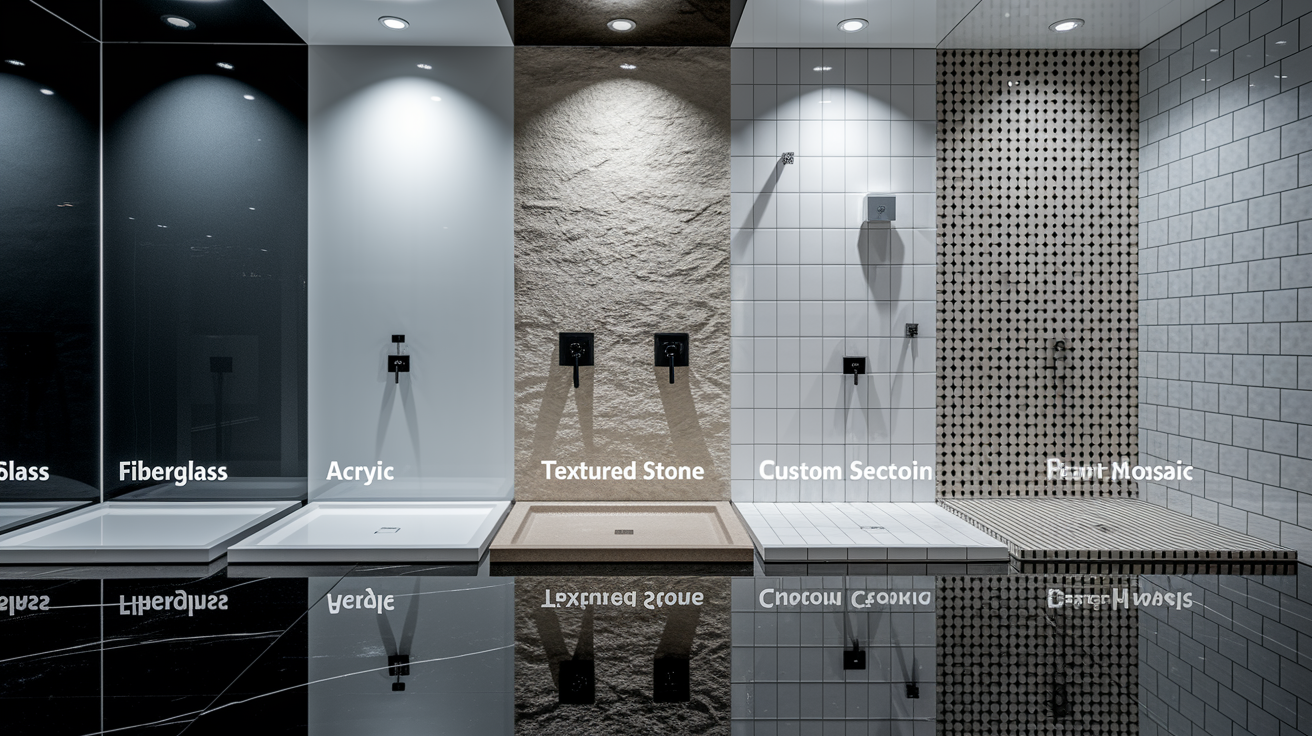
The type and material of your existing shower pan significantly impacts repair expenses because replacement parts vary dramatically in cost and different pan styles require specialized labor with distinct skill sets.
Prefabricated options including fiberglass pans and acrylic pans represent the most affordable and straightforward repair scenarios. Fiberglass pans cost $150 to $450 for replacement units, while acrylic versions run $200 to $620. These standardized sizes come with readily available replacement parts, published installation instructions, and widespread contractor familiarity that keeps labor costs reasonable. When damage is minor, repairs may involve only resealing joints or replacing drain assemblies without full pan replacement. The lightweight construction allows single person installation for many sizes, and the smooth non porous surface resists mold growth better than tile installations.
Custom installations demand more extensive labor and specialized expertise regardless of repair scope. Mortar bed pans with waterproofing membranes cost $350 to $650 for professional installation of the mud base and liner system. Hot mop applications run $225 to $500 and require licensed professionals to heat and apply multiple layers of tar based waterproofing. Tile over systems cost $500 to $800 before tile expenses because they involve building proper slope with mortar or foam, installing waterproof membranes, and creating the substrate for tile installation. Premium custom tile projects range from $900 to $3,500 depending on tile selection, pattern complexity, and shower size. Stone shower pans represent luxury installations at $1,200 to $2,000 for materials and specialized cutting, fitting, and sealing work.
| Pan Type | Material Cost Range | Repair Complexity | Typical Total Repair Cost |
|---|---|---|---|
| Fiberglass | $150-$450 | Low – Standard installation | $530-$1,020 |
| Acrylic | $200-$620 | Low to Moderate – Similar to fiberglass | $550-$1,190 |
| Cast Iron | $800-$1,300 | High – Heavy, requires multiple installers | $1,150-$1,870 |
| Mortar Bed with Liner | $350-$650 | Moderate to High – Specialized skills required | $700-$1,220 |
| Hot Mop | $225-$500 | High – Licensed application required | $575-$1,070 |
| Tile-Over Custom | $500-$800 base + tile | High – Complete custom fabrication | $1,400-$4,300 |
Older custom installations frequently require full replacement rather than patch repairs because construction methods have evolved, matching materials are no longer manufactured, or the original installation technique doesn’t meet current waterproofing standards. Cast iron pans at $800 to $1,300 represent the premium replacement end with highest material costs, plus the need for multiple installers to safely handle the extreme weight and specialized techniques for proper leveling and drain connection.
Signs Your Shower Pan Needs Repair Versus Replacement
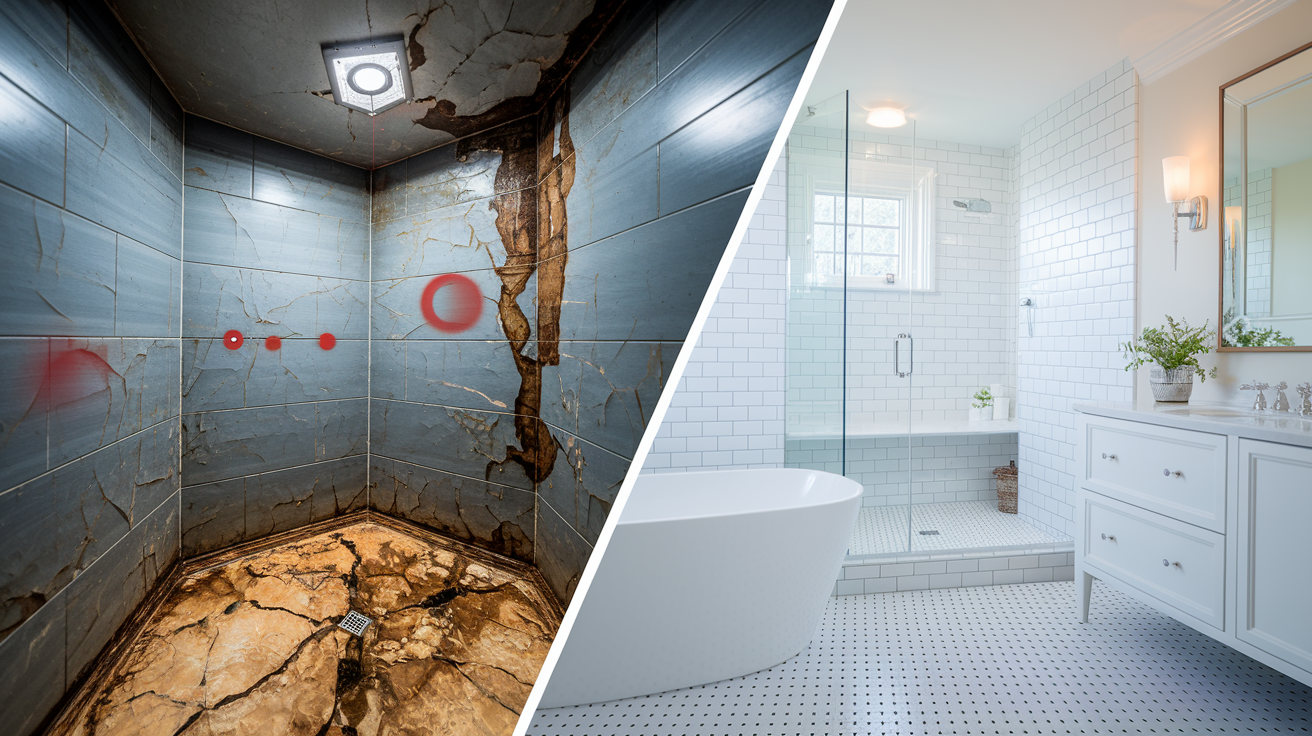
The repair versus replace decision directly impacts both immediate expenses and long term costs, making accurate damage assessment critical for appropriate budget planning.
Minor damage indicating repairable issues includes isolated seal deterioration around drain assemblies or where pan meets wall surfaces, small surface cracks less than two inches long that haven’t caused structural flexing, loose or deteriorated caulking along seams that can be removed and properly reapplied, and drain system problems like worn gaskets or loose connections that allow water to bypass the drain rather than indicating pan failure. Professional sealing and caulking work resolves these issues at $150 to $500 without the expense and disruption of complete replacement.
Red flags signaling replacement necessity include major structural cracks running across significant pan sections or radiating from drain areas, widespread water damage evidenced by soft spots in surrounding floors or walls, noticeable pan movement or flexing underfoot indicating failed mortar bed or compromised subfloor support, extensive mold growth that’s penetrated beyond surface areas into substrate materials, persistent leaks that continue after previous repair attempts, and shower pans over fifteen years old showing multiple simultaneous problems. Attempting repairs in these situations wastes money on temporary fixes while underlying deterioration continues damaging your home.
Specific inspection points every homeowner should check include:
- Visible cracks in the shower pan surface, particularly around the drain or in corners where stress concentrates
- Soft spots when stepping that indicate water damaged subfloor beneath the pan
- Water stains on the ceiling directly below your bathroom suggesting ongoing leaks
- Persistent musty odors near the shower that indicate hidden moisture and likely mold growth
- Loose or hollow sounding tiles around the shower base when tapped with knuckles
- Moldy grout at the shower base that returns quickly after cleaning
Professional assessment becomes essential when you’re uncertain about damage extent or the right solution. Spending $75 to $150 on detailed inspection prevents wasting $150 to $500 on ineffective repair attempts that delay proper fixes while allowing progressive water damage. The cost difference between timely replacement and delayed action can reach thousands of dollars as leaks compromise structural framing, create extensive mold problems requiring remediation, and damage finished spaces on lower levels.
Regional Price Variations for Shower Pan Leak Repair
Geographic location significantly impacts shower pan leak repair pricing, with labor rates and material costs varying by thirty to fifty percent between regions depending on local economic conditions and market competition.
Urban versus rural pricing shows consistent patterns nationwide. Metro areas typically charge twenty to forty percent more for labor with plumbers and contractors commanding $60 to $200 per hour compared to $45 to $120 per hour in rural communities. The higher urban rates reflect elevated business operating costs including licensing fees, insurance premiums, vehicle expenses in congested areas, and higher wages needed to attract skilled workers in expensive housing markets. However, cities offer compensating advantages through more competitive material pricing at plumbing supply houses with volume purchasing power, greater contractor selection that enables competitive bidding, and specialized repair services for unusual pan types or complex leak scenarios that might not exist in smaller markets.
Regional differences extend beyond urban rural divides to broader geographic patterns. High cost of living coastal cities like San Francisco, New York, Seattle, and Boston see premium rates at the top end of national ranges. A standard four hour installation commanding $600 to $900 in labor alone versus $350 to $570 in moderate cost regions. Midwest and Southern states often deliver fifteen to thirty percent lower costs for comparable work quality, with the same repair project costing $700 to $1,100 in Kansas City or Atlanta versus $1,000 to $1,600 in coastal markets. Mountain West states fall somewhere between, influenced by factors like population density, contractor availability, and distance from material distribution centers.
Permit fee variations by municipality create another cost layer ranging from $30 to $500 depending on local requirements. Strict coastal building codes in areas with high water tables, seismic considerations, or environmental regulations sometimes require additional waterproofing steps, separate rough and final inspections, or specialized flood resistant installation techniques that increase both permit costs and labor hours.
Getting at least three local quotes establishes realistic regional pricing expectations rather than relying solely on national averages. The national range of $220 to $3,500 means little without local context. Your actual costs depend heavily on whether you live in rural Mississippi or metro San Francisco, whether local contractors face high demand with limited availability, and whether your municipality requires simple notification or comprehensive inspection processes.
How to Get Accurate Quotes and Estimates for Your Repair

Comprehensive repair estimates rather than vague ballpark figures prevent the surprise costs and payment disputes that plague bathroom repair projects.
Detailed quotes should include specific itemized components that clarify exactly what you’re paying for. Labor costs need hourly rates clearly stated along with estimated hours for each project phase (demolition, waterproofing, installation, and finishing work). Materials specifications listing brand names, model numbers, and quality grades prevent substitution of inferior products while quantities ensure you’re not paying for excess. Timeline expectations with firm start and completion dates allow you to plan bathroom access and identify scheduling issues before work begins. Removal and disposal fees including approximately $250 for pan removal and $250 for junk hauling should appear as separate line items. Additional anticipated repairs discovered during pre quote inspection need cost ranges rather than surprises during the project. Permit costs from $30 to $500 must be specified if required in your jurisdiction. Warranty terms for both labor and materials protect your investment with clear duration and coverage details.
The inspection process before quoting determines estimate accuracy and prevents mid project cost escalations. Thorough assessment involving tile removal in sample areas, moisture meter testing of surrounding surfaces, and inspection of accessible plumbing identifies the full repair scope. Some contractors charge $75 to $150 for detailed inspection but credit this amount toward repair costs if you hire them for the work. Others provide free estimates but may offer less comprehensive damage evaluation, potentially leading to “we found additional problems” conversations after demolition begins. The upfront inspection fee often proves worthwhile through more accurate quotes and fewer surprise expenses.
Questions to ask contractors during the vetting process include:
- Are you licensed, bonded, and insured for plumbing and bathroom renovation work in this jurisdiction?
- What specific warranty do you provide on labor, and what warranty comes with the materials you’ll install?
- What repairs do you specifically recommend for this leak and what’s your reasoning for each recommendation?
- What payment schedule do you require (deposit percentage, progress payments, and final payment terms)?
- How will you protect bathroom fixtures, flooring in adjacent areas, and furnishings from dust and debris?
- What happens if you discover additional damage during demolition and how will pricing changes be communicated?
- Can you provide references from three similar projects completed in the past six months along with photos of finished work?
Getting at least three comparable quotes from properly vetted contractors with similar scope and material specifications allows meaningful cost comparison. For a helpful guide on vetting plumbing professionals, see how to find a reliable plumber for detailed selection criteria. Be wary of estimates significantly lower (twenty percent or more below competitors) than other bids, which often indicates incomplete understanding of project scope, plans to use inferior materials or cut corners on waterproofing, or unlicensed contractors who can’t pull proper permits and lack insurance protection if problems arise.
Strategic Cost Reduction Tactics Without Compromising Quality

Strategic planning and informed material choices reduce shower pan leak repair expenses by twenty to forty percent while maintaining proper waterproofing and long term durability.
Timing and bundling strategies leverage contractor economics for better pricing. Scheduling repairs during winter months when bathroom contractors face lower demand often yields ten to fifteen percent discounts compared to busy spring and summer seasons. Bundling shower pan repair with other bathroom projects like toilet replacement, vanity installation, or full bathroom remodeling reduces per project overhead costs since the contractor mobilizes once for multiple tasks. Taking advantage of material sales during holiday weekends, end of season clearances, or when showrooms rotate floor models provides opportunities for fifteen to twenty five percent savings on shower pans, tiles, and fixtures.
Selective DIY contributions allow you to capture savings on labor intensive but low skill tasks while leaving technical work to professionals. Handling demolition and tile removal yourself saves $200 to $400 that contractors charge for this physically demanding but straightforward work. Sourcing your own materials at wholesale plumbing supply houses or during contractor sales events eliminates the fifteen to twenty five percent markup contractors add to materials purchased through their accounts. Completing finishing work like painting water damaged walls, applying final caulk beads around fixtures, or reinstalling shower accessories reduces the contractor’s time on site by several hours.
Specific cost effective choices that maintain quality include:
- Choose mid range acrylic or fiberglass pans at $200 to $620 instead of premium materials, saving thirty to forty percent with minimal performance differences for most households
- Reuse existing shower fixtures, doors, and accessories when condition allows rather than replacing functional components
- Address leaks immediately before water damage expands repair scope from simple pan replacement to extensive structural restoration
- Maintain proper caulking and reseal joints every one to two years to prevent leaks rather than paying for emergency repairs
- Select prefabricated pans in standard sizes costing $150 to $620 instead of custom installations at $900 to $3,500 when your shower dimensions allow
- Schedule work as non emergency maintenance during regular business hours to avoid premium after hours rates
False economy temptations must be avoided because they create more expensive problems. Cutting corners on waterproofing materials by using discount membranes or skipping proper pan preparation saves fifty to one hundred dollars initially but causes recurring leaks within months. Using unqualified contractors found through Craigslist or neighborhood apps to save thirty percent on labor often results in code violations, voided warranties, improper waterproofing, and liability issues if subsequent leaks damage your home or neighbors’ property. Attempting complex repairs beyond your documented skill level (particularly work involving plumbing modifications, mortar bed construction, or custom pan fabrication) leads to failed repairs costing $300 to $800 in wasted materials and eventual professional correction at full rates. The progressive water damage occurring during failed repair attempts adds thousands in restoration costs, structural repair expenses, and mold remediation that dwarf any initial savings.
Insurance Coverage and Warranty Options for Leak Repairs
Understanding insurance and warranty considerations clarifies which repair costs you’ll pay out of pocket versus which expenses might be covered by policies or guarantees.
Homeowners insurance coverage for shower pan leaks depends on the leak’s cause and your policy’s specific terms. Sudden pipe bursts or accidental damage from events like a fallen object cracking the pan often qualify for claims under standard policies, potentially reducing your out of pocket expenses to only the deductible amount. Gradual deterioration from age, wear, lack of maintenance, or improper original installation typically fall outside coverage as these represent homeowner maintenance responsibilities. Documentation becomes critical for claims. Photograph all damage immediately upon discovery, note dates when you first observed problems, keep receipts for emergency mitigation work like water extraction, and report claims promptly. However, typical deductibles ranging from $500 to $2,500 often equal or exceed minor repair costs, making claims impractical for straightforward resealing work at $150 to $300 while appropriate for major leaks causing extensive secondary damage.
Warranty considerations significantly affect long term repair value and your protection against defective work or materials. Manufacturer warranties on shower pan materials typically provide one to five years of coverage for prefabricated fiberglass and acrylic pans, with some premium brands offering lifetime warranties against defects in materials and workmanship. Contractor labor warranties provide at least one year of coverage as industry standard for professional installation, with quality contractors offering two to five years of protection for their work. Proper installation directly affects warranty validity. Improper DIY installation or work by unlicensed contractors voids manufacturer coverage on materials, leaving you responsible for full replacement costs if defects appear.
Warranties typically cover material defects like pan cracking under normal use, installation failures such as leaks caused by improper waterproofing or drain connections, and workmanship issues including inadequate slope preventing proper drainage. Common exclusions include normal wear from daily use over years, improper maintenance like allowing standing water or using abrasive cleaners, damage from external causes such as dropped objects or renovations by other contractors, and secondary water damage to surrounding structures even when the pan failure itself is covered.
Verify contractor insurance and bonding before hiring to protect against liability and ensure recourse for defective work. Request certificates showing current general liability coverage and workers compensation insurance if employees will be on your property. Understand all warranty terms in writing before work begins so you know exactly what’s covered, for how long, and what maintenance requirements preserve coverage. Maintain documentation of all installation and repair work including contracts, paid invoices, warranty certificates, and dated photos of completed work. Follow manufacturer recommended maintenance including resealing joints every one to two years with appropriate products, avoiding harsh chemical cleaners that degrade waterproofing, and addressing minor issues promptly before they escalate. These practices maximize the ten to fifteen year expected shower pan lifespan while preserving warranty coverage for the rare cases when defects appear despite proper care.
When Emergency Repairs Affect Your Cost Budget
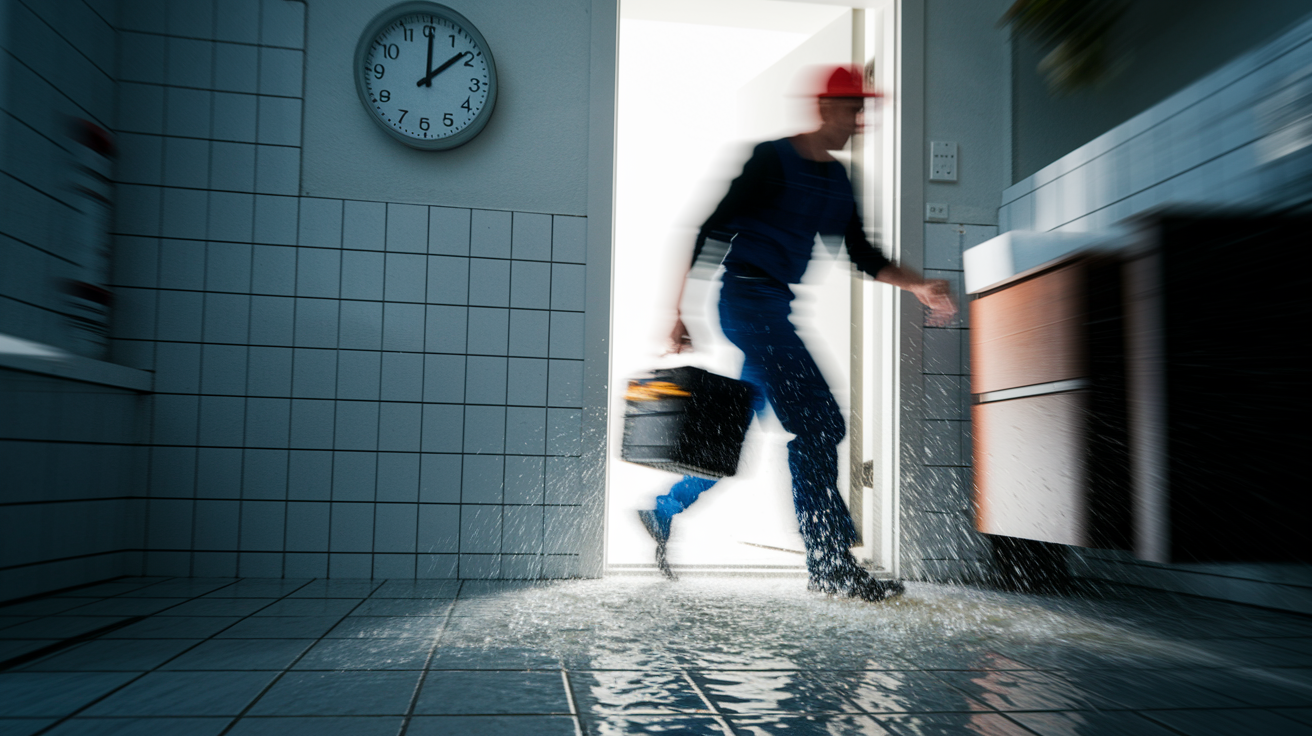
Emergency repairs requiring immediate attention to prevent escalating damage carry significantly higher costs than planned maintenance, making the financial impact of delayed action painfully clear.
Emergency repairs differ from routine maintenance in their timing urgency. They demand immediate response regardless of whether it’s convenient, affordable, or well timed in your budget cycle because continued water flow actively damages your home with each passing hour.
Emergency pricing premiums reflect contractor reality that after hours service, weekend response, and holiday availability interrupt personal time and require maintaining on call availability. After hours rates typically run one and a half to two times standard pricing, adding $175 to $400 to base repair costs when leaks become critical at 9 PM or on Sunday morning. Weekend and holiday surcharges tack on $100 to $300 additional because contractors maintain skeleton crews during off hours. Expedited material delivery fees appear when standard suppliers are closed and emergency plumbing supply houses charge premium pricing. Rush scheduling may limit contractor selection to whoever answers your frantic call rather than optimal choices based on reputation, specialized expertise, or competitive pricing.
The exponential cost of delaying repairs demonstrates why “I’ll deal with it later” becomes the most expensive decision homeowners make. Minor seal failures costing $150 to $300 to fix professionally progress within weeks to subfloor damage adding $225 to $650 to repair bills as moisture saturates plywood or particleboard decking. Continued delay advances deterioration to structural joist damage requiring thousands in restoration work as support beams soften and lose load bearing capacity. Mold development in wall cavities necessitates professional remediation at $500 to $6,000 depending on contamination extent. A leak pattern showing how a straightforward $200 caulking repair becomes a $3,000 to $8,000 restoration project within three to six months illustrates the math of procrastination. For information on recognizing early damage signs before they become expensive emergencies, see signs of water damage for detailed visual indicators.
Situations constituting true emergencies requiring immediate response include active water pooling on bathroom floors indicating ongoing leaks that won’t stop on their own, ceiling stains in rooms below your bathroom suggesting structural saturation that could lead to ceiling collapse, soft flooring or baseboards signaling subfloor compromise that poses collapse risk, visible mold growth indicating moisture levels supporting active contamination, or sudden dramatic increases in water bills (fifty percent or more) pointing to substantial hidden leaks wasting hundreds of gallons.
Proactive response to early warning signs including minor water stains that appear and disappear, occasional dampness in grout joints, grout discoloration from moisture exposure, very slight floor softness in isolated spots, or musty odors that come and go avoids emergency pricing while stopping damage progression. Addressing these issues during normal business hours with planned scheduling saves thirty to fifty percent versus emergency calls. A $400 emergency repair completed calmly during business hours costs $200 to $280. More importantly, you prevent the catastrophic damage multiplication where original problems triple to quintuple in repair costs as water spreads through building cavities, deteriorates structural components, and creates ideal conditions for mold establishment that requires specialized remediation far exceeding simple pan replacement.
Final Words
Shower pan leak repair cost depends on damage extent, repair method, and whether you’re sealing a minor crack or replacing the entire base.
Most homeowners spend between $150 and $2,300, with simple professional sealing running $150-$500 and complete pan replacement averaging around $1,620.
The real decision comes down to catching it early. A $200 repair today beats a $3,000 restoration project six months from now when that small leak turns into rotted subfloor and ceiling damage.
Get a few quotes, ask the right questions, and fix it correctly the first time. Your home’s worth protecting.
FAQ
How much does it cost to repair a leaking shower pan?
A leaking shower pan repair costs between $150 and $500 for minor professional sealing work, $500 to $1,200 for moderate repairs involving liner patches or drain work, and $900 to $2,300 for complete pan replacement with $1,620 being the national average.
What is the life expectancy of a shower pan?
A shower pan’s life expectancy is typically 10 to 15 years when properly installed and maintained with regular resealing of joints every 1 to 2 years, though premium materials and professional installation can extend this lifespan with appropriate care.
Do plumbers fix shower pans?
Plumbers do fix shower pans, particularly when repairs involve drain assemblies, leak detection, or plumbing modifications, though complete pan replacement often requires collaboration with tile contractors or bathroom remodeling specialists for surrounding tile and finishing work.
Does insurance cover a leaking shower pan?
Insurance coverage for a leaking shower pan depends on the cause—sudden accidental damage or pipe bursts often qualify for claims, while gradual deterioration or maintenance-related leaks typically aren’t covered, and deductibles may exceed repair costs for minor fixes.
Can you repair a cracked shower pan without replacing it?
You can repair a cracked shower pan without replacing it if damage is minor and isolated, using professional sealing and patching methods that cost $150 to $500, though extensive cracks, structural damage, or widespread deterioration require complete replacement.
How long does it take to repair a shower pan leak?
A shower pan leak repair takes 2 to 4 hours for minor sealing work, 1 to 2 days for moderate repairs involving liner patches or drain work, and 2 to 3 days for complete pan replacement including tile removal and reinstallation.
What causes shower pan leaks?
Shower pan leaks are caused by deteriorated caulking and seals, cracked pan materials from age or impact, faulty drain assemblies, improper original installation lacking adequate waterproofing, or tile and grout failures allowing water penetration to the pan below.
How do you know if your shower pan is leaking?
You know your shower pan is leaking when you notice water stains on ceilings below the bathroom, persistent musty odors, soft or spongy flooring around the shower, moldy grout at the base, or sudden unexplained increases in water bills.
Should I replace or repair my shower pan?
You should repair your shower pan for minor seal deterioration, small isolated cracks, or loose caulking, but replace it when you find major structural cracks, widespread water damage, pan movement underfoot, extensive mold, or persistent leaks after previous repairs.
What’s included in a shower pan repair quote?
A shower pan repair quote should include itemized labor costs with hourly rates and estimated hours, specific materials with quantities, timeline with completion dates, removal and disposal fees, anticipated additional repairs, permit costs, and warranty terms for labor and materials.
How much does DIY shower pan repair cost?
DIY shower pan repair costs $10 to $30 for minor sealant and caulk fixes, $100 to $300 for moderate repairs with liner patches and drain parts, and $220 to $520 for complete pan replacement materials including the pan, drain assembly, putty, and mortar.
Does delaying shower pan repairs increase costs?
Delaying shower pan repairs significantly increases costs as minor seal failures costing $150 to $300 progress to subfloor damage adding $225 to $650, then advance to structural deterioration and mold requiring thousands in restoration versus immediate repair.