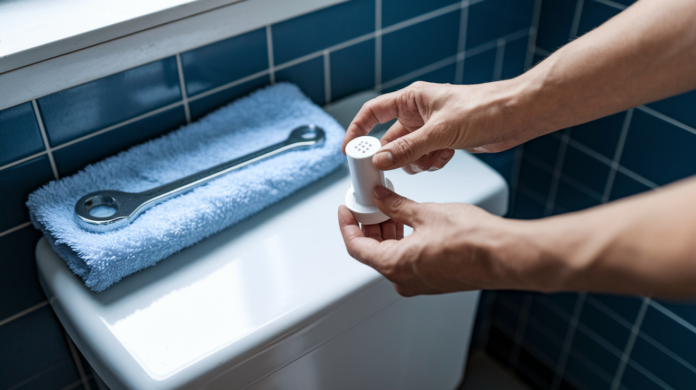

You just opened your toilet tank and saw the fill valve cap sitting in two pieces, or maybe it’s missing completely. Now your toilet won’t stop running, and you’re watching water bills climb while that hissing sound drives you nuts. Good news: swapping that cap takes about five minutes, costs under $12, and stops the problem cold. You don’t need plumbing experience, just a couple basic tools and the willingness to get your hands a little wet. We’ll walk you through exactly how to replace it, what to watch for, and when a cap fix is enough versus when you need a new valve.
Identifying a Broken Fill Valve Cap and Its Effects

The fill valve cap sits on top of your toilet’s fill valve assembly inside the tank. It locks into place with a quick one-eighth turn and acts as the protective cover for the valve mechanism underneath. You’ll spot it at the top of that vertical pipe on the left side of most toilet tanks, right above the float cup. This isn’t just a cover piece. It regulates water pressure, keeps debris away from the valve’s internal seal and diaphragm, and makes sure the valve shuts off completely when the tank hits the right water level.
Caps wear out. Hard water leaves deposits around the threads that weaken the plastic over time. Years of temperature swings and constant pressure make the material brittle. Sometimes it cracks when someone forces it during a repair attempt. Other times mineral buildup locks it in place until it snaps. If your water runs high in minerals, you’ll see white or rust colored crud around the cap threads. That’s stress showing up.
When your fill valve cap breaks, cracks, or goes missing, here’s what you’ll notice:
- Toilet running constantly even when the tank should be full
- Hissing sound from inside the tank that won’t quit
- Water level problems where the tank overfills or never gets high enough
- Higher water bill from water flowing nonstop into the bowl
- Gurgling noise as water struggles to regulate
- Weak or incomplete flush because the tank isn’t filling to where it should
A broken cap creates a problem that needs fixing now. Without that protective seal, debris from your supply line gets right into the valve body and stops the valve from shutting off at the correct float height. That’s wasted water running 24/7. If the valve can’t regulate properly, your tank might overflow onto the bathroom floor. Even a small constant leak wastes hundreds of gallons monthly. The longer you wait, the more likely you’ll damage other tank parts or end up with water stains on the floor.
Tools and Parts Needed for Cap Repair

Before starting, figure out if you need just a replacement cap or if the whole fill valve assembly should be swapped. If your valve is under seven years old and only the cap is damaged, a replacement cap assembly will do it. If the valve’s been sitting in the tank seven years or longer, or if you’re seeing other issues like constant adjustment problems or leaks at multiple spots, plan on replacing the entire valve. That’s the more dependable fix for older stuff.
You can grab replacement parts at any hardware store, home improvement center, or plumbing supply shop. The most common brands are Fluidmaster 400 series and Korky valves. Both make universal fit caps that work with standard fill valves. A replacement cap assembly runs $5 to $12. A full valve replacement costs $15 to $40 depending on what you pick. If you don’t already have basic plumbing tools, budget another $10 to $25 for an adjustable wrench and pliers.
| Item | Purpose | Notes |
|---|---|---|
| Adjustable wrench | Loosen and tighten lock nut under tank | 6-inch or 8-inch works for most toilets |
| Pliers | Disconnect supply line if needed | Channel-lock or slip-joint type |
| Bucket | Catch water when disconnecting parts | 2-gallon capacity is plenty |
| Towels or rags | Wipe up spills and dry connections | Old towels work fine |
| Replacement cap assembly (385) or seal (242) | Replace broken cap component | Universal fit for most standard valves |
| New fill valve (optional) | Complete valve replacement if needed | 400A Universal or Korky 528X recommended |
| Rubber gasket or washer | Seal connections if installing new valve | Usually included with new valve |
| Cup or small container | Cover valve opening when flushing debris | Any plastic cup works |
Look for specific part numbers when you’re shopping. The 242 Replacement Seal works if you only need to swap the rubber disc and pin inside the cap. The 385 Replacement Top Cap Assembly includes both the cap and the seal. That’s the complete fix for a broken cap. If you’re replacing the whole valve, the 400A Universal Toilet Fill Valve fits most standard toilets, or the 400H PerforMAX for high performance applications. The Korky 528X is another solid choice with QuietFILL Technology and a 10 year warranty.
Step-by-Step Cap Replacement Instructions

Start by shutting off the water supply at the shut off valve behind the toilet. Turn the oval handle clockwise until it stops. This keeps water from flowing into the tank while you work. If the valve is stuck or you don’t have one, you’ll need to shut off the main water supply to your house temporarily.
-
Turn off the water supply at the shut-off valve behind the toilet by rotating the handle fully clockwise.
-
Flush the toilet to drain most of the water from the tank, then hold the flush lever down to empty as much as you can.
-
Remove the tank lid carefully and set it on a towel on the floor where it won’t get knocked over.
-
Locate the fill valve on the left side of the tank. It’s the vertical assembly with the float cup attached.
-
Lift the float cup with your right hand while holding the gray shaft steady with your left hand, raising the black arm attached to the cap.
-
Turn the cap and lever counterclockwise one-eighth turn (about 45 degrees) while keeping the float cup lifted. You’ll feel it unlock.
-
Remove the broken cap by lifting it straight up off the valve body, exposing the valve opening underneath.
-
Flush debris from the valve by holding a cup upside down over the exposed opening, then turning the water supply back on full force for 10 to 15 seconds. This clears out any sediment or mineral buildup.
-
Install the new cap by placing the cap arm next to the refill tube, then pressing down firmly while turning the cap and arm clockwise until it locks into position.
-
Turn the water back on fully, let the tank fill, then check the water level and adjust the float cup height by twisting it up or down on the shaft if needed.
Test the repair by flushing once and watching the tank refill. The water should stop flowing when the tank is about one inch below the top of the overflow tube. Listen for any hissing sound. If the tank is silent and the water level holds steady, the repair worked. If you still hear running water or see the level creeping up, the cap might not be fully locked, or there’s debris still in the valve that needs another flush cycle.
Troubleshooting Common Fill Valve Cap Problems

Installing a new cap solves most issues, but sometimes you’ll hit problems that need a little extra attention. Most post repair issues come down to alignment, adjustment, or debris that needs one more flush.
- Cap won’t lock properly: The cap arm needs to sit right next to the refill tube when you press and turn. If it’s not aligned, lift the cap off and reposition it before locking.
- Toilet still running after cap replacement: The float height is probably set too high. Twist the float cup down the shaft about half an inch and test again.
- Hissing sound persists: There’s likely still debris in the valve body or the seal inside the new cap is damaged. Remove the cap and flush the valve opening again for 15 seconds.
- Water level too high or low: Adjust the float cup position up or down on the valve shaft, or turn the adjustment screw on top of the valve clockwise to lower the level, counterclockwise to raise it.
- Leaking at valve connections under the tank: The lock nut or supply line connection isn’t tight enough. Use a wrench to snug it up, or check if the rubber gasket is worn and needs replacing.
After you’ve got the cap installed and locked, fine tuning the float cup position makes a big difference. If the water level is too high, you’ll hear a trickle into the overflow tube. If it’s too low, you’ll get a weak flush. The sweet spot is about one inch below the overflow tube opening. Twist the float cup to adjust the height. Righty tighty moves it down and lowers the water level, lefty loosey moves it up and raises the level. Make small adjustments and test with a flush each time.
Sometimes the fix isn’t as simple as swapping a cap. If you’ve replaced the cap and you’re still dealing with constant running, multiple leaks, or a cracked valve body, it’s time to call a professional. Same goes if you see extensive rust or corrosion on the tank components, if there’s already water damage on the floor or ceiling below, or if you’re just not comfortable working inside the tank. A licensed plumber can diagnose problems you might not spot and make sure the repair is done right the first time.
Full Fill Valve Replacement When Cap Alone Won’t Fix It

If your fill valve has been in service for seven years or more, replacing just the cap is like putting a new tire on a worn out car. It might help for a bit, but the rest of the components are on borrowed time. You’ll know it’s time for a full valve replacement when you see worn parts beyond just the cap, when the valve won’t hold calibration no matter how much you adjust it, when you’ve got leaks at multiple connection points, or when the valve body itself is cracked. At that point, spending $20 on a new valve makes more sense than chasing down problems on an old one. The repair takes less than an hour, and you’ll get another seven to ten years of reliable service.
Removing the Old Fill Valve Assembly
Shut off the water supply at the valve behind the toilet, then flush to drain the tank. Use a bucket to catch any remaining water. Disconnect the supply line from the bottom of the fill valve using an adjustable wrench. Turn the coupling nut counterclockwise. You’ll see a plastic lock nut holding the valve to the bottom of the tank. Unscrew it by hand or with pliers if it’s tight. Once the lock nut is off, lift the entire old ballcock assembly straight up and out of the tank opening. If it’s stuck from mineral buildup, wiggle it gently while pulling up.
Installing the New Valve Assembly
Insert the new valve through the tank opening from inside the tank. The rubber gasket should sit flush against the bottom of the tank hole. From underneath, thread the lock nut onto the valve shank and hand tighten it. Don’t crank it with pliers or you’ll crack the porcelain. Reconnect the supply line to the threaded water inlet at the bottom of the valve and tighten with a wrench. Attach the refill tube to the overflow tube using the clip that comes with the valve. Adjust the valve height so the top of the valve clears the tank lid by at least an inch. Turn the water back on slowly and let the tank fill. Set the float cup height so the water stops about one inch below the overflow tube.
Run a test flush and watch the tank refill. Check all connections under the tank for drips. If you see water seeping from the lock nut or supply line, tighten it a quarter turn more. Adjust the float cup or turn the adjustment screw on top of the valve to fine tune the water level. The valve should shut off cleanly with no hissing or running water after the tank is full.
Professional Repair Costs and Time Estimates

Calling a licensed plumber for a fill valve repair typically costs $100 to $200 for a standard service call, and that includes diagnosing the problem, replacing the cap or the entire valve, and testing the repair. Emergency or after hours service pushes that cost higher, sometimes $200 to $350 depending on your area. If the plumber recommends a full valve replacement, the parts are usually included in the service call price. Professional repair makes sense when you don’t have the tools, when you’re dealing with an unfamiliar valve type, when there are other tank components that need attention, or when you just don’t have the time or physical ability to do it yourself. The upside is you get a warranty on the work, and the plumber will troubleshoot any related issues while they’re there.
DIY repairs are fast and cheap if you’re comfortable working in the tank. Replacing just the cap takes 15 to 30 minutes once you’ve got the parts. A full valve replacement takes 45 to 90 minutes including cleanup. You’re spending $5 to $40 on parts depending on whether you’re swapping the cap or the whole valve. That’s a fraction of the professional cost, and it’s a straightforward repair with basic tools. The tradeoff is you’re doing the troubleshooting and testing yourself.
| Repair Type | DIY Time | Professional Cost | Best For |
|---|---|---|---|
| Cap replacement only | 15-30 minutes | $120-$180 | Recent valve, simple crack or missing cap |
| Cap with seal replacement | 20-35 minutes | $130-$190 | Cap and internal seal both worn |
| Full valve replacement | 45-90 minutes | $150-$250 | Valve over 7 years old, multiple issues |
| Emergency service | N/A | $200-$350 | Active flooding, after-hours, urgent fix |
Preventive Maintenance to Avoid Future Cap Failures

Simple maintenance keeps your fill valve working for its full lifespan and saves you from emergency repairs at inconvenient times. Most valve failures are predictable. They happen because of wear, debris, and mineral buildup that you can manage with a few minutes of attention every six months.
Understanding Why Fill Valves and Caps Fail
Fill valves are built to last about seven years under normal conditions. After that, the plastic components start to weaken from constant exposure to water, pressure changes, and temperature fluctuations. Hard water speeds up the process. Mineral deposits build up around the cap threads, inside the valve body, and on the seal surfaces. That buildup creates stress points where cracks form. The threaded cap takes the most abuse because it’s opened and closed during maintenance, and it’s exposed to the most pressure variation as the valve cycles on and off thousands of times. Debris from your supply line can lodge under the cap or inside the valve, preventing it from sealing completely. If a previous repair was done too aggressively, the cap threads might already be damaged and just waiting to fail. Constant water pressure above 80 PSI puts extra stress on every component and shortens the valve’s life.
- Flush valve debris annually by removing the cap and turning the water supply on full force for 15 seconds to clear sediment from the valve body and supply line.
- Inspect tank components every six months for white mineral buildup, rust stains, or cracks in the cap, valve body, and connections.
- Clean the refill tube and overflow tube connections to prevent clogs that force the valve to work harder.
- Monitor water pressure and install a pressure regulator if your home water pressure exceeds 80 PSI. High pressure kills valves early.
- Replace rubber gaskets and seals at the first sign of wear, before they crack completely and cause leaks at multiple points.
- Track your valve’s installation date and plan to replace the entire assembly around year seven, even if it’s still working. Preventive replacement beats emergency repair.
- Address hissing sounds or running water immediately instead of ignoring them. Those symptoms mean the valve is already failing and the problem will get worse.
Regular toilet maintenance prevents water damage to your bathroom floor, ceiling below, and surrounding walls. It keeps your water bill in check by stopping small leaks before they turn into hundreds of gallons of waste per month. A well maintained fill valve and flush mechanism give you reliable performance and eliminate those middle of the night running toilet sounds that wake everyone up. You avoid the stress of dealing with a broken valve when you’re already busy with everything else.
Final Words
A toilet fill valve cap broken doesn’t have to mean a big repair bill or weeks of listening to that constant hissing sound.
Most cap replacements take under 30 minutes with basic tools. You shut off the water, swap the part, flush debris, and test.
If the valve’s older or you’re seeing other issues, replacing the whole fill valve now saves you from dealing with the same problem again in six months.
Either way, you’re stopping wasted water and protecting your home from potential tank damage. That’s worth the effort.
FAQ
What happens when a toilet fill valve is broken?
A broken toilet fill valve causes the toilet to run constantly, creates hissing sounds from the tank, prevents proper water shut-off, and leads to wasted water that increases your water bill. The tank may not refill to the correct level, resulting in weak flushes.
How do you remove the cap on a fill valve?
To remove the cap on a fill valve, turn off the water supply, lift the float cup with your right hand while holding the gray shaft, then turn the cap and lever counterclockwise one-eighth turn to unlock and lift off.
How much will a plumber charge to replace a fill valve in a toilet?
A plumber will typically charge between $100 and $200 for a service call to replace a fill valve in a toilet, which includes labor and parts. Emergency repairs outside normal business hours cost more.
What is the most common problem associated with Fluidmaster valves?
The most common problem associated with Fluidmaster valves is debris buildup inside the valve body causing constant running or hissing sounds. Mineral deposits from hard water also weaken the cap and seal components over time, leading to leaks.
How long should a toilet fill valve last?
A toilet fill valve should last approximately 7 years under normal use and water conditions. Hard water, high water pressure, and debris accumulation can shorten the lifespan, making earlier replacement necessary.
Can you replace just the cap on a fill valve?
You can replace just the cap on a fill valve if the valve is less than 7 years old and the valve body shows no cracks or damage. Replacement cap assemblies cost between $5 and $12 at hardware stores.
What tools do you need to replace a toilet fill valve cap?
You need basic tools to replace a toilet fill valve cap: an adjustable wrench or pliers, a bucket to catch water, towels for cleanup, and the replacement cap or seal assembly from your local hardware store.
Why does my toilet keep running after replacing the fill valve cap?
Your toilet keeps running after replacing the fill valve cap because the float height needs adjustment or debris remains in the valve body. Check that the cap locked properly by turning it clockwise and adjust the float cup position.
How do you flush debris from a fill valve?
To flush debris from a fill valve, remove the cap, hold a cup upside down over the exposed valve opening, and turn the water supply on full force for 10 to 15 seconds to clear sediment and mineral buildup.
When should you replace the entire fill valve instead of just the cap?
You should replace the entire fill valve instead of just the cap when the valve is over 7 years old, the valve body shows cracks, multiple components are worn, or you’ve had repeated cap failures indicating internal valve problems.