
You’ll find dozens of leak detectors online, but half of them won’t actually work for your situation. A $50 moisture sensor makes sense under a washing machine, but it’s useless for finding a slab leak under concrete. An ultrasonic meter that costs $5,000 pinpoints underground pipe cracks fast, yet it needs pressure to work and training to read the signals right. Knowing which tool fits which leak saves you from buying the wrong gear or hiring someone with equipment that can’t solve your problem.
Comprehensive Comparison of Leak Detection Equipment

Leak detection equipment varies a lot in how it works, what it costs, and where it fits best. Understanding these differences helps you pick the right tool for the job, whether you’re monitoring a home or tracking down leaks in a complex commercial system.
| Equipment Type | Detection Method | Best Applications | Approximate Cost Range | Key Pros | Key Cons |
|---|---|---|---|---|---|
| Acoustic/Ultrasonic Sensors | Sound wave monitoring | Underground pipes, compressed air systems | $200-$8,000 | Non-invasive, pinpoints location | Requires pressurized system |
| Thermal/Infrared Imaging | Temperature differential detection | Roof moisture, slab leaks, HVAC | $300-$25,000 | Rapid large-area scanning, non-destructive | Requires temperature difference, surface only |
| Pressure Testing Devices | Pressure loss measurement | Sealed systems, pipelines | $150-$5,000 | Confirms leak presence, quantifies severity | Doesn’t pinpoint location, system downtime |
| Tracer Gas Systems | Introduced gas detection | HVAC, refrigeration, critical systems | $200-$15,000 | Extremely sensitive, precise location | Requires system access, consumable gases |
| Moisture Meters & Spot Sensors | Water contact/resistance change | Residential fixtures, appliances | $15-$400 | Low cost, immediate alerts | Requires direct water contact, won’t detect hidden leaks |
| Rope/Cable Sensors | Continuous conductive cable | Mechanical rooms, pipe runs, data centers | $300-$2,000 | Large coverage area, location identification | Requires drying after detection, higher cost |
| Visual Inspection Cameras | Direct observation | Pipe interiors, hidden spaces | $200-$10,000 | Visual confirmation, documentation | Requires access point, won’t work in water-filled pipes |
| Smart/IoT Systems | Connected sensors with notifications | Whole-home, commercial monitoring | $50-$800 plus $3-15/month | 24/7 monitoring, remote alerts | Requires connectivity, subscription costs |
| Flow Monitoring/Shutoff Valves | Velocity and volume measurement | Whole-house, zone protection | $400-$1,500 installed | Prevents major damage, usage insights | Professional installation, higher cost |
Acoustic and Ultrasonic Detection Equipment
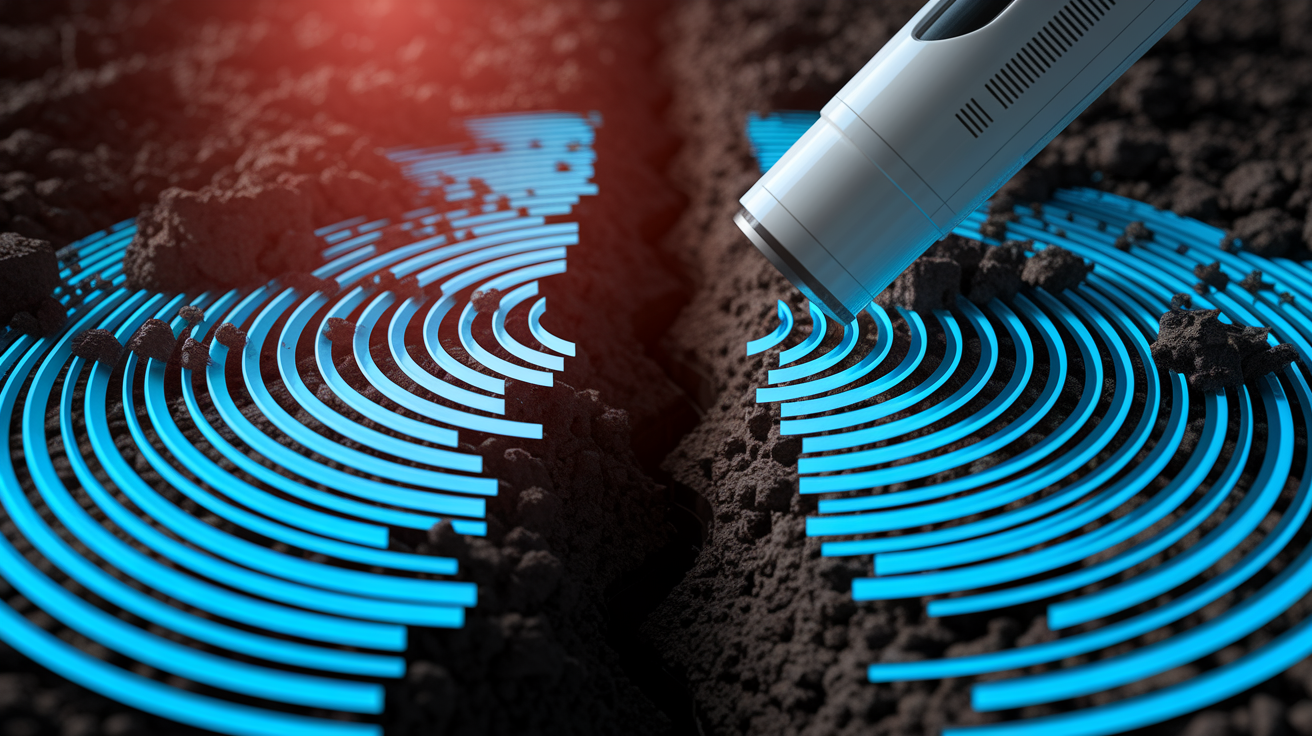
Acoustic and ultrasonic gear picks up sound waves created when pressurized water or gas escapes through cracks. The fluid forced through an opening generates vibrations that travel through the pipe and surrounding soil. Most systems work in a range from 100 Hz to 10 kHz for acoustic detection, and 20 kHz to 100 kHz for ultrasonic.
Acoustic sensors work in the lower frequency range. They use ground microphones placed on pavement or dirt above buried pipes. The most precise acoustic tech is the correlator, which uses two sensors positioned 100 to 300 feet apart along the line. It measures how long it takes for the leak sound to reach each sensor, then calculates the exact position through triangulation. You can usually get within 3 feet for most pipe materials and burial conditions.
Ultrasonic detectors focus on higher frequencies. They’re handheld devices with directional sensors that zero in on specific sound sources. These units tell the difference between airborne sound from compressed air or gas leaks and structure-borne sound from liquid pipe failures. For liquid leaks, you need contact sensors placed right on the pipe surface or valve body. Compressed air systems work with airborne sensors scanning from several feet away.
Detection distance runs anywhere from 3 to 15 feet depending on pipe material, how deep it’s buried, ambient noise, and leak severity. Metal pipes carry sound farther than plastic. Shallow burial works better than pipes 8 feet down. You need a pressurized system for acoustic methods to work since still water doesn’t make detectable sound. Trained operators are essential for accurate interpretation, telling leak signatures apart from background noise created by pumps, meters, and normal water flow.
Thermal Imaging and Infrared Detection Systems
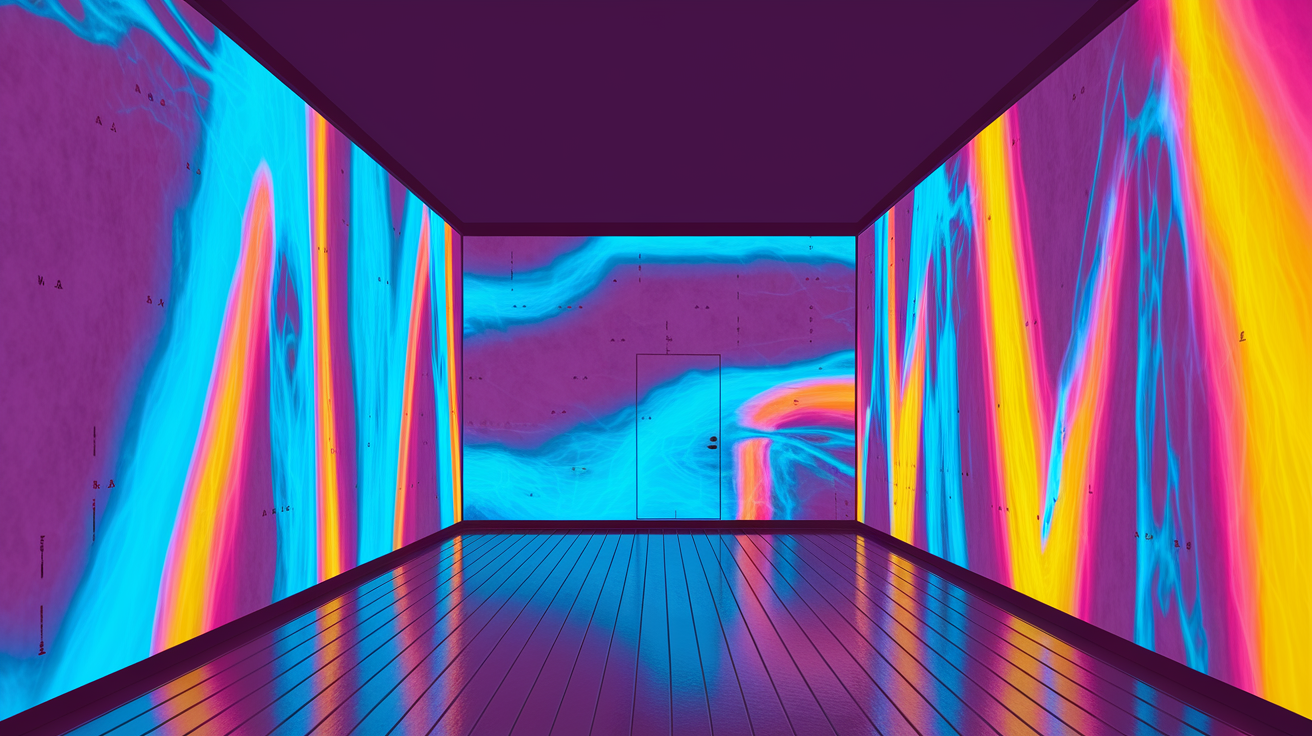
Thermal cameras show you temperature differences created by water getting into building materials or moving through pipe systems. Water infiltration creates evaporative cooling that drops temperatures 2 to 10°F compared to surrounding dry materials. Hot water pipe leaks produce 5 to 20°F temperature bumps. Professional cameras offer 0.1°F thermal sensitivity, detecting moisture through walls up to 6 inches thick depending on material density.
You’ve got options here. Handheld thermal cameras work for targeted investigation of suspected problem areas. Fixed-mount IR systems handle continuous monitoring of critical equipment rooms or storage facilities. Drone-mounted systems survey large commercial roofs. A drone inspection can cover 50,000 square feet in under an hour, identifying wet insulation zones that show up as cool spots during daytime surveys.
Thermal imaging is completely non-destructive with fast large-area scanning. But it’s got limits. You need a temperature difference between the leak and surrounding materials. It doesn’t work when ambient temperature matches the leak temperature. Detection only works on surface moisture, missing leaks trapped inside pipe walls or beneath waterproof membranes. Exterior roof surveys depend on weather conditions, with the best temperature differential happening during early morning hours after overnight cooling. Metal surfaces reflect instead of emit infrared radiation, reducing effectiveness through metal roofing, flashing, or aluminum siding.
Pressure Testing and Monitoring Devices
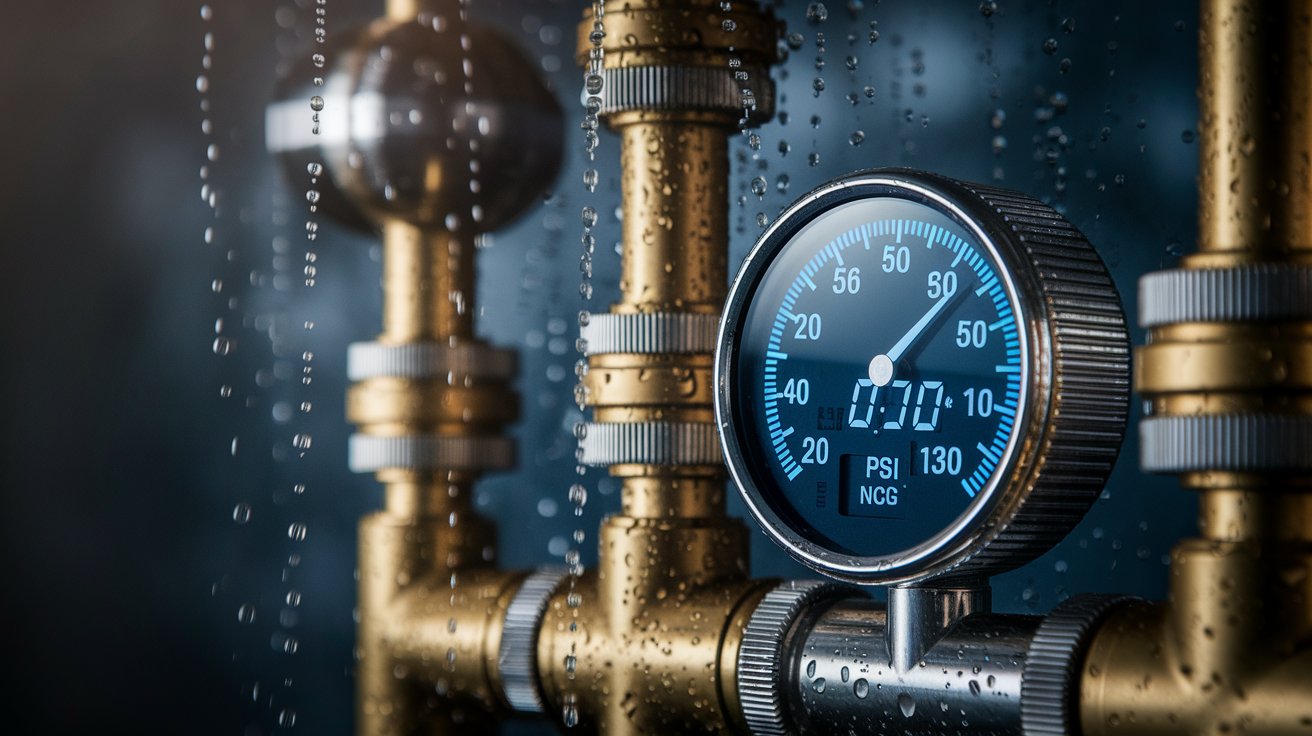
Pressure testing measures pressure loss over time in isolated pipe sections or sealed systems. Leak severity gets calculated from how fast the pressure drops, with test procedures following industry formulas that account for pipe volume, test pressure, and acceptable loss rates defined by building codes.
Hydrostatic pressure testing fills systems with water, then pressurizes to 1.5 times normal operating pressure. Test duration ranges from 2 to 24 hours depending on system volume and local code requirements. Pneumatic testing uses air or nitrogen, giving faster results since gas responds quicker to pressure changes. Safety protocols matter due to stored energy risks in compressed air systems. Vacuum decay methods measure vacuum loss rate in sealed components, with sensitivity detecting leaks as small as 1 micron radius. This works well for checking refrigerator seals, medical equipment chambers, and hermetically sealed electronic housings.
Digital pressure monitors with data logging let you continuously watch critical pipelines. Programmable alert thresholds trigger notifications when pressure drops exceed normal variance by 2 to 5 PSI depending on system setup. Automated systems send notifications to maintenance teams via email or text within seconds of detecting abnormal pressure loss.
| Testing Method | Leak Sensitivity | Typical Duration | Best Applications |
|---|---|---|---|
| Hydrostatic | 0.5-2 GPH | 2-24 hours | Water piping, irrigation systems |
| Pneumatic | 0.1-1 CFM | 15 minutes-2 hours | Gas lines, compressed air systems |
| Vacuum Decay | 1 micron radius | 5-30 minutes | Sealed components, refrigeration |
| Continuous Monitoring | System dependent | Ongoing | Critical pipelines, process systems |
Tracer Gas and Halogen Detection Technology

Tracer gas methods introduce a detectable gas into a sealed system, then use specialized sensors to identify where it’s escaping. Sensitivity goes way beyond pressure testing for catching micro-leaks in critical applications where even small losses create operational or safety concerns.
Helium detection uses mass spectrometry analyzers with extreme sensitivity reaching 1×10⁻¹⁰ atm cc/sec. That’s 1,000 times more sensitive than bubble testing methods. Helium’s small molecular size and inert chemical properties make it perfect for finding the tiniest possible openings. Primary uses include refrigeration systems needing sealed circuits, vacuum chambers used in manufacturing, aerospace components where reliability matters most, and semiconductor manufacturing facilities with contamination-free requirements.
Halogen-specific detectors identify refrigerant gases including R-22, R-410A, and R-134a. Electronic sensor technology and heated diode sensors typically offer sensitivity of 0.1 oz per year. Regulations require periodic leak testing in commercial HVAC systems containing more than 50 pounds of refrigerant. When halogen gas passes through the detector’s heated element, it produces a characteristic green flame color confirming refrigerant presence.
Hydrogen and nitrogen mix gases provide a safe, affordable tracer alternative for large piping systems where helium cost would be too high. The standard mix combines 5% hydrogen with 95% nitrogen. Detection uses portable hydrogen sensors identifying concentration as low as 5 parts per million. This approach works for underground pipes, district heating lines, and fuel distribution networks spanning miles where helium injection would cost thousands in gas alone.
Moisture Meters and Water Sensors
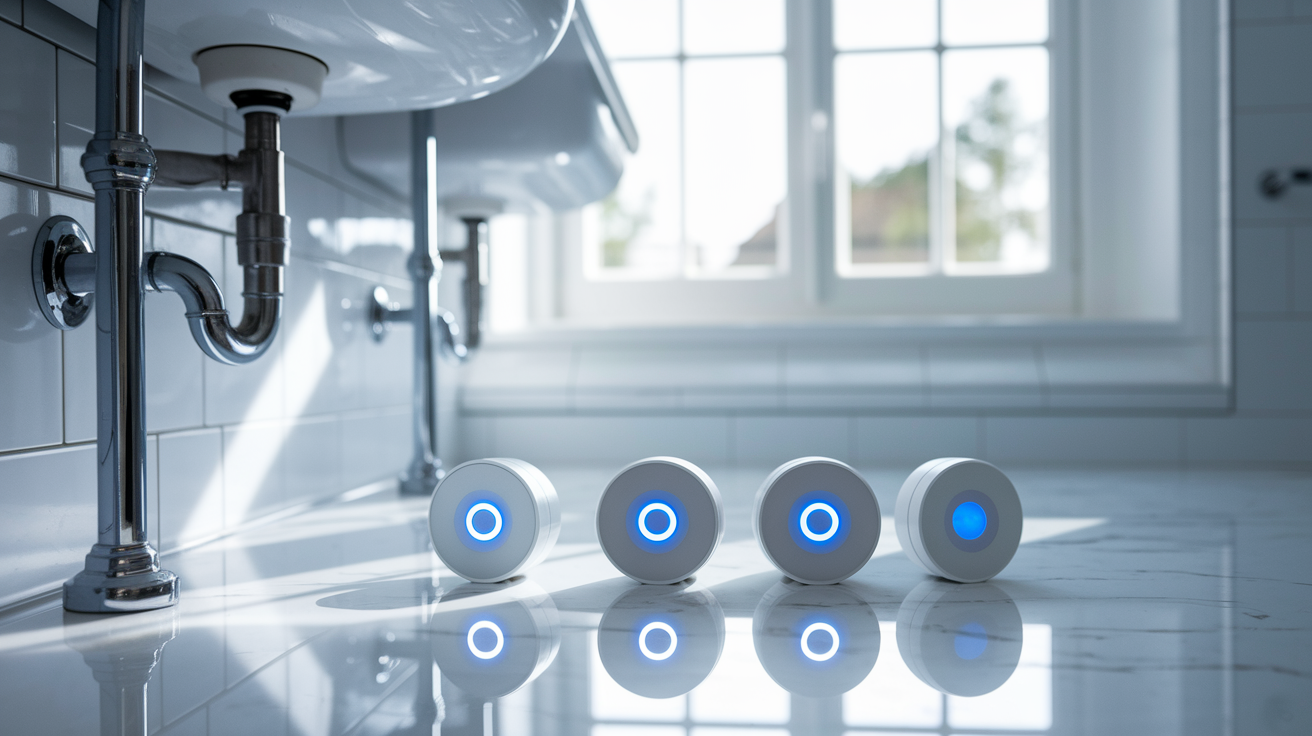
Moisture meters come in two main types serving different needs. Pin-type models use penetrating probes that measure electrical resistance through building materials, giving moisture content readings on a 0 to 100% scale with typical accuracy within ±2%. Pinless models use electromagnetic scanning to detect moisture 3/4 inch deep without surface penetration. The non-invasive approach works well for finished surfaces where probe holes would damage paint, wallpaper, or wood flooring.
Spot water sensors provide the most affordable first defense for homes and light commercial spaces. You want to position sensors within 1 inch of floor surfaces near water heaters, under sinks, behind washing machines, and next to dishwashers. Units typically cost $15 to $60 per sensor. Battery life spans 2 to 5 years using standard alkaline or lithium batteries. Detection relies on water bridging two conductive contacts, causing resistance to drop and triggering the alarm circuit within seconds of water contact.
What to look for when picking spot sensors:
Detection method matters. Conductivity sensors need direct water contact, while capacitive sensing detects moisture through materials without needing submersion. Alert type includes audible alarm producing 85 to 95 decibels, LED indicator lights, or wireless notification delivered to smartphone apps. Power source options are replaceable battery operation, plug-in AC adapter, or dual power with battery backup maintaining protection during power outages. Connectivity includes standalone operation with local alarm only, Wi-Fi direct connection to home network, or hub-required systems using Zigbee or Z-Wave protocols. Environmental rating covers indoor-only housing versus water-resistant IP65+ rated enclosures suitable for outdoor installation, unfinished basements, or crawl spaces.
Handheld moisture meters serve post-leak investigation and building inspection needs. Models ranging $50 to $400 include features like dual pin and pinless operation in the same device, material-specific calibration settings for accurate readings in wood versus drywall versus concrete, and data logging storing readings with timestamps for documentation and trend analysis.
Rope, Cable, and Printed Sensor Systems

Rope and cable sensors detect moisture right away when it contacts anywhere along their length. Construction uses conductive polymer coating or a sensing cable with detection capability spanning from 6 feet to 500 feet. Zone-based systems identify which 25 to 50-foot section detected moisture. Continuous location reporting systems pinpoint the detection point within 1 to 3 feet using time-domain reflectometry that measures electrical signal travel time to the wet section.
Benefits include large coverage area where a single 200-foot rope replaces 5 to 10 spot sensors, cutting hardware costs and simplifying installation. Precise location identification eliminates search time when investigating alarms. The technology suits mechanical rooms with multiple pipes, data centers with rows of server racks, crawl spaces with limited access, and installation directly along pipe runs or under raised computer room floors. Downsides include a complete drying period of 24 to 72 hours before the sensor returns to monitoring capability. This gap leaves the area unprotected until the sensor fully dries. Professional installation makes sure the sensor maintains proper floor contact and the controller gets configured correctly for the specific cable length installed.
Printed sensor technology features thin flexible substrate less than 1mm thick, letting you flush mount under flooring or equipment without creating trip hazards. Multiple detection zones per sensor panel identify not just that water’s present but which specific zone within a 10 to 20-foot panel contacted moisture. Wipe-clean rapid reset lets you return to monitoring within minutes after cleaning up water. You dry the sensor surface with a towel and it immediately resumes protection. Works best in critical environments like telecom facilities where network equipment downtime costs thousands per hour, and pharmaceutical storage where temperature-controlled medicine needs continuous protection. Typical installation runs $400 to $1,500 per monitored zone depending on sensor panel size and number of detection zones configured.
Visual Inspection and Camera Systems
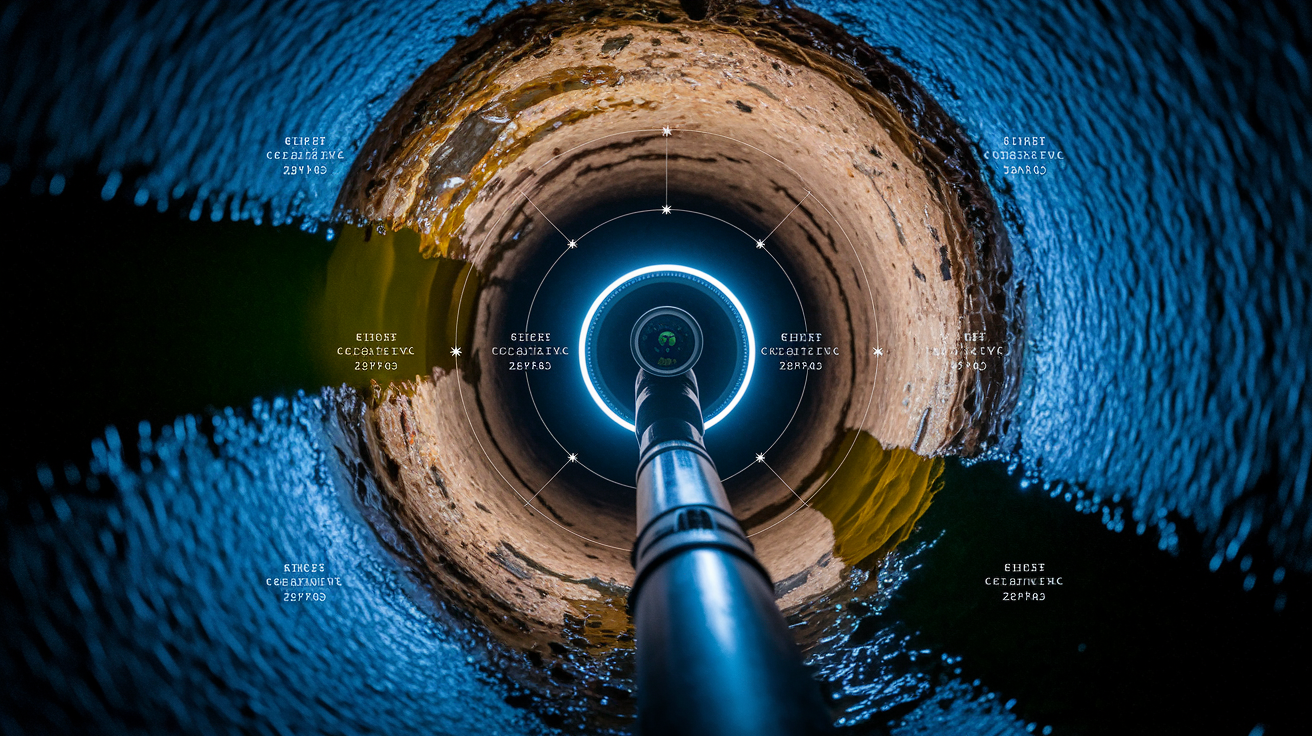
Drain and sewer cameras feature flexible cable-mounted cameras with LED lighting arrays providing clear visibility inside pipes. Inspection depth ranges from 100 to 400 feet depending on cable length and pipe diameter. Real-time color video with recording documents conditions for insurance claims and repair planning. Transmitter and locator systems let you precisely map depth and position from ground surface. Accuracy reaches within 6 inches for pipe depths up to 20 feet, letting crews mark exact excavation locations before digging.
Borescopes and inspection scopes include rigid models for straight-line inspection through walls or floors, and flexible articulating models for navigating wall cavities, ceiling spaces, and confined areas behind fixtures. Typical camera head diameter measures 5 to 10mm, fitting through small openings without demolition. Working length spans 3 to 15 feet depending on the model. Features include adjustable LED brightness for different viewing conditions, still image capture for documentation, and Wi-Fi connection compatibility allowing smartphone displays instead of dedicated monitors.
Visual confirmation before demolition prevents unnecessary wall or floor opening, saving $500 to $3,000 in repair costs when the suspected leak location proves wrong. Permanent video documentation supports insurance claims by showing the actual damage and justifying repair scope. Recorded video also verifies proper repair completion before closing walls. Limits include needing a pipe access point such as a cleanout, removed fixture, or drilled inspection hole. Cameras can’t penetrate solid materials, only traveling through open spaces. Water-filled pipes need drainage before inspection since cameras can’t see through standing water.
Smart and IoT-Connected Detection Equipment
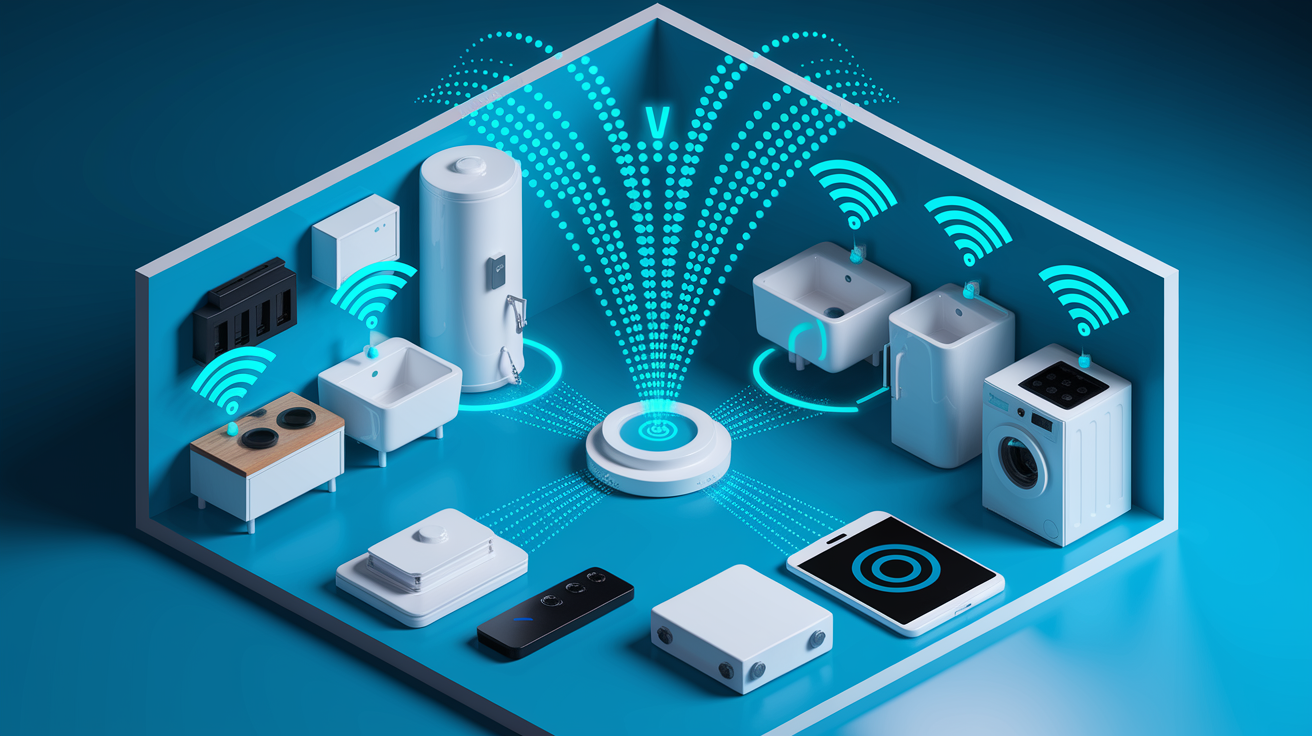
Smart leak detection connects Wi-Fi or cellular sensors to cloud monitoring platforms, sending smartphone notifications within seconds of moisture detection. You can monitor remotely from any location with internet access. Integration with home automation systems includes voice assistants like Alexa or Google Home, and smart home hubs for centralized control of multiple devices and automated responses.
Communication protocols vary in cost, range, and installation complexity. Wi-Fi direct connection links sensors straight to the home router but needs strong signal strength at each sensor location. Hub-based systems use proprietary protocols, reducing per-sensor cost by eliminating individual Wi-Fi radios. Cellular LTE connections operate independent of home networks, perfect for vacation properties or construction sites without reliable internet. LoRaWAN works for commercial buildings covering 300,000 square feet with minimal infrastructure. Zigbee and Z-Wave mesh networks provide extended range through device-to-device relay, where each powered device extends the network reach.
Advanced features include machine learning algorithms establishing baseline water usage patterns over 2 to 4 weeks, then reducing false alarms by 60 to 80% through intelligent pattern recognition. Automatic water shutoff integration cuts water supply within 5 seconds of major leak detection, preventing catastrophic damage that occurs when leaks run for hours. Historical analytics identify high-risk periods like winter freezing events and locations showing repeated minor alarms indicating developing problems. Multi-property dashboards let property managers monitor 50 or more units from a single interface, with map views showing which properties triggered alarms. Geofencing technology increases alert sensitivity when residents leave the property based on smartphone location, providing enhanced protection for unoccupied homes.
Subscription costs typically range $3 to $15 per month for cloud services and data storage, with discounts for annual prepayment. Hardware costs run $50 to $300 per sensor location plus $200 to $500 for communication hubs if the system requires them. Documented benefits include 24/7 monitoring regardless of occupancy, immediate response reducing average water damage costs by up to 80% compared to leaks discovered hours later, and best practices for preventing water damage that insurance carriers recognize with premium discounts of 5 to 15% available from major providers for documented monitoring systems.
Automatic Shutoff Valves and Flow Monitoring
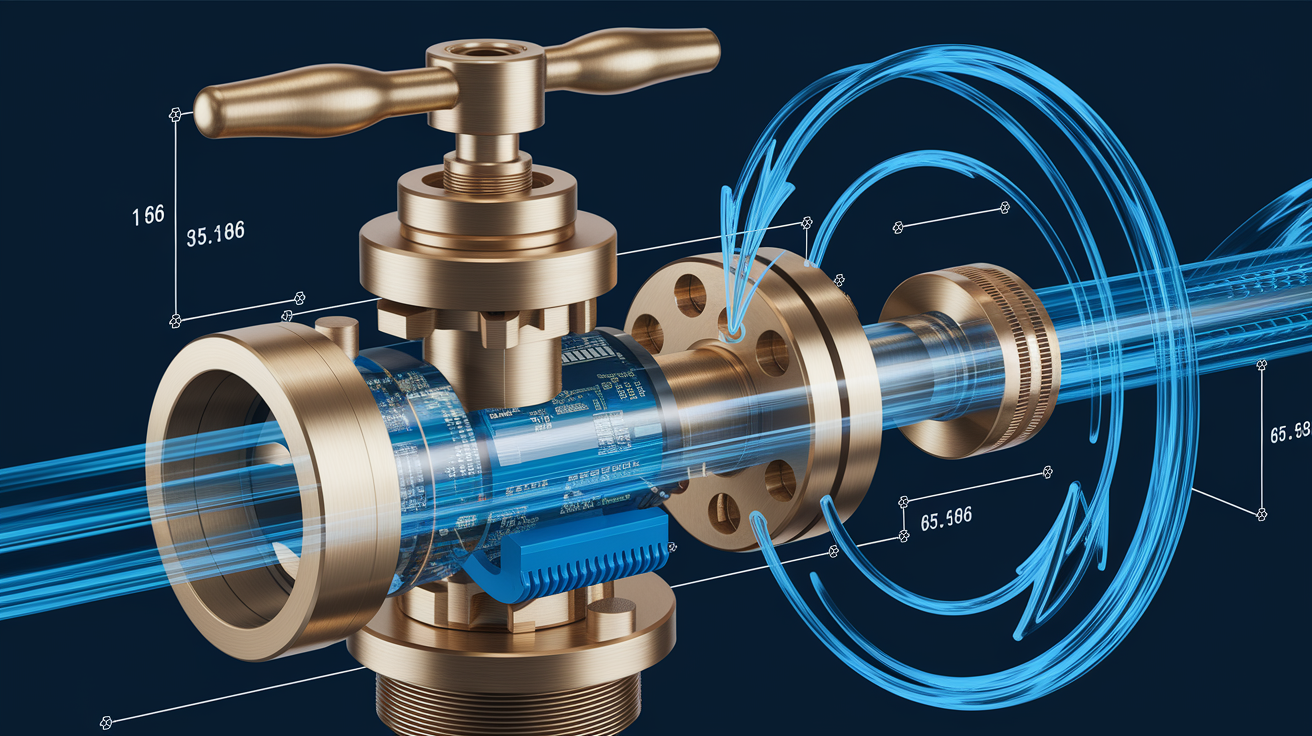
Automatic shutoff valves install as motorized ball or gate valves on main water lines or zone piping. Triggers include pressure drop sensors detecting 15 PSI or greater drops indicating pipe ruptures, moisture detector signals from connected leak sensors, timer-based closure for vacation mode protection, or manual app control letting you shut off remotely when you’re away. Typical closure time spans 3 to 10 seconds. Gradual closing mechanisms prevent water hammer, the pressure surge that occurs with instant valve closure and can damage fixtures, burst supply tubes, or crack toilet tanks.
Installation strategy compares whole-house installation on the main line providing complete property protection with investment of $800 to $1,500 installed, versus point-of-use installation at individual water heaters or fixtures at $400 to $600 each. Point-of-use lets you target high-risk areas while maintaining water service to the rest of the home during repairs. Flow monitoring integration measures gallons per minute continuously. The system establishes baseline consumption patterns over 2 to 4 weeks of normal use, learning when morning showers typically run, when irrigation cycles operate, and typical overnight usage. Detection of unusual flow patterns identifies continuous leaks as small as 1 to 2 gallons per hour, catching toilet flapper leaks and irrigation valve failures before they waste thousands of gallons.
What to consider when selecting automatic shutoff systems:
Installation location options include main line for complete property protection, individual fixtures for targeted control of water heaters or washing machines, or zone-based approach for large homes with separate plumbing zones. Power requirements cover AC powered with battery backup capability maintaining 30 or more valve closures during extended power outages. Fail-safe position means normally open configuration maintaining water service during system failure versus normally closed requiring active power to maintain flow. Manual override access includes bypass valve allowing water service during system maintenance or emergency release mechanism for immediate manual operation. Professional installation handles plumbing modifications for valve integration, electrical connection for motorized operation, and pressure testing verifying no leaks at new connections. Integration capability covers compatibility with existing smart home systems and connection protocols matching installed leak detection sensors.
Water bill savings of 15 to 30% are possible through usage insights identifying inefficient fixtures running more water than expected and irrigation schedules watering during peak evaporation hours. Automatic leak detection cuts consumption from slow leaks that would otherwise run for weeks before discovery.
Equipment Selection Based on Application Needs
Equipment selection follows a framework based on five critical factors. Leak type and fluid determines whether you’re detecting water, natural gas, refrigerant, or compressed air since each needs different detection technology. Location accessibility influences whether hidden pipes require non-invasive methods like acoustic or thermal detection versus accessible areas that work with contact sensors. Budget constraints balance initial investment against total cost including potential damage costs. Consequence severity weighs cosmetic water damage against business interruption or safety hazards needing immediate detection. Required response time determines whether unmanned facilities need immediate automatic shutoff versus alert-only systems for occupied buildings with maintenance staff available.
Residential selection starts with strategic placement of spot sensors at highest-risk fixtures. Water heater drip pans catch tank failures. Under-sink placement monitors supply line connections for kitchen and bathroom fixtures. Washing machine sensors detect both supply hose failures and drain backups. Dishwasher sensors catch leaks from door seals and supply connections. Most homes need 4 to 8 sensors at $15 to $60 each, totaling $60 to $500 for comprehensive high-risk area coverage. Smart whole-home systems providing monitoring with automatic shutoff run $500 to $1,200 including installation. Handheld moisture meters priced $50 to $150 let homeowners investigate suspected leaks, identifying wet drywall or subflooring before calling professionals and reducing diagnostic service call costs.
| Application Type | Recommended Equipment | Typical Investment | Detection Priority |
|---|---|---|---|
| Residential Preventive | Spot sensors + moisture meter | $200-$600 | Water heater, fixtures, appliances |
| Rental Property Management | Smart IoT systems with remote alerts | $500-$2,000 per unit | Whole-home coverage with automatic shutoff |
| Commercial Building | Rope sensors + flow monitoring | $5,000-$25,000 | Mechanical rooms, risers, critical equipment |
| Industrial Facility | Acoustic systems + pressure monitoring | $15,000-$75,000 | Process lines, underground mains, storage tanks |
| Underground Utility | Acoustic correlators + tracer gas | $10,000-$50,000 per mile | Distribution mains, transmission lines |
| HVAC/Refrigeration | Refrigerant detectors + pressure switches | $1,000-$8,000 per system | Compressors, evaporators, line sets, mechanical rooms |
Equipment investment should be evaluated against water damage incident costs. Residential insurance claims average $10,000 per event. Commercial property claims average $50,000 to $100,000 depending on building size and contents. Business interruption costs potentially reach $500,000 or more for critical facilities like data centers or medical facilities. Even premium detection systems represent just 0.5 to 5% of potential loss costs. Documented leak detection systems qualify for insurance premium reductions of 5 to 15%, creating 3 to 7-year payback periods through reduced premiums alone before accounting for damage prevention benefits.
Technical Specifications and Performance Factors
Detection sensitivity defines the minimum detectable leak rate, with range spanning multiple orders of magnitude. Basic water sensors detect gallons per hour when water contacts the sensor surface. Pneumatic pressure testing identifies leaks measured in cubic feet per minute. Gas detectors measure parts per million concentration in surrounding air. Critical sealed component testing reaches micron-level sensitivity, with helium mass spectrometry detecting leaks as small as 1×10⁻¹⁰ atm cc/sec. Higher sensitivity means earlier detection when leaks are still small and easier to repair. Equipment complexity and cost increase by 3 to 10 times per order of magnitude improvement in sensitivity.
Response time ranges from immediate detection under 3 seconds for direct contact water sensors to seconds or minutes for area monitoring systems depending on sensor spacing and communication protocol speed. Pressure decay testing requires hours for system stabilization before meaningful measurements occur. False alarm rates get affected by environmental factors. Dust buildup on sensors creates conductive paths mimicking water presence. Humidity condensation in unheated spaces triggers moisture sensors. Vibration from passing vehicles or nearby equipment triggers acoustic sensors monitoring underground pipes. Temperature fluctuations affect pressure readings in sealed systems. Quality equipment achieves false alarm rates below 1% through sensor design improvements and signal processing algorithms that distinguish real events from environmental variations.
Environmental operating limits include temperature range typically 32 to 120°F for standard equipment. Extended range models operate from -40 to 185°F for outdoor winter installation or high-temperature process monitoring at premium cost. Humidity tolerance rates most sensors 0 to 95% non-condensing. Conformal coated electronics are needed for condensing environments where moisture forms directly on circuit boards. Chemical compatibility matters in corrosive atmospheres containing chlorine, ammonia, or industrial solvents that degrade sensor materials. Intrinsically safe ratings including Class I Division 1 and 2 or ATEX certification are required for explosive atmosphere installation in fuel storage facilities, chemical plants, or grain elevators. Safety certification adds 40 to 100% to equipment cost.
Accuracy validation includes calibration intervals typically 12 months for professional acoustic and ultrasonic equipment and 24 months for pressure and gas detection devices. Field testing procedures use known leak sources like calibrated orifices or certified calibration gases verifying sensor response matches specifications. Relevant certification standards include ISO 12311 for acoustic emission testing, ASTM E1066 for tracer gas procedures, and ASTM D7053 for pressure decay testing. Performance degradation of 10 to 20% typically occurs between calibration cycles for precision sensors. Annual recertification maintains manufacturer specifications and regulatory compliance for facilities subject to environmental or safety regulations.
Total Cost of Ownership Analysis
Total cost extends well beyond purchase price. Professional installation labor ranges $200 to $2,000 depending on system complexity and whether electrical or plumbing integration is needed. Annual calibration and maintenance for professional equipment typically costs $100 to $500 including sensor verification, software updates, and performance documentation. Consumables include batteries at $10 to $30 every 2 to 5 years per sensor, replacement sensors at $25 to $200 depending on type and quality, and tracer gases at $50 to $300 per test for helium or refrigerant refills. Monitoring service subscriptions for cloud-based smart systems average $36 to $180 annually, with monthly costs ranging $3 to $15. Multi-year prepay arrangements offer discounts of 15 to 25% compared to month-to-month billing.
Equipment lifespan expectations vary by technology and usage intensity. Spot sensors last 5 to 10 years before sensor degradation or battery compartment corrosion requires replacement. Rope sensors last 3 to 7 years, with shorter life resulting from degradation caused by repeated wetting and drying cycles. Acoustic and ultrasonic equipment lasts 10 to 15 years with proper annual calibration. Thermal cameras last 8 to 12 years before detector array degradation reduces image quality. Pressure testing equipment lasts 15 to 20 years with basic maintenance since mechanical gauges and chambers have few wear components. Smart IoT sensors last 5 to 8 years, limited by electronics obsolescence as communication protocols evolve. Automatic shutoff valves last 15 to 25 years, matching typical plumbing fixture lifespans.
What justifies leak detection investment:
Average damage claim prevention runs $10,000 for residential properties, $50,000 for commercial buildings, $500,000 or more for critical facilities experiencing business interruption. Insurance premium discounts of 5 to 15% with documented monitoring systems create $200 to $2,000 annual savings depending on property value and coverage limits. Water bill reduction of 10 to 30% possible with flow monitoring and usage analytics, averaging $300 to $800 annually for residential properties and $2,000 to $15,000 for commercial properties with irrigation systems. Equipment lifespan of 3 to 25 years depending on technology type provides long-term protection value that compounds over time. Property value enhancement from smart home systems adds 2 to 5% to resale value, averaging $5,000 to $15,000 for median-priced homes in markets where buyers value technology integration.
Rental options exist for specialized professional equipment when purchase can’t be justified. Acoustic correlators rent for $150 to $300 per day. Thermal imaging cameras rent for $75 to $200 per day depending on resolution and features. Tracer gas systems rent for $100 to $250 per day including consumable gases. Rental makes sense for one-time troubleshooting or occasional professional use. Purchase breakeven typically occurs at 15 to 30 rental days, making ownership economical for contractors performing 2 or more leak investigations monthly.
Implementation Best Practices and Maintenance
Strategic sensor placement maximizes detection effectiveness. Spot sensors position within 1 inch of floor surfaces at water heater drain pans where tank failures first appear. Under-sink placement positions sensors next to supply line connections where most failures start. Washing machine and dishwasher sensors capture both supply line failures and drain backups. Rope sensors install along full pipe runs in crawl spaces and mechanical rooms with the sensor cable maintaining continuous floor contact, not suspended above the surface. Acoustic sensors mount at main line access points including meter vaults and valve chambers with spacing of 100 to 300 feet along pipelines. Spacing depends on pipe material since metal conducts sound farther than PVC. Thermal imaging survey paths get planned for maximum temperature differential times, meaning early morning hours for roof moisture surveys when overnight cooling creates larger temperature differences, and during heating system operation for radiant floor leak investigations.
Installation considerations include power source availability and backup capability. AC power with battery backup works best for critical sensors, maintaining 30 or more days of operation during extended outages. Wireless signal strength needs verification for smart systems, with minimum -70 dBm signal strength needed for reliable IoT connectivity. Test signal at each proposed sensor location before final installation. Accessibility matters for routine maintenance and battery replacement. Position sensors where you can reach them without moving furniture, disconnecting equipment, or accessing locked areas. Physical protection prevents damage from foot traffic, equipment wheels, and floor cleaning operations. Use protective sensor covers or recessed mounting in high-traffic areas. Avoid placement in areas experiencing normal condensation including HVAC condensate drain pans, refrigerator drip pans, and basement dehumidifier discharge areas. These locations generate nuisance alarms without indicating actual plumbing failures.
Preventive maintenance schedules extend equipment life and maintain reliability. Battery replacement occurs every 2 to 5 years based on manufacturer specifications and low battery alert activation. Monthly sensor functionality testing uses the test button or controlled water exposure confirming alarm activation and notification delivery to all designated recipients. Quarterly sensor contact cleaning in dusty environments uses isopropyl alcohol on a cotton swab, removing contamination that degrades conductivity-based detection. Annual calibration for precision acoustic and gas detection equipment requires qualified technicians with traceable calibration standards and documentation. Firmware updates for smart systems should be applied within 30 days of release, addressing security vulnerabilities discovered since the last version and adding features that improve detection accuracy.
User training requirements include understanding alarm meanings since different tones indicate water detection versus low battery versus system faults needing service. Emergency response procedures cover water shutoff valve locations for individual fixtures and the main shutoff, plus main electrical disconnect locations for flooded areas where standing water creates electrocution risk. Basic troubleshooting before calling service includes checking battery installation orientation, verifying AC power supply connection and outlet function, testing sensors with small water puddles, and confirming hub and router connectivity for wireless systems. Documentation practices include logging alarm events with date and time, maintenance activities performed, and battery replacements creating a service history showing system reliability. Proper training and maintenance extends equipment operational life 30 to 50% beyond nominal ratings and maintains detection reliability above 95% compared to 70 to 80% for neglected systems experiencing sensor drift and communication failures.
Final Words
The right leak detection equipment types depend on what you’re protecting and how much risk you’re facing. A few well-placed spot sensors can save a home. Commercial buildings need rope sensors or flow monitoring. Industrial systems might require acoustic correlators or tracer gas detection.
Start with your highest-risk areas. Match the equipment to the job. Test it regularly. Keep batteries fresh.
Good detection gives you time. Time to shut off the water. Time to call for help. Time to avoid serious damage. That’s what matters most.
FAQ
Q: What is the best water leak detection device?
A: The best water leak detection device depends on your specific application. For residential whole-home protection, smart IoT systems with automatic shutoff valves provide comprehensive monitoring and damage prevention. For commercial buildings, rope sensors combined with flow monitoring offer precise location identification across large areas. For underground pipes, acoustic correlators deliver accurate leak pinpointing without excavation.
Q: What is the most effective leak detection method?
A: The most effective leak detection method varies by leak type and location. Acoustic and ultrasonic sensors work best for pressurized underground pipes, detecting sound frequencies from escaping fluids with accuracy within 3 feet. Thermal imaging excels for moisture in walls, roofs, and slabs by visualizing temperature differences. Tracer gas systems using helium provide extreme sensitivity for detecting micro-leaks in sealed HVAC and refrigeration systems.
Q: What do plumbers use to detect leaks?
A: Plumbers use to detect leaks a combination of acoustic listening equipment for underground pipes, thermal imaging cameras for hidden moisture in walls and ceilings, pressure testing devices to confirm leak presence in isolated sections, and inspection cameras to visually examine pipe interiors. For slab leaks and hidden pipe runs, plumbers rely on electronic correlators that triangulate exact leak position between two sensor points.
Q: How do acoustic leak detectors work?
A: Acoustic leak detectors work by capturing sound wave frequencies created when pressurized fluids escape through pipe openings. These systems monitor frequencies typically ranging from 100 Hz to 10 kHz that are often inaudible to human ears. Digital correlators compare sound arrival times between two sensor points placed 100-300 feet apart, calculating exact leak location with accuracy within 3 feet.
Q: What types of water leak sensors exist for commercial buildings?
A: Water leak sensors for commercial buildings include flood sensors or pucks for point detection, rope and cable sensors covering 200 linear feet or more, printed sensors offering flush-mounted thin-profile monitoring, and in-line flow meters measuring water velocity and volume continuously. Rope sensors can monitor areas requiring 5-10 spot detectors with single installation, making them cost-effective for mechanical rooms and data centers.
Q: How accurate is thermal imaging for leak detection?
A: Thermal imaging for leak detection achieves accuracy by visualizing temperature differentials as small as 0.1°F with professional-grade cameras. Water infiltration creates evaporative cooling producing 2-10°F temperature reduction, while hot water leaks show 5-20°F elevation. Detection works through walls up to 6 inches thick depending on material density, but requires temperature difference between leak and surroundings to be effective.
Q: What is tracer gas leak detection used for?
A: Tracer gas leak detection is used for finding extremely small leaks in sealed systems including HVAC, refrigeration, vacuum chambers, and critical industrial equipment. Helium-based systems achieve sensitivity to 1×10⁻¹⁰ atm cc/sec, detecting leaks 1000x smaller than bubble testing methods. Hydrogen-nitrogen mix gases provide affordable alternatives for large underground pipes and district heating lines where helium costs would be prohibitive.
Q: How do pressure testing devices detect leaks?
A: Pressure testing devices detect leaks by measuring pressure loss over time in isolated pipe sections or sealed systems. Hydrostatic testing uses water at 1.5x operating pressure for 2-24 hours, while pneumatic testing with air or nitrogen provides faster results. Vacuum decay methods measure vacuum loss rate with sensitivity detecting leaks as small as 1 micron radius in sealed components.
Q: What is the difference between spot sensors and rope sensors?
A: The difference between spot sensors and rope sensors is coverage area and installation cost. Spot sensors are single-point battery-powered devices costing $15-60 each that detect water through direct contact at one location. Rope sensors monitor continuous lengths from 6 to 500 feet along their entire cable, replacing 5-10 spot sensors but costing approximately 5 times more and requiring complete drying for 24-72 hours after detection.
Q: How do smart leak detection systems work?
A: Smart leak detection systems work by connecting Wi-Fi or cellular-enabled sensors to cloud-based monitoring platforms that send smartphone notifications within seconds of detection. These systems establish baseline water usage patterns using machine learning algorithms, integrate with automatic shutoff valves to stop water flow within 5 seconds of major leaks, and enable remote monitoring from any location through mobile apps.
Q: What equipment is needed for underground pipe leak detection?
A: Equipment needed for underground pipe leak detection includes acoustic sensors and ground microphones for sound-based detection, digital correlators that triangulate leak position between two points with 100-300 foot spacing, thermal imaging for shallow pipes showing temperature variation, and tracer gas systems for precise location in larger distribution mains. Detection distance capabilities range from 3-15 feet depending on pipe material, burial depth, and ambient noise.
Q: How much do automatic water shutoff valves cost?
A: Automatic water shutoff valves cost $800-1,500 installed for whole-house main line installation providing complete property protection. Point-of-use installation at individual fixtures like water heaters costs $400-600 each for targeted control. These motorized valves close in 3-10 seconds upon detecting pressure drops, moisture sensor signals, or manual app commands, preventing extensive water damage in unmanned properties.
Q: What is the best leak detection method for HVAC systems?
A: The best leak detection method for HVAC systems is refrigerant-specific halogen detectors with sensitivity to 0.1 oz/year for common gases including R-22, R-410A, and R-134a. For extremely small leaks, helium tracer gas with mass spectrometry-based analyzers provides sensitivity to 1×10⁻¹⁰ atm cc/sec. Pressure testing and electronic leak detectors are used for routine maintenance and regulatory compliance in systems containing more than 50 pounds of refrigerant.
Q: How do moisture meters detect water damage?
A: Moisture meters detect water damage using pin-type probes that penetrate building materials and measure electrical resistance, providing moisture content readings on a 0-100% scale with ±2% accuracy, or pinless electromagnetic scanning that detects moisture 3/4 inch deep without surface penetration. These handheld devices cost $50-400 and include material-specific calibration settings for accurate readings in wood, drywall, concrete, and other building materials.
Q: What are printed leak sensors?
A: Printed leak sensors are thin flexible substrate panels less than 1mm thick that provide flush-mounted moisture detection with multiple zones per panel. These sensors wipe-clean for rapid reset within minutes, maintaining continuous monitoring without extended drying periods required by rope sensors. Printed sensors are optimal for critical environments including telecom facilities and pharmaceutical storage where uninterrupted protection is mandatory, with installation investment of $400-1,500 per monitored zone.
Q: How often should leak detection equipment be calibrated?
A: Leak detection equipment should be calibrated every 12 months for professional acoustic and ultrasonic devices and every 24 months for pressure and gas detection equipment according to manufacturer specifications and industry standards. Field testing using known leak sources or calibration gases verifies accuracy. Performance degradation of 10-20% typically occurs between calibration cycles for precision sensors requiring annual recertification to maintain specifications.
Q: What is the total cost of ownership for leak detection systems?
A: The total cost of ownership for leak detection systems includes initial purchase price, professional installation ($200-2,000 depending on complexity), annual calibration and maintenance ($100-500 for professional equipment), consumables including batteries ($10-30 every 2-5 years per sensor), and cloud monitoring subscriptions ($36-180 annually for smart systems). Equipment lifespan ranges from 3-7 years for rope sensors to 15-25 years for shutoff valves and pressure testing equipment.
Q: Where should water leak sensors be placed in homes?
A: Water leak sensors should be placed within 1 inch of floor surface at highest-risk locations including water heater drain pans, under kitchen and bathroom sinks adjacent to supply line connections, behind washing machines and dishwashers capturing both supply and drain failures, and near sump pumps in basements. Strategic placement of 4-8 sensors at these critical points provides comprehensive residential coverage for $60-500 total investment.
Q: Can thermal imaging cameras detect leaks through walls?
A: Thermal imaging cameras can detect leaks through walls up to 6 inches thick depending on material density by visualizing temperature differentials created by moisture infiltration. Professional cameras offering 0.1°F thermal sensitivity identify evaporative cooling from water infiltration creating 2-10°F reduction and hot water pipe leaks showing 5-20°F elevation. Detection is ineffective through metal surfaces which reflect rather than emit infrared radiation.
Q: What is the ROI of leak detection equipment?
A: The ROI of leak detection equipment is realized through preventing average damage claims of $10,000 residential and $50,000 commercial, insurance premium discounts of 5-15% saving $200-2,000 annually depending on property value, and water bill reductions of 10-30% through flow monitoring averaging $300-800 annually for homes. Even premium systems cost 0.5-5% of potential loss, with documented systems achieving 3-7 year payback through reduced insurance premiums alone.