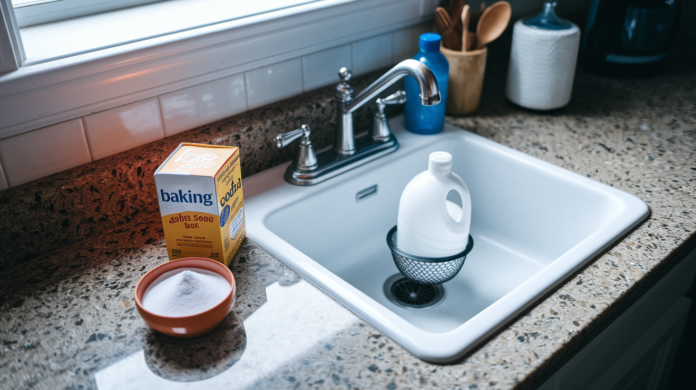

You’ve scrubbed greasy pans, rinsed rice down the drain, and poured that leftover bacon fat because it seemed harmless at the time. Now your kitchen sink drains like molasses and backs up every few weeks no matter how many times you plunge it. The real problem isn’t the clog you’re dealing with today. It’s what’s been building up inside your pipes for months, hardening into layers that catch everything flowing past. Here’s what’s actually causing those repeat blockages and how to fix them for good.
Immediate DIY Solutions for Kitchen Sink Drain Blockages
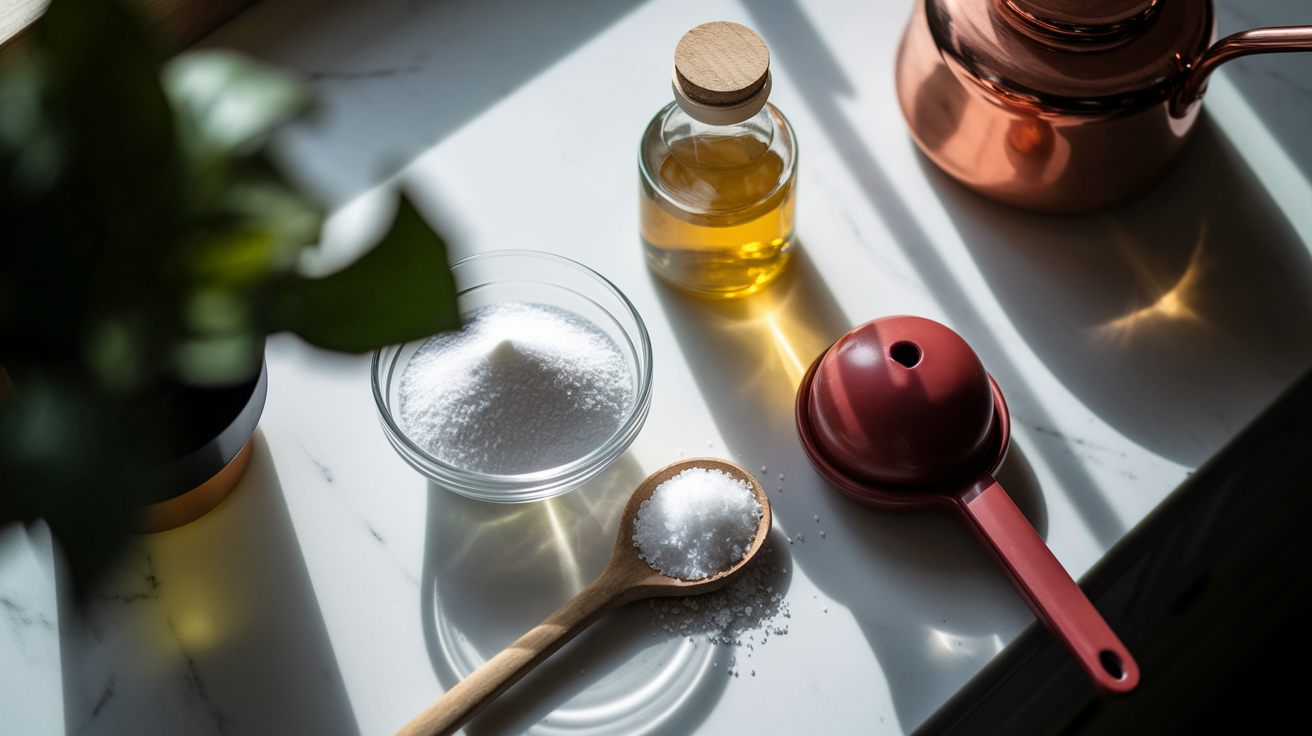
Most kitchen sink clogs can be cleared right now with stuff you’ve already got under your sink and a few basic tools. These work on partial blockages and fresh buildup before you need to call anyone.
Here’s what to try, in order:
Baking soda and vinegar method. Pour half a cup of baking soda down the drain, then half a cup of vinegar. Let it fizz for 10 to 15 minutes, then flush with boiling water. The reaction helps break down grease and food stuck to pipe walls.
Baking soda and salt method. Mix half a cup of each and pour it down. Follow with boiling water, then let it sit for several hours or overnight. This one’s better for stubborn grease that needs more contact time.
Boiling water alone. For simple grease clogs near the surface, slowly pour a full kettle of boiling water straight down in two or three stages. Give it a few seconds between pours to work.
Plunger technique. Fill the sink with enough water to cover the plunger bell completely. Place it over the drain and plunge hard up and down for 30 seconds. The push and pull forces water both ways through whatever’s stuck. Repeat if you need to.
Drain snake procedure. Pull off the drain cover. Insert the cable into the opening, turning the handle slowly as you feed it deeper. When you hit resistance, keep turning to grab the clog. Pull it out and toss whatever hair or food comes with it.
Hot water flush. Run very hot tap water for several minutes to soften and wash away minor soap scum and light food buildup before it turns solid.
Chemical drain cleaners might look like the fastest fix, but they’ve got harsh stuff that eats away at pipes over time. They work by generating heat and dissolving material, sure. But they also damage the inside of your pipes with every use. Natural options using baking soda, vinegar, salt, dish soap, and hot water are gentler for regular maintenance. They break down organic matter without leaving corrosive residue that weakens your plumbing.
These DIY methods work best for partial clogs and fresh blockages that haven’t hardened yet. If you’re dealing with standing water that won’t budge after trying two or three of these, or if the clog comes back within a few days, you’re probably looking at a deeper problem that needs different tools or professional help.
The Main Culprits Behind Your Recurring Kitchen Sink Clogs
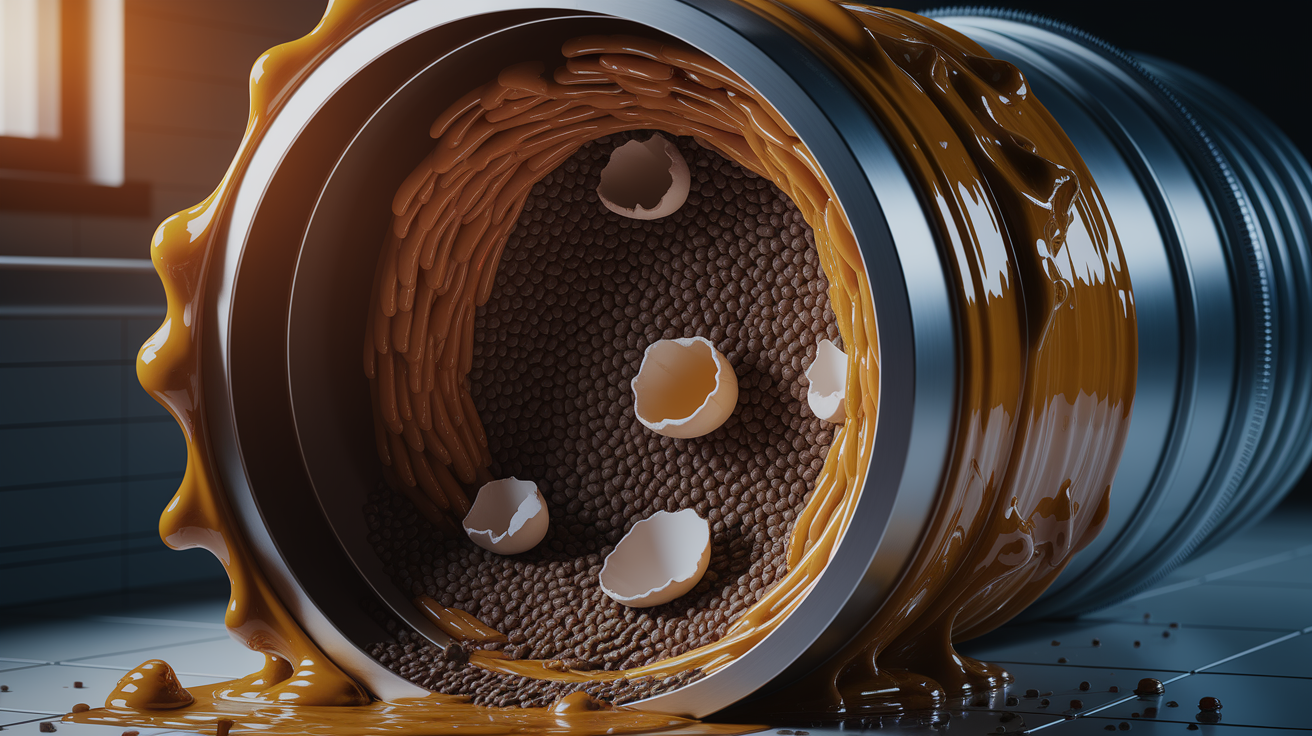
Recurring clogs tell you material’s building up inside your pipes instead of getting completely cleared. Each time you unclog the drain, you remove the worst of it, but layers of residue stay stuck to the walls.
Fats, oils, and grease cause most kitchen sink clogs because they change once they leave your pan. When you pour liquid cooking oil or rinse greasy dishes, that fat flows smoothly through the drain opening. But partway through your pipes, as the temperature drops, the grease cools and hardens. It sticks to pipe walls in layers, getting thicker each time you wash dishes. Hot water pushes it further down temporarily, but it still hardens once it cools. The sticky coating catches other stuff flowing past. Think of it like a snowball rolling downhill. Each layer of hardened grease traps food particles, soap residue, and debris until the pipe gets so narrow water can’t flow through.
Certain food particles create the worst problems because of how they react with water inside your pipes. Coffee grounds absorb water and clump together when wet, sticking to pipe sides and catching other materials. They should never go down the drain, even if you’ve got a garbage disposal. Pasta, rice, and beans swell when exposed to water and turn into a paste that sticks to pipe walls. Potato peels release starch that acts like glue. Eggshells break into tiny sharp bits that catch on any rough surface. Fibrous vegetables like celery strings, corn husks, and onion skins don’t break down. Instead they create tangles that trap other debris.
Soap scum and dish detergent leave a sticky film on pipe walls over time. The film itself doesn’t clog anything, but it creates a tacky surface that catches food particles, grease droplets, and whatever else flows past. Layers build up slowly until drainage crawls to a stop.
Kitchen Sink Plumbing Configuration and System Issues
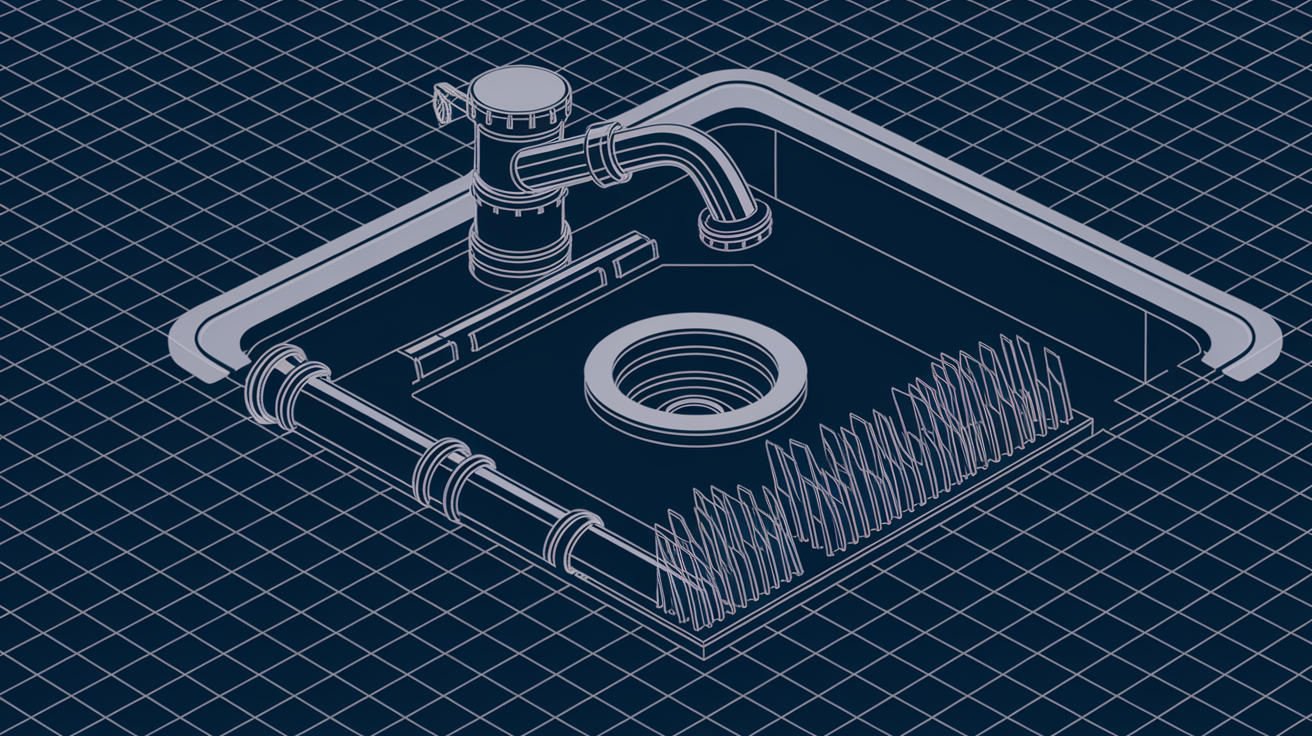
The P-trap is that curved section of pipe right beneath your sink, shaped like the letter P or S lying on its side. It holds standing water in the curve to block sewer gases from coming up through the drain. Objects that accidentally fall down often get stuck right there in the curve. Grease and food debris settle in the lowest part because water flow slows as it makes the turn. You can remove the P-trap by hand or with a wrench, unscrewing the fasteners on both ends. Keep a bucket underneath to catch the dirty water that spills when you pull it free. Once it’s off, you can see exactly what’s stuck inside and clean it out manually.
Hard water contains high levels of dissolved minerals, mainly calcium and magnesium. Every time water flows through your pipes, tiny amounts of these minerals stick to the interior walls. Over months and years, the deposits build up in layers, narrowing the pipe diameter. What started as a two inch pipe might now only have a one inch opening in the middle. Water flow slows because there’s less space for it to pass through. The rough mineral surface also catches grease and food particles more easily than smooth pipe walls. If your dishes have white spots after washing or your faucet has crusty buildup around the aerator, you’re dealing with hard water that’s doing the same thing inside your hidden drain pipes.
Old pipes develop problems new pipes don’t have. After decades of use, the interior surfaces get rough from corrosion and chemical reactions with everything that flows through. Metal pipes can develop rust spots, cracks, and pitting. The rough texture catches debris like Velcro catches fabric. Small cracks also create edges where grease and food can snag. Even plastic pipes degrade over time, developing a textured surface that grabs onto materials flowing past. The older your home’s plumbing, the more likely you’re fighting against damaged pipe interiors that turn minor debris into major clogs.
Proper pipe installation requires a slight downward slope so gravity helps water flow toward the main drain line. If pipes weren’t installed with the correct slope, or if they’ve shifted over time, you end up with dips and bellies in the line. These low spots create pools where water sits instead of flowing through. Debris settles there because there’s not enough velocity to carry it forward. Each time you use the sink, more material settles in the same spot until it builds into a complete blockage.
The vent stack is a pipe that runs from your drain system up through your roof, letting air into the plumbing system. Air pressure might sound unrelated to drainage, but it’s critical for water flow. When water rushes down a drain pipe, it pushes air ahead of it. That air needs somewhere to go, or it creates back pressure that slows the water down. A working vent lets air escape through the roof while water flows smoothly down. When vents get blocked by bird nests, leaves, or ice, or when they were never installed right, air pressure problems prevent proper drainage. You might hear gurgling sounds as air struggles to escape through the drain instead of through the vent.
Prevention and Maintenance Routine to Stop Clogs Before They Start
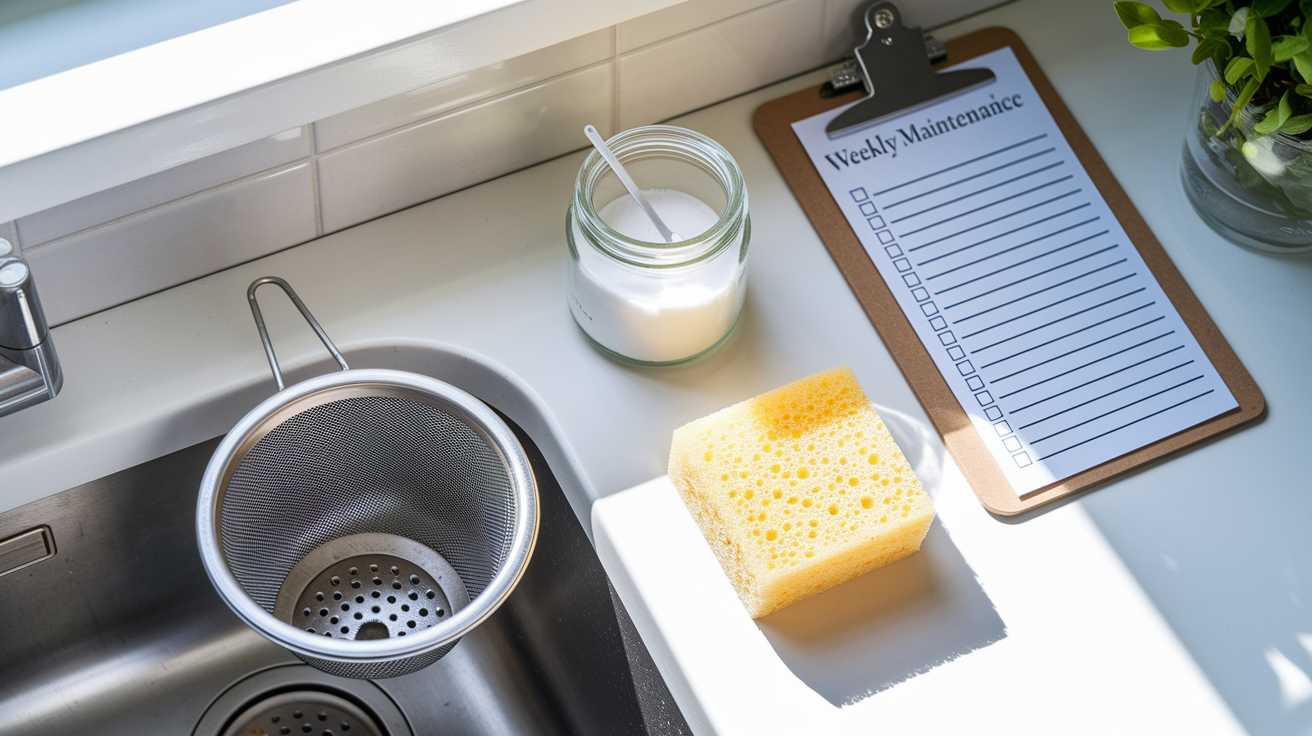
Prevention takes less time and costs way less than dealing with repeated clogs and potential pipe damage. A clogged drain isn’t just an inconvenience. It’s a sign that buildup is happening throughout your pipes.
Small daily habits, when combined with scheduled maintenance tasks, make a real difference in keeping your kitchen sink drain flowing freely for years. Most clogs develop gradually from repeated small mistakes rather than one big event.
-
Install and use sink strainers. Place a mesh or perforated strainer over your drain opening to catch food particles while water flows through. Empty it into the trash after each meal prep and dishwashing session.
-
Never pour cooking oil, grease, or fats down the drain. Let grease cool in the pan, then wipe it out with paper towels and throw those in the trash. Even small amounts of fat create coating inside pipes that hardens and traps other materials.
-
Scrape dishes thoroughly before rinsing. Use a rubber spatula or paper towel to remove all food remnants into the trash before putting dishes in the sink. Rinsing should only remove light residue, not chunks of food.
-
Run cold water during garbage disposal use and several seconds after. Cold water keeps grease and fats in solid form so the disposal can chop them up and push them through the pipes. Running water for a few extra seconds after you turn off the disposal makes sure everything clears the drain line.
-
Run hot water after dishwashing. Let hot water flow for 30 to 60 seconds after you finish washing dishes to flush away soap scum and detergent residue before they can build up on pipe walls.
-
Do a weekly hot water flush with baking soda. Once a week, pour one cup of baking soda down the drain followed by hot water. This helps break down light grease buildup and prevents material from hardening on pipe walls.
-
Only put appropriate items in garbage disposal. Disposals can grind soft fruit scraps, vegetable scraps, small cooked meat pieces, and ice. Don’t put fibrous vegetables, starchy foods like pasta or potato peels, eggshells, large bones, raw meat, or shells down the disposal.
-
Wipe greasy pans with paper towel before washing. Remove as much grease as possible with a dry paper towel before you add water and soap. This keeps fat out of your drain system entirely.
| Task | Frequency | Method | Time Required |
|---|---|---|---|
| Empty sink strainer | Daily | Remove strainer and dump contents in trash | 30 seconds |
| Hot water flush | Daily | Run hot water for 30-60 seconds after dishwashing | 1 minute |
| Baking soda and hot water treatment | Weekly | Pour 1 cup baking soda down drain, follow with hot water | 2 minutes |
| Baking soda and vinegar deep clean | Monthly | Pour 1/2 cup baking soda and 1/2 cup vinegar, wait 15 minutes, flush with boiling water | 20 minutes |
| Manual drain snake cleaning | Every 3 months | Remove drain cover, insert snake or zip-it tool, extract buildup | 10 minutes |
| P-trap inspection and cleaning | Every 6 months | Remove P-trap with wrench, clean interior, reinstall | 15 minutes |
Advanced Unclogging Tools and When to Use Them
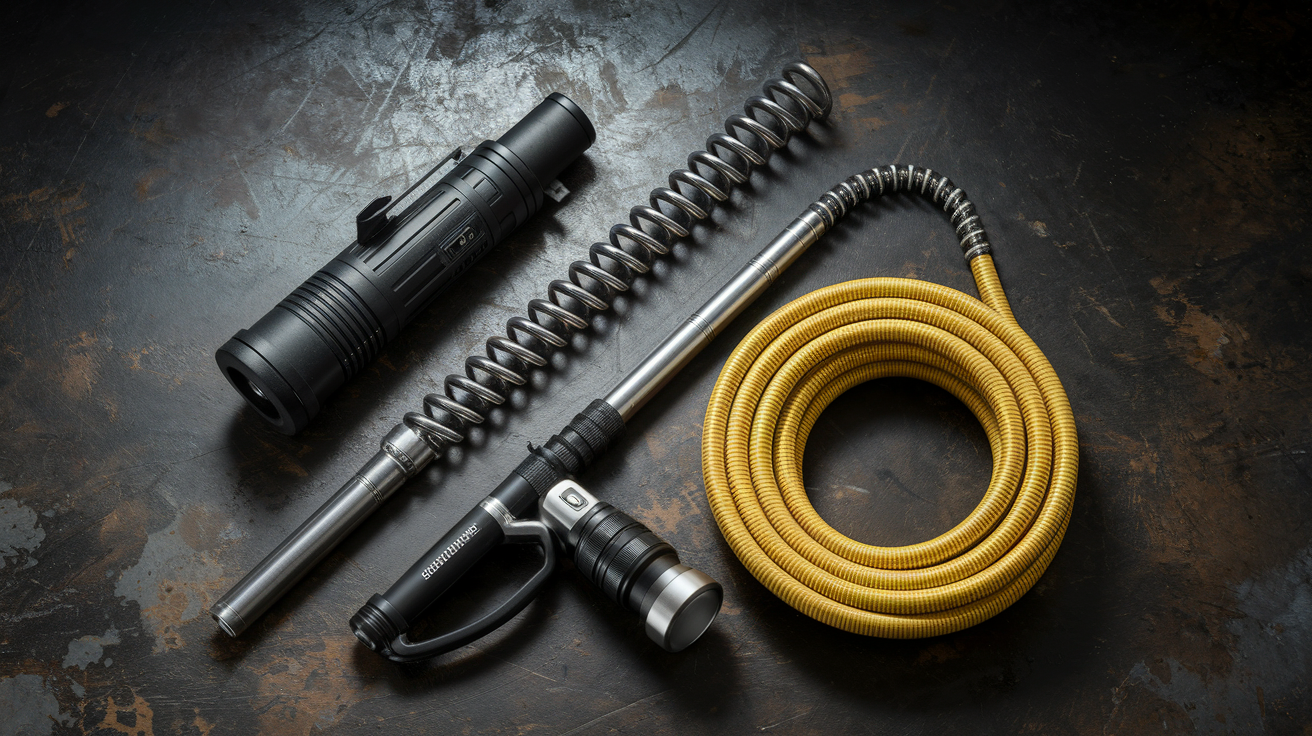
Manual drain snakes and auger tools reach blockages several feet into your pipes, well beyond what a plunger can touch. A basic handheld snake has a flexible cable that you feed into the drain opening, turning the handle as you push it deeper. When you feel resistance, keep turning to let the end grab onto hair, food clumps, or other debris. Professional grade motorized augers have longer cables and more power for reaching clogs in main drain lines or deeper in your plumbing system.
A wet/dry shop vacuum provides serious suction for stubborn clogs that won’t budge with plunging or snaking. Set it to liquids mode, create a tight seal over the drain opening, and turn it on to pull the blockage up and out. This works especially well when you can see or feel that something solid is stuck just below the drain opening. The vacuum method works where other tools fail because it reverses the direction of force, pulling material up instead of trying to push it down.
Try advanced DIY tools when basic methods don’t work and you’re comfortable working with your plumbing. If you’re not sure about removing the P-trap, or if the clog seems deeper in the system where you can’t reach it, that’s when to call a professional. Most homeowners can handle drain snakes and shop vacuums safely, but there’s no point struggling with a deep blockage when specialized equipment would clear it in minutes.
Professional plumbers have access to hydro jetting equipment that uses high pressure water streams to blast away years of accumulated grease, mineral deposits, and debris from pipe interiors. This goes way beyond what hot water from your tap can do. Hydro jetting typically gets used for severe buildup in main sewer lines or when recurring clogs show that pipe walls are coated with hardened material that scraping and snaking can’t remove.
Critical Warning Signs Your Clog Requires Professional Help

Some clogs point to larger problems in your plumbing system that DIY methods can’t fix. Knowing when you’re dealing with a symptom of deeper damage saves you from wasting time on temporary solutions.
Specific warning signs tell you it’s time to call a professional right away. Persistent foul odors coming from the drain suggest trapped organic matter rotting somewhere in your pipes, possibly from damaged pipes or improper venting. Complete blockage with standing water that refuses to drain even after plunging and snaking means the obstruction is either too large, too far down the line, or hardened beyond what household tools can break through. Water backing up into other fixtures while you run the kitchen sink points to a shared drain line problem or main sewer line blockage affecting multiple drains in your home. Gurgling sounds coming from the drain when water flows mean air pressure issues caused by partial blockages or venting problems deeper in the system.
Recurring clogs that return within days or weeks after you clean them out signal that you’re only removing the surface problem while residue stays stuck to pipe walls. Plunging and snaking remove the worst buildup so water can flow again temporarily, but they can’t blast away the sticky coating that remains on pipe interiors. That residue acts like a magnet for new debris. If you find yourself unclogging the same drain every few weeks, you’re dealing with either structural pipe issues or material buildup that needs professional cleaning equipment to fully remove.
System problems require professional diagnosis because they’re hidden inside walls or underground. Old corroded pipes develop rough interiors where rust, pitting, and cracks catch every piece of debris that flows past. What used to be smooth pipe walls now grab onto grease and food particles like sandpaper. Tree root invasion in main sewer lines affects kitchen drainage even though the roots are outside your house and underground. Roots sense moisture and grow toward sewer pipes, eventually punching holes and creating obstructions that block flow from all your home’s drains. Improper pipe installation problems include lack of slope that prevents proper drainage, sagging sections that create low spots where water pools, and incorrectly sized pipes that don’t have adequate flow capacity.
Professional plumbers use camera inspection tools that show exactly what’s happening inside your pipes. A small waterproof camera on a flexible cable feeds through the drain line and sends live video, revealing tree roots puncturing pipes, cracks and breaks in old pipes, mineral buildup narrowing pipe diameter, and sagging or improperly sloped sections creating persistent clogs. This diagnostic step identifies root causes before catastrophic failure forces an emergency repair.
Common Mistakes That Worsen Kitchen Sink Clogs
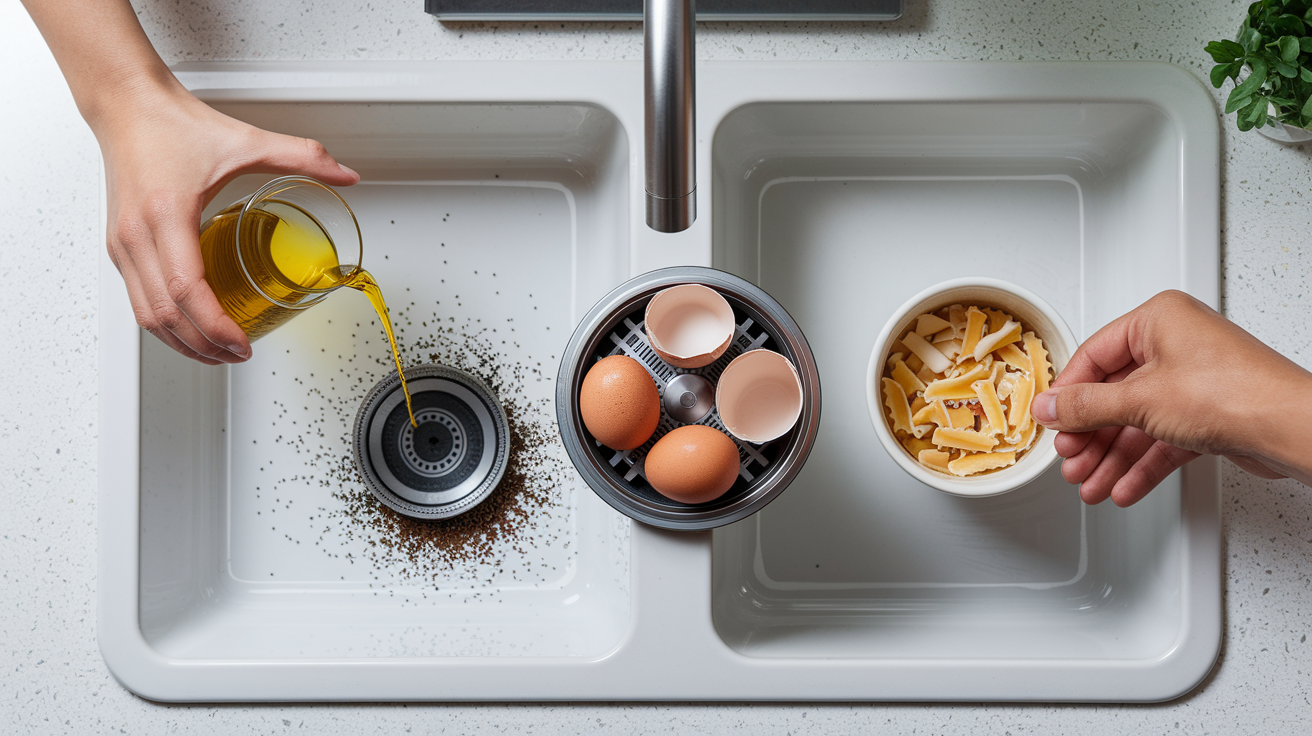
Well intentioned actions often make clogs worse or create conditions for recurring blockages. Understanding what not to do matters as much as knowing the right methods.
Here are five common mistakes to skip:
Using hot water to push grease down the drain. Hot water melts grease and makes it flow easily right now, but it only delays the problem. The grease flows further down your pipes in liquid form, then hardens when it cools. Now you’ve got the same grease blockage, just deeper in your plumbing system where it’s harder to reach.
Overloading garbage disposal with inappropriate items. Disposals can grind soft food scraps like fruit and vegetable pieces, not hard items. Eggshells create sandlike particles that stick together. Large bones and shells damage disposal blades. Raw meat is too fibrous and wraps around the mechanism. Putting these items down the disposal guarantees clogs and potential disposal damage.
Running disposal without adequate water flow. The disposal chops up food, but water flow is what actually carries that material through your pipes. If you run the disposal with just a trickle of water, or turn off the water right when you turn off the disposal, chopped food sits in the pipes instead of flowing to the main drain line.
Ignoring slow drainage until complete blockage occurs. A sink that drains slowly is telling you that buildup is narrowing your pipes right now. Ignoring it means the buildup will continue until water can’t flow at all. Addressing slow drainage early with cleaning and maintenance prevents complete blockages that need more aggressive intervention.
Rinsing plates heavily instead of scraping first. Treating your drain like a garbage disposal by rinsing chunks of food down sends material into pipes that have no way to break it down. Large pieces of food sit in the P-trap or further down the line, creating immediate obstruction or catching other debris flowing past.
Learning proper disposal habits prevents most kitchen sink clog problems before they start. The drain is for water and light residue only, not a convenient trash chute for everything you don’t want on your plate.
Final Words
Grease buildup, food particles, and pipe configuration issues are the main reasons why your kitchen sink keeps clogging. But you’re not stuck in a cycle.
Start with simple fixes like baking soda and vinegar or a drain snake. Build daily habits that keep debris out of your pipes. Use a sink strainer. Scrape your dishes. Run cold water with the disposal.
If clogs keep coming back even after DIY attempts, that’s your signal to call a plumber. Something deeper might be going on, like corroded pipes or a sloping problem.
Small prevention now beats emergency repairs later.
FAQ
How do I stop my kitchen sink from clogging?
You can stop your kitchen sink from clogging by installing sink strainers to catch food particles, never pouring grease or oils down the drain, scraping dishes thoroughly before rinsing, and running hot water after each use to flush soap scum and debris through the pipes.
Why does my kitchen sink keep clogging every few months?
Your kitchen sink keeps clogging every few months because grease buildup, food particles, and soap scum accumulate on pipe walls over time. Even after clearing a clog, residue remains stuck to pipes, creating sticky surfaces that trap new debris and cause recurring blockages.
What liquid do plumbers use to unclog drains?
Professional plumbers typically use enzyme-based drain cleaners or hydro jetting with pressurized water rather than chemical liquids. When chemicals are necessary, they use professional-grade formulations sparingly, as harsh chemical cleaners corrode pipes over time and provide only temporary relief without addressing root causes.
Why should you never use baking soda and vinegar to unclog a drain?
The claim that you should never use baking soda and vinegar to unclog drains is misleading. This natural method works safely for minor clogs and regular maintenance, using half a cup of each followed by boiling water. It’s gentler on pipes than chemical cleaners and won’t cause long-term corrosion.
When should I call a professional plumber for a clogged kitchen sink?
You should call a professional plumber when you notice persistent foul odors from the drain, complete blockage with standing water that won’t drain, water backing up into other fixtures, or clogs that return shortly after clearing them, as these indicate deeper plumbing system problems.
Can a garbage disposal cause recurring kitchen sink clogs?
A garbage disposal can cause recurring clogs when overloaded with inappropriate items like eggshells, large bones, fibrous vegetables, starchy foods, or when run without adequate cold water flow. Only small fruit scraps, vegetable pieces, and cooked meat should go through the disposal.
What causes slow drainage in kitchen sinks even without complete blockage?
Slow drainage in kitchen sinks occurs from gradual grease coating on pipe walls, mineral deposits from hard water narrowing pipe diameter, soap scum buildup trapping debris, or old corroded pipes developing rough interior surfaces that catch food particles more easily over decades.
How often should I clean my kitchen sink drain to prevent clogs?
You should flush your kitchen sink drain weekly with hot water and baking soda, perform monthly preventive treatment with baking soda and vinegar followed by hot water, and manually clean with a drain snake every few months to remove accumulated hair and debris.
What foods should never go down a kitchen sink drain?
Foods that should never go down a kitchen sink drain include pasta, rice, potato peels, coffee grounds, eggshells, and fibrous vegetables like celery because they absorb water, expand, clump together, and create paste that sticks to pipe walls and catches other debris.
Can hard water cause kitchen sink clogs?
Hard water can contribute to kitchen sink clogs by creating mineral deposits that accumulate inside pipes over time, narrowing the pipe diameter and restricting drainage capacity. This mineral buildup provides rough surfaces where food particles and grease stick more easily.
What’s the safest way to unclog a kitchen sink at home?
The safest way to unclog a kitchen sink at home is using a plunger with enough standing water to cover the bell, plunging vigorously for 30 seconds, or trying the baking soda and vinegar method with boiling water flush before attempting drain snakes or chemical cleaners.
How do I know if my kitchen sink clog is in the P-trap?
You can identify a P-trap clog by slow drainage immediately at the sink, standing water that eventually drains, or by removing the curved P-trap pipe beneath the sink with a bucket underneath to check for stuck objects or debris buildup in the curved section.