
Ever turn on a faucet and feel like the water’s gonna blast through the wall? Or notice your pipes making banging sounds you swear weren’t there before? Those aren’t normal quirks. They’re signs your water pressure might be off. Most homeowners never think about the force pushing water through their pipes until something starts leaking or a fixture gives out way too soon. Turns out, there’s a sweet spot for pressure, and staying in that range protects your whole system. Here’s what normal actually looks like and why it matters.
Typical Household Water Pressure Range
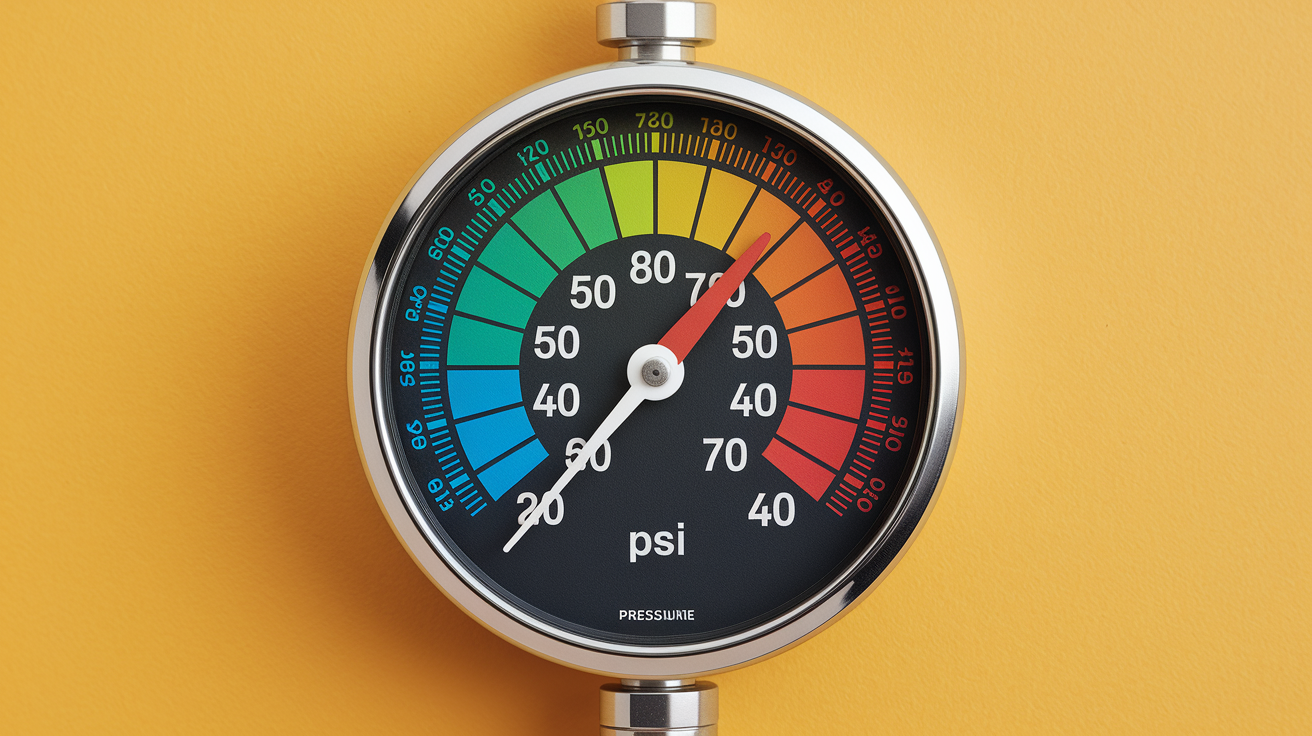
Normal residential water pressure sits somewhere between 40 and 80 psi in most homes. The sweet spot? That’s usually 50 to 70 psi, with 60 psi being what most plumbers recommend for residential use. This middle ground gives you enough force to get water flowing nicely to all your fixtures without beating up your plumbing system. Most pressure regulators come from the factory set between 45 and 60 psi, which lines up with building codes and what appliance manufacturers want to see.
When pressure dips below 40 psi, you’ll notice it during daily tasks. Showers feel weak, washing machines take forever to fill, and dishwashers don’t clean like they should. On the flip side, pressure above 80 psi creates a different set of headaches. It stresses pipes where they connect, makes leaks more likely, and can wreck water heaters, washing machines, and other equipment. The extra force wears out washers and seals way faster than normal, which leads to dripping faucets and toilets that won’t stop running.
Different pressure levels create distinct effects around your house:
- Below 30 psi: Water barely comes out of faucets, showers are basically useless, and toilets take several minutes just to refill
- 40 to 50 psi: Works fine for basic stuff but might feel weak upstairs or when multiple fixtures are running at once
- 50 to 70 psi: The optimal range. Strong, consistent flow without excess force
- 70 to 80 psi: Upper edge of acceptable, where you might hear occasional water hammer or louder pipe sounds
- Above 80 psi: Danger zone where damage becomes likely and fixtures wear out fast
That 45 to 60 psi factory preset on most regulators isn’t random. This range comes from decades of plumbing standards designed to balance performance with how long your system lasts. It delivers enough pressure for comfortable daily use while protecting the pipes, fixtures, and appliances that make up your home’s water system.
How to Measure Water Pressure in Your Home

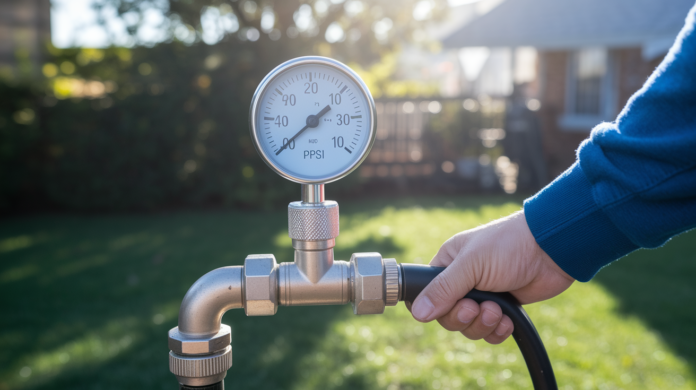
Testing your water pressure needs an inexpensive pressure gauge you can grab at any home improvement store for around ten to twenty bucks. These gauges have 3/4 inch female hose threads that fit standard outdoor spigots and most threaded faucet connections. The gauge shows PSI on a dial face, making it easy to get an accurate reading in seconds.
Here’s how to measure your home’s water pressure:
- Pick up a pressure gauge from a hardware or home improvement store
- Find an outdoor spigot (hose connection) or the threaded connection behind your washing machine
- Turn off all fixtures and appliances throughout the house. No running faucets, showers, dishwashers, or washing machines
- Thread the gauge onto the connection point hand tight (you don’t need tools or excessive force)
- Open the valve all the way and let the system sit for about 30 seconds
- Read the PSI displayed on the gauge dial
Shutting off all water sources before testing matters because it gives you an accurate static pressure reading. Static pressure is the force in your pipes when no water’s moving. That’s your baseline, what your system maintains when nothing’s running. If faucets are open or appliances are going during the test, you’ll measure dynamic pressure instead, which is always lower and doesn’t show you the true picture.
We recommend testing at different times during the day to catch pressure swings. Morning readings around 7 or 8 am, when neighborhood demand peaks, often show lower pressure than midday or late evening tests. If you notice a swing of more than 10 psi between morning and evening, it could point to municipal supply issues or problems with your pressure regulator keeping things consistent.
Understanding Static Versus Dynamic Water Pressure

Static pressure is what you measure when all faucets and appliances are sitting idle. With no water moving through the system, the gauge shows the resting force in your pipes. Typically 40 to 60 psi in a properly functioning home. This number is your system’s baseline, the pressure available before you ask it to deliver water anywhere.
Dynamic pressure is what you actually experience during use. Turn on a shower, and pressure drops as water flows through pipes, around bends, and through the showerhead. Run the dishwasher at the same time, and it drops further. Dynamic pressure is always lower than static because friction and flow resistance naturally cut force as water moves.
The gap between these two measurements tells you a lot about your system’s capacity. A home showing 60 psi static and 50 psi with one shower running? That’s performing normally. But if pressure plunges from 60 psi down to 20 psi when two faucets open, you’re looking at a flow problem, not a pressure problem. Flow rate measures the volume of water your system can deliver, expressed in gallons per minute (GPM). Most households need 5 to 10 GPM to support multiple simultaneous uses without dramatic pressure drops. Enough to run a shower, flush a toilet, and fill a sink at the same time without anyone noticing.
Sharp pressure drops below 20 psi during use point directly to flow restrictions. The system has adequate pressure when idle, but something’s limiting the volume of water that can move through pipes. Common culprits include undersized pipes, heavy mineral buildup narrowing pipe diameter, or insufficient supply from a low yield well.
Low Water Pressure: Causes and Fixes

Low pressure can start inside your home or come from external sources. The symptoms often appear gradually. You might notice the shower spray weakening over weeks, the toilet tank taking longer to refill, or reduced flow at multiple fixtures when only one used to be affected. These signs suggest something in the system is restricting water delivery.
Internal causes often develop slowly as systems age. Galvanized steel pipes corrode from the inside out, with rust and mineral deposits narrowing the passage water flows through. In homes built before the 1970s, these pipes might have lost 30 to 50 percent of their original diameter. Faucet aerators collect sediment and mineral particles, blocking the small screen openings. A partially closed main shut off valve (sometimes left in the wrong position after repairs) restricts flow right where water enters the house. Faulty pressure regulators can fail in the closed position, limiting pressure downstream even when street pressure runs high.
| Cause | How to Identify | Quick Check |
|---|---|---|
| Leaking pipes | Water meter continues recording usage when all fixtures are off | Turn off all water, check meter after 2 hours. If it moved, you have a leak |
| Clogged aerators | Weak flow from a single fixture while others work normally | Unscrew aerator and run water. If flow improves dramatically, the aerator was clogged |
| Mineral buildup in pipes | Gradual pressure loss over months or years, usually in older homes with galvanized pipes | Check installation date of plumbing. Galvanized pipes from before 1970 are prime suspects |
| Faulty pressure regulator | Inconsistent pressure throughout the home, or pressure that doesn’t match street pressure | Test pressure on both sides of regulator. Downstream should be lower but stable |
| Partially closed main valve | Sudden low pressure throughout entire home after recent plumbing work | Locate main shut off near meter and verify it’s fully open (handle parallel to pipe) |
Several fixes can be handled without professional help:
- Clean clogged aerators: Unscrew the aerator from each affected faucet, rinse debris from the screen, soak in vinegar if mineral deposits are present, and reinstall
- Fully open the main shut off valve: Find the valve where water enters your home (usually near the meter) and turn it counterclockwise until it stops
- Flush sediment from the water heater: Attach a garden hose to the drain valve at the bottom of the tank, open the valve, and let several gallons drain out (this improves hot water pressure specifically, as discussed in our water heater troubleshooting guide)
- Check for and repair visible leaks: Look under sinks, around toilets, and near the water heater for signs of dripping or moisture
Booster pumps make sense in specific situations. Homes at the end of long municipal supply lines sometimes receive adequate pressure when demand is low but struggle during peak hours. Well water systems with good yield (5+ GPM) but insufficient natural pressure benefit from boosters that increase delivery force without overwhelming the well. Multi-story buildings often need boosters to push water up to upper floors where gravity works against delivery. Some municipalities have reduced supply pressure due to aging infrastructure or new conservation regulations, forcing homeowners to add boosting systems to maintain comfortable flow.
Before investing in major repairs or booster systems, contact your municipal water supply company. They can tell you the pressure at the street, confirm whether recent changes have affected delivery, and rule out external issues. If street pressure runs at 70 psi but your house only sees 35 psi, the problem’s inside your property line.
Why Water Pressure May Be Too High

Pressure above 80 psi puts your entire plumbing system at risk. The extra force stresses every joint, connection, and seal, dramatically shortening the lifespan of pipes and fixtures that would otherwise last for decades.
Watch for these warning signs that pressure has climbed too high:
- Loud banging sounds in walls when faucets shut off quickly (water hammer)
- Frequent leaks at fixture connections or supply line fittings
- Water bills climbing without explanation, suggesting leaks you haven’t spotted yet
- Toilets that run intermittently because flush valves can’t seal properly against excess pressure
- Hissing sounds at faucets even when handles are fully closed
Excessive pressure causes specific types of damage throughout the home. Braided flex lines connecting toilets and faucets can burst, releasing large volumes of water quickly. Water heater temperature and pressure relief valves weep constantly, or worse, the tank develops leaks at welded seams. Washing machine hoses blow out, flooding laundry rooms and adjacent spaces. Dishwasher door seals fail, dripping onto kitchen floors. Every rubber washer, gasket, and O ring in the system wears out faster than designed.
The most common culprit behind high pressure? A faulty or missing pressure regulator. Municipal supply lines often deliver 100 to 150 psi or more. Plenty of force to push water through miles of mains and up into water towers. Without a regulator reducing that street pressure to household levels, that full force hits your pipes, fixtures, and appliances directly.
Pressure Regulator Solutions: Function, Adjustment, and Replacement

Pressure regulators (also called pressure reducing valves or PRVs) are the gatekeepers protecting your plumbing from excessive street pressure. They reduce incoming force from 100 plus psi down to safe household levels, typically 50 to 60 psi. The regulator sits on your main water line, usually within a few feet of where city water enters your home, and automatically adjusts flow to maintain consistent downstream pressure no matter how much street pressure fluctuates.
Most regulators install near the water meter, either in a basement, crawl space, or exterior meter box. The valve body has a distinctive bell or dome shape, wider in the middle than the pipes on either side, with an adjustment screw and locknut on top. To verify your regulator is working, attach a pressure gauge to a faucet on the house side of the regulator and compare it to street pressure. The upstream (street side) reading should be significantly higher. If both sides show the same pressure, the regulator has failed open and isn’t protecting your system.
Adjusting a regulator takes patience and small movements. Turn the adjustment screw clockwise to increase downstream pressure, counterclockwise to decrease it. Make quarter turn adjustments, then test pressure at a faucet to see the change. Wait about 30 seconds between adjustments for pressure to stabilize. Keep adjusting until you reach the target range of 50 to 60 psi. Tighten the locknut once you’re satisfied so vibration doesn’t shift the setting over time.
Replacement becomes necessary when adjustment no longer works. Regulators older than 10 to 15 years have often worn out internal diaphragms and springs. Visible corrosion, mineral deposits, or water leaking from the valve body indicate failure. If you adjust the screw through its full range without changing downstream pressure, internal components have failed. Persistent pressure fluctuations (swinging 20 psi or more throughout the day despite adjustment attempts) signal that the regulator can’t maintain stable output. Water hammer sounds that developed recently often mean the regulator has lost its ability to cushion pressure changes.
Professional installation makes sense for regulator work. Licensed plumbers ensure the new valve matches your household’s flow requirements, which matters for performance. An undersized regulator restricts flow even at proper pressure settings, creating the same symptoms as low pressure. The plumber will shut off the main water supply, drain the line, cut out the old regulator, and solder or thread in the new one depending on pipe material. New regulators typically come factory set to 50 to 60 psi, but the installer will verify and adjust as needed. Expect installation to take one to three hours and cost a few hundred dollars for the valve and labor combined, though prices vary by region and complexity of access to your main line.
Water Pressure Differences in Multi-Story Homes

Vertical distance affects pressure in ways that surprise homeowners who assume every floor should perform identically. Water pressure drops by approximately 0.43 psi for every foot of elevation gain. That means a fixture on the second floor, 10 feet above the ground floor, experiences about 4 psi less pressure than an identical fixture downstairs.
The pressure distribution breaks down predictably by level. Basements see the highest pressure because street pressure gets a gravitational assist pushing water down. The ground floor receives whatever pressure your regulator delivers, assuming the regulator sits at or near ground level. Upper floors experience reduced pressure as the system works against gravity to lift water up. In a three story home with 60 psi at the ground floor, the second floor might see 55 psi, and the third floor could drop to 50 psi or lower. Still functional, but noticeably weaker during showers or when filling tubs.
Solutions exist for multi-story pressure challenges. Some homes install zone specific pressure regulators that allow different settings for different levels, though this requires more complex plumbing. Booster pumps can be dedicated to upper floors, installed at basement or ground level with supply lines running directly to higher fixtures. Pressure tanks (similar to those used in well systems) can be placed on upper floors to maintain consistent delivery without requiring the pump to run constantly. Proper main line diameter matters too. A 3/4 inch main has enough capacity to serve vertical distribution in most homes, while older 1/2 inch mains struggle to deliver adequate volume to multiple floors simultaneously.
Water Pressure Considerations for Well Systems
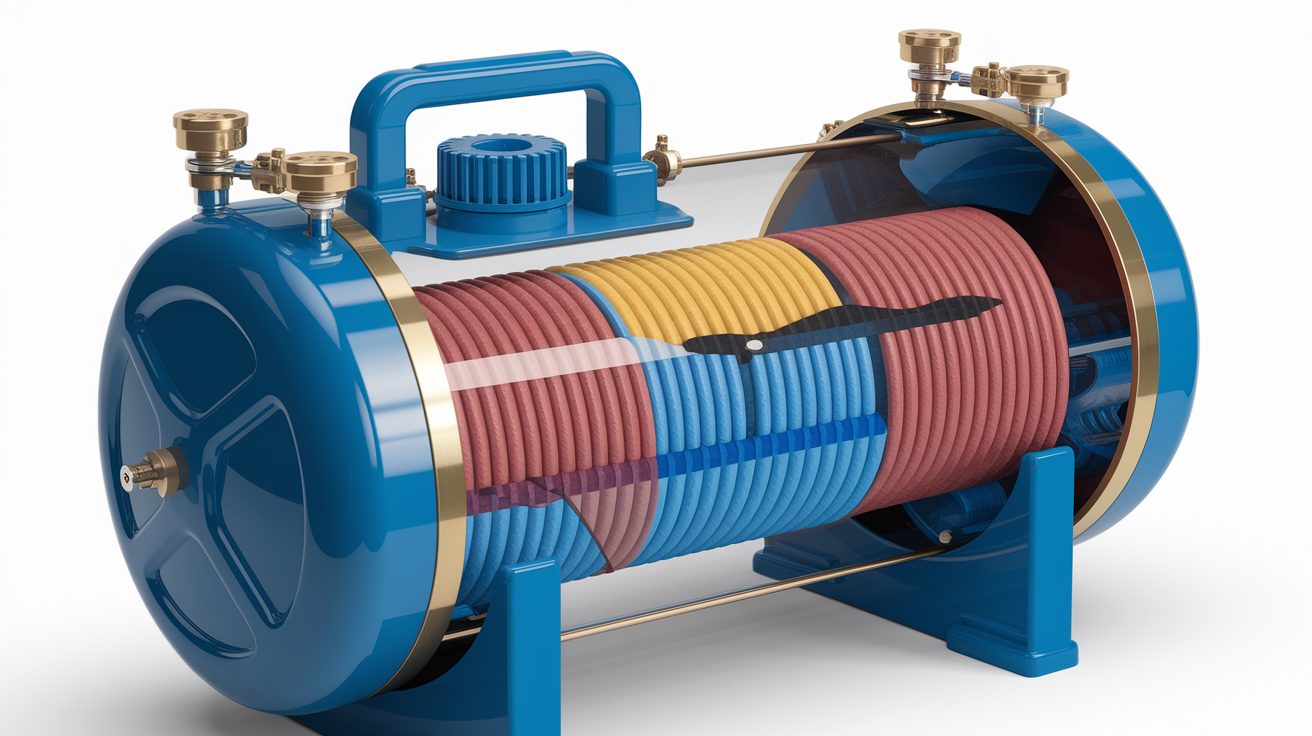
Well systems maintain pressure through a completely different mechanism than municipal supply. Instead of continuous pressure from city mains, well pumps cycle on and off based on pressure switch settings. The typical cycle turns the pump on when pressure drops to 40 psi and shuts it off when pressure reaches 60 psi. A pressure tank stores water and uses compressed air to maintain pressure between pump cycles.
The pressure tank is the heart of consistent delivery in a well system. Inside the tank, a rubber bladder separates water from air. As the pump fills the tank with water, it compresses the air on the other side of the bladder. That compressed air pushes back against the water, maintaining pressure at faucets and fixtures even after the pump shuts off. Proper air pressure in the tank should be set 2 psi below the pump’s cut in pressure. For a standard 40/60 switch, tank air pressure should be 38 psi.
Regular tank maintenance prevents pressure problems before they start:
- Tap the side of the tank with your knuckles. A hollow sound indicates proper air charge, while a dull thud suggests the bladder has failed and the tank is waterlogged
- Check air pressure annually using a tire pressure gauge on the valve at the top or side of the tank (drain the tank first by shutting off power to the pump and opening faucets until flow stops)
- Drain several gallons from the tank’s bottom drain valve once a year to flush out accumulated sediment
- Watch for rapid pump cycling. If the pump runs every time you turn on a faucet for just a few seconds, the tank has lost its air charge or the bladder has failed
- Plan for bladder replacement every 5 to 10 years as part of normal system maintenance
Well yield affects pressure in ways that confuse homeowners because the pressure gauge might read fine even when the system struggles. A well producing 5 GPM or more typically supports normal household use while maintaining good pressure. But a well yielding only 2 to 3 GPM can show perfect pressure on the gauge when nothing’s running, then plummet during simultaneous use because the well can’t supply water fast enough to keep up with demand. Low yield wells need storage systems that fill slowly during periods of light use, then supply water from storage during peak demand.
When to Call a Licensed Plumber for Pressure Issues

Simple pressure checks and basic adjustments make sense as DIY projects. Testing with a gauge, cleaning aerators, and verifying valve positions fall within most homeowners’ capabilities. But certain situations require professional knowledge, specialized tools, and licensing for code compliance.
Bring in a licensed plumber for these scenarios:
- Pressure consistently above 80 psi despite repeated adjustment attempts at the regulator
- Complete absence of a pressure regulator when your home connects to municipal supply
- Suspected leaks behind walls, under concrete slabs, or in other inaccessible locations
- Any pressure regulator replacement or new installation work
- Persistent low pressure affecting the entire home when simple fixes haven’t helped
- Sudden dramatic pressure changes that appeared without explanation
- Pressure tank problems, switch failures, or cycling issues on well systems
Contact your utility company before calling a plumber when pressure issues might originate outside your property. Neighborhood wide low pressure during specific times points to municipal capacity problems, not your house. Recent main line work or repairs in your area can temporarily affect delivery. The utility company can tell you what pressure they’re delivering at the street and confirm whether the issue starts on their side or yours. Pressure drops during morning peak hours (6 to 9 am) or evening demand periods (5 to 8 pm) often indicate system wide load issues. Summer months when irrigation systems run heavily can strain municipal capacity in some areas.
Once you’ve ruled out external causes and confirmed the problem lives within your property line, a plumber can diagnose internal issues systematically. They’ll test at multiple points, inspect the regulator and main valve, check for hidden leaks, and determine whether pipe condition, sizing, or component failure is causing your pressure problems. As with other common plumbing problems, pressure issues often have multiple contributing factors that require professional assessment to untangle.
Maintaining Consistent Water Pressure Over Time

Pressure systems need periodic maintenance to function reliably year after year. Components wear out, sediment accumulates, and materials corrode even in well maintained homes. Pressure regulators typically last 10 to 15 years before internal parts wear enough to affect performance. Pressure tank bladders in well systems need replacement every 5 to 10 years. Galvanized pipes installed before the 1970s gradually corrode and narrow from the inside, restricting flow more each year. Sediment collects in water heaters and pressure tanks, reducing capacity and affecting pressure at hot water fixtures.
A straightforward maintenance schedule prevents most pressure problems:
- Test pressure with a gauge twice each year (spring and fall) to catch changes early
- Flush your water heater annually to remove sediment that reduces tank capacity and affects hot water pressure
- Check pressure tank air charge once a year if you have a well system
- Inspect the pressure regulator for corrosion, leaks, or mineral buildup during seasonal checkups
- Clean faucet aerators every three months or whenever flow seems reduced
- Verify the main shut off valve opens and closes smoothly (test it once a year so it doesn’t seize in position)
- Monitor water bills for unexplained increases that might indicate hidden leaks caused by pressure problems
- Schedule a professional plumbing inspection every 3 to 5 years for a comprehensive system review
Consistent pressure protects everything downstream. Appliances last longer when they receive steady, appropriate pressure instead of fluctuating extremes. Emergency repairs happen less often because fixtures and connections aren’t constantly stressed. Water waste drops because leaks caused by excess pressure don’t develop in the first place. The few hours spent on basic pressure maintenance pay back in avoided repairs and equipment replacement costs.
Final Words
Normal water pressure for a house sits right in that 50 to 70 psi sweet spot, with 60 psi being the reliable middle ground most homes aim for.
Too low, and you’re struggling through weak showers and slow-filling washing machines. Too high, and you’re risking leaks, blown hoses, and damaged fixtures.
Testing with a simple pressure gauge gives you the real number. From there, it’s about adjusting your regulator, fixing what’s causing drag in your system, or calling in help when the issue runs deeper.
Keep an eye on your pressure. Check it twice a year. Address problems before they turn into leaks or emergency repairs.
Your plumbing will last longer, your appliances will run better, and you’ll avoid the surprise of water where it doesn’t belong.
FAQ
What is a good water pressure for a house?
A good water pressure for a house is between 50 and 70 psi, with 60 psi being the ideal target for most homes. This range provides strong flow for showers and appliances without stressing your pipes or causing leaks.
How do I adjust the water pressure in my house?
You adjust water pressure in your house by locating the pressure regulator near your water meter and turning the adjustment screw—clockwise to increase pressure, counter-clockwise to decrease it. Make small quarter-turn adjustments, then retest with a pressure gauge until you reach 50 to 60 psi.
Is 40 PSI low water pressure?
40 psi is on the low end of acceptable water pressure but still functional for most household tasks. You may notice weaker shower spray and slower-filling appliances, but it’s not dangerously low unless it drops further during use.
Is 100 PSI too high for house water pressure?
100 psi is too high for house water pressure and can damage pipes, appliances, and fixtures over time. Pressure above 80 psi stresses your plumbing system, causes leaks, and shortens the life of water heaters and washing machine connections.
What causes low water pressure in a house?
Low water pressure in a house is caused by corroded pipes, mineral buildup, clogged aerators, partially closed main shut-off valves, or faulty pressure regulators. Leaking pipes and issues with municipal supply can also reduce pressure throughout your home.
How do you test for a water leak causing low pressure?
You test for a water leak causing low pressure by turning off all water fixtures and appliances, then checking your water meter after two hours. If the meter shows water usage during that time, you likely have a hidden leak reducing your pressure.
What is a pressure regulator and do I need one?
A pressure regulator is a valve installed near your water meter that reduces high incoming street pressure to safe levels for your home. You need one if your municipal supply delivers pressure above 80 psi to protect your plumbing and appliances from damage.
What’s the difference between static and dynamic water pressure?
Static water pressure is measured with no fixtures running and shows your system’s resting pressure, typically 40 to 60 psi. Dynamic pressure is measured during use and is always lower because water flowing through pipes naturally reduces force.
Why does my water pressure drop when multiple faucets are running?
Your water pressure drops when multiple faucets are running because your system has a limited flow rate measured in gallons per minute. If simultaneous use exceeds your available flow capacity, pressure falls—this indicates a flow issue rather than a pressure problem.
How does elevation affect water pressure in my home?
Elevation affects water pressure in your home by reducing it approximately 0.43 psi per foot of height. Upper floors naturally have lower pressure than basements due to gravity working against the water being lifted vertically through your plumbing.
When should I replace my pressure regulator?
You should replace your pressure regulator when it’s older than 10 to 15 years, shows visible corrosion or leaking, can’t maintain pressure settings, or causes persistent fluctuations above 80 psi. Water hammer sounds also indicate internal failure requiring replacement.
How does well water pressure differ from city water?
Well water pressure differs from city water by using a pressure tank and switch system that cycles the pump on at 40 psi and off at 60 psi. The tank stores water under pressure between pump cycles rather than receiving constant pressure from municipal mains.
What does a waterlogged pressure tank sound like?
A waterlogged pressure tank sounds like a dull thud when you tap it, compared to the hollow sound of a properly functioning tank. This indicates a failed air bladder that needs replacement to restore proper pressure cycling in your well system.
When should I call a plumber for pressure problems?
You should call a plumber for pressure problems when pressure stays above 80 psi despite adjustments, you need regulator replacement, suspect hidden leaks, or experience sudden dramatic pressure changes throughout your home. Professional diagnosis prevents costly damage from pressure-related failures.